For Immigrant Families, Carework is Resistance
By Sarah Bruhn, author of Holding On to Home: Immigrant Women and the Promise of Sanctuary
Lorenzo Salgado Araujo and Johan Sebastián Durán Guerrero were husbands and fathers, sons and grandsons, workers and community members. Both were killed by ICE agents in their cars, one week apart. Despite the government’s assertions that the shootings were warranted, the evidence suggests otherwise. Their deaths sparked an outcry, bringing people to the streets in cities around the country to protest the arbitrary violence that wrenched Mr. Araujo and Mr. Guerrero from their families.
The public outrage in the wake of these killings is meaningful and important. Street protests direct public attention to extralegal government action, pressure politicians, and give people a sense of collective agency. Public protest is vital. It is not, however, the full picture of the kinds of resistance necessary to foster spaces of safety and inclusion—spaces of sanctuary—for the families and communities Mr. Araujo and Mr. Guerrero leave behind. After the protesters go home and the news crews pack up their equipment, there are still people doing the everyday work of caring for the people harmed by immigration policies.
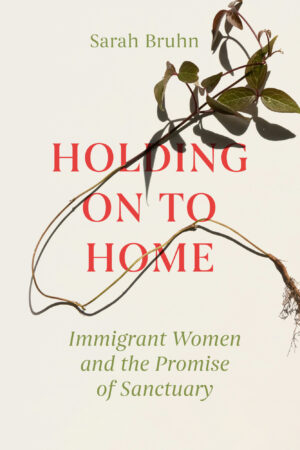
In the research for my book, Holding On to Home: Immigrant Women and the Promise of Sanctuary, I saw this everyday care in action as I sought to understand how immigrant women navigated the tensions between a profoundly anti-immigrant federal context and a city that, symbolically at least, welcomed immigrants. Over the course of five years, I spoke with immigrant mothers from Latin America, educators and community leaders in a small sanctuary city I call Beacon. I witnessed how the quieter, less visible resistance of immigrant women’s carework is as critical as public protest to contesting the hardships imposed by immigration laws, policies, and enforcement practices.
The quieter, less visible resistance of immigrant women’s carework is as critical as public protest to contesting the hardships imposed by immigration laws, policies, and enforcement practices.
The mothers who shared their stories with me valued the protections offered by sanctuary policies, including non-cooperation with ICE, resources for linguistically diverse residents, and resources for non-citizens. They knew, of course, that sanctuary city policies were far from perfect. They saw them as important all the same. Yet what the mothers also told me, and what I witnessed in my years of observations, was that the most critical part of sanctuary was how it was brought to life.
In cramped school offices, in WhatApp groups, on playgrounds and soccer sidelines, I saw how immigrant women’s carework makes sanctuary real. Often, this carework happens within schools and city departments, carried out by employees, nearly all multilingual women from immigrant families themselves. Other times, it is between immigrant mothers, like when a woman who has been in the United States for several years passes on words of wisdom to a mother who just arrived from the Texas-Mexico border. This kind of care, what I call resistive carework, does not just appear spontaneously in the wake of a crisis like an ICE shooting or a global pandemic. It happens every day, in vital but sometimes invisible connections among women striving to ensure immigrant families thrive, even as they face a web of anti-immigrant policies.
There are vast geographic differences between Beacon, Biddeford, and Houston. But behind the obvious distinctions, there are efforts across all three places to separate the authority of local police and federal immigration enforcement. Beacon had clear municipal sanctuary policies prohibiting most cooperation between police and ICE. Biddeford, the small, mostly white town where Mr. Guerrero lived and provided for his wife and young daughter, has never declared itself a sanctuary city. But the police department has a policy that it will not cooperate actively with federal immigration enforcement. Houston, Texas, where Mr. Araujo raised three sons and ran a construction company, is not a sanctuary city either. It is a sprawling metropolis, where Latinos comprise almost 45% of the population. It tried to pass sanctuary policies that would separate policing from immigration enforcement, before it was barred from doing so by state law.
These policies do matter. But Holding On to Home also illustrates the significant impact that carework has on immigrant families, wherever they are. As the public protests fade, there will continue to be women who take up the mantle of resistance, doing the quiet carework of sanctuary in the wake of violence and disruption.
About the Author

is a scholar of migration, family, and education. She is Lecturer at Boston University Wheelock College of Education and Human Development.