Former Prisons and the Power of Place
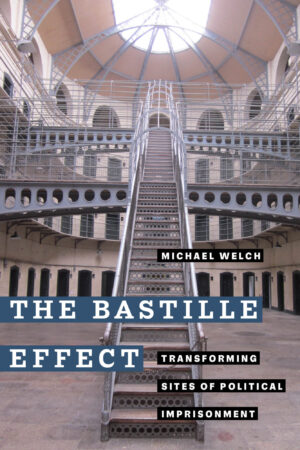
Recently I returned to live in Paris, my long-term summer hideaway. Thus, it is fitting that I write these thoughts on July 14—Bastille Day—since the French Revolution became a starting point for my book The Bastille Effect: Transforming Sites of Political Imprisonment. Conveniently, I rent an apartment within walking distance of the Bastille. Among other things, the summer of 2026 is consumed by heat waves alongside World Cup fever. But soon the heat waves will fade and the World Cup will celebrate another champion. The Bastille, however, will continue to resonate. Although that infamous prison and instrument of royal tyranny was demolished amid the French Revolution, its symbolism persists. It is that phenomenon which remains the focus of the book since other sites where political prisoners were held have also been transformed into places of memory—hence, the Bastille Effect. My research takes me to many of those sites in Dublin, Montreal, Buenos Aires, Santiago, and elsewhere.
What those sites have in common is the power of place. Sociologists have improved our understanding of place distinct from space. For his part Michael Mayerfield Bell explains that space refers to the three-dimensional coordinates of things. A place is particular space that has meaning. Likewise other sociologists have refined our conceptualization of place by recognizing cultural meaning. The following passage from the The Bastille Effect captures the thrust of the power of place.
To chronicle the afterlives of the Bastille, sociologist Philip Smith (1999) delves into how the cultural meaning of place has changed over the course of history. The Bastille was a fortress prison where the monarchy had long disposed of political opponents and other nuisances. Durkheim would have considered the Bastille a profane symbol, or as Smith puts it, “a polluted place” (1999: 23). The Revolution with its patriotic heroes and blood sacrifice altered not only the nation but also the Bastille itself, allowing myth to transform it from a profane to a sacred place. Decades later, however, the site fell into neglect as its moats filled with stagnant water and patches of wild grass. That particular afterlife lost its capacity to evoke the sacred; the Bastille had become an ill-defined and desolate place (Lemoine, 1930).
Enter Napoleon, who was determined to reverse the Bastille’s symbolic dysfunction. To commemorate his military adventures in the Orient, in 1806 he ordered that a giant fountain in the shape of an elephant be built on the site. Architects and other cultural advisers failed utterly to convince him that an elephant was not a fitting—let alone elegant—image for the tribute. “Project Elephant” moved forward, but instead of a fountain it would be a wooden and plaster model standing 24 meters tall. From 1817 to 1847, that behemoth occupied the place de la Bastille, where it decayed physically and aesthetically. “In 1847, the sad history of the elephant came to an appropriate end. It was finally thrown into the canal/sewer on the order of Prefect Rumbuteau. Crowds watched as rats escaped from the sinking monument” (Smith, 1999: 28).
Today, sightseers still congregate at the Bastille to snap photos of the 50-meter column in the center of place de la Bastille. At the top of the spire is a sculpture of the Genie de la Bastille (or Genie de la Liberté), who hoists a torch in one hand and a broken chain in the other. The site of a former prison once again embodies the revolutionary spirit. The fact that tourists visit the site speaks to the power of place which resides in the collective consciousness. For me, the site inspired me to travel to other countries where former prisons have been transformed into what I refer to as a Bastille Effect. Like the other books this trilogy, Escape to Prison and Visions of Prisons (also with University of California Press), the power of place looms large as we tour sites that have been repurposed from places of punishment to places of memory. For more insights into my research, please visit the blogs for the other books in this trilogy.