The Future of Civic Engagement in Climate Action
by Paul Almeida, author of Climate Change and Civic Engagement: The Origins and Future of the Climate Justice Movement
As we enter a super El Niño period, and August 2026 serving as the hottest year on record (along with unprecedentedly high ocean temperatures in the Pacific), the time for wider civic participation on climate action remains urgent. Not only does the world face prolonged heat waves and extreme weather events from the super El Niño weather patterns, but also extensive drought conditions risking food security from south Asia to Central America. In Climate Change and Civic Engagement, I outline both the obstacles and most promising frameworks for increasing sustained public participation in climate action strategies with a just transition focus.
Social movements mobilize over the impediments to address global warming. Climate denialism and delay act as the largest obstacles to rational attempts to slow down the pace of climate change. In recent years, climate denialism and obstruction have moved from fossil fuel industry-funded think tanks and lobbying groups to become a pillar in political platforms for authoritarian populism, acting as the core climate change counter-movement. With the increasing electoral success of authoritarian populism in the mid-2020s in Latin America, the United States, Europe, and parts of Asia and Oceania, pro-climate forces must also mobilize at the ballot box where democratic governance survives in order to turn back the encroachment of climate obstructionism.
On the pro-climate front, the two competing paradigms driving actual climate action involve: 1) decarbonization and 2) just transitions. Decarbonization centers on technological approaches by developing the scientific and technological tools and practices to reduce the use of carbon-based fuels and other greenhouse gases and mitigate the impacts of climate change. Traditional environmental movements and environmental scientists advocate for these strategies such as in the rapid development and deployment of renewable energy sources, carbon capture techniques, and climate action planning programs. The just transition perspective focuses on climate change as a problem linked to larger political and economic structures. The labor movement initially formulated the vision of a just transition by protecting displaced workers, and now the concept extends to larger environmental and economic justice concerns. In brief, a just transition involves giving a primary voice to workers and frontline communities in directing economic activity away from fossil fuels.
These three paradigms of denialism, decarbonization, and just transitions are competing at the global, national, and local levels, even within the same organizations and institutions such as universities. Climate denialism is diametrically opposed to both decarbonization and just transitions. Climate Change and Civic Engagement contends that the key challenge in the second quarter of the twenty-first century relates to overcoming denialism while simultaneously pushing the forces of decarbonization on a just transition trajectory. Centering climate action on low-income workers and frontline communities enhances the potential move toward the just transition pathway. These particular sectors discipline strategies of climate action to carry out equitable economic policies and to employ social safety nets alongside green transitions. For example, in representative surveys reported throughout disinvested communities in California’s San Joaquin Valley, residents report a much greater interest in civic participation over housing, medical, and utility costs than climate change. Combining these household survival issues with climate action broadens participation by ordinary people and integrates equitable economic strategies as part of a broader program to transform prevailing extractive economic structures.
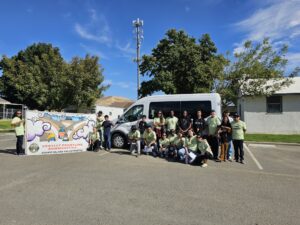
In terms of broadening civic engagement, there are at least three key organizations: 1) universities and colleges; 2) community-based organizations (CBOs); and 3) labor unions. Institutions of higher education provide one means to provide the institutional and technical capacity to move forward on the just transition trajectory, especially when they are located in frontline regions. This is not a given, as universities exemplify complex organizational structures with competing interests and agendas, including decarbonization-only solutions suppressing the efforts of just transition coalitions off campus. CBOs and labor-based organizations with deep ties in frontline communities provide capacity training to increase civic participation in general, from canvassing for elections to working on campaigns involving the issues most impacting their respective localities and constituencies. The types of assets offered by CBOs and labor-based groups can broaden climate civic engagement and should be prioritized for state and philanthropic investments. Building long-term relationships and trust allows for lasting commitments over climate action along the lines of just transitions.