The Bride! A Celebration of the Monstrous Feminine
by Surekha Davies, author of Humans: A Monstrous History (now in paperback)
On a stormy night near Lake Geneva, Switzerland in 1816, a group of literary friends amused themselves by writing ghost stories. Among them was the nineteen-year-old Mary Shelley (then still Mary Godwin), who penned Frankenstein: The Modern Prometheus.
Halfway between our time and that gothically wet weekend sits Chicago in 1936. In The Bride!, written and directed by Maggie Gyllenhaal, Shelley’s spirit (Jessie Buckley) awakens in her coffin to pronounce that her magnum opus was but half the story she had wanted to tell, “crumbs from a stifled mind.” Shelley is determined to tell the rest of the story, to be a woman who says and does what she wants with no regard for social conventions that reduce women to objects and servants. By sheer force of imagination Shelley transcends time, space, and the laws of nature to possess the mind of Ida (also Buckley), a disaffected escort circling Chicago’s gangster scene.
We first meet Ida at a nightclub table, observing the women around her, their lives consisting of pandering to men’s desires and biting their tongues to keep from speaking their minds. Shelley’s presence in Ida’s mind breaks her filter. The possessed Ida refuses a man’s advances (in a British accent), and calls out the crimes and misogynistic behavior of the hoodlums around her. Her outspokenness prompts the local gangster boss to order his underlings to deal with her. Ida’s murder follows quickly.
Meanwhile Dr. Frankenstein’s monster, who now goes by the name of Frank, emerges from his mysterious, century-long hibernation or undercover operation. We first meet Frank en route to the laboratory of Dr. Euphronius (Annette Bening), known for pioneering work resurrecting — “rejuvenating” — the dead, albeit only small mammals. After a century of loneliness Frank hopes that she will make him a soulmate who won’t run away, screaming.
Dr. Euphronius is skeptical: “What if she’s monstrous, or not what you want?” But after some emotional arm-twisting, she agrees. They dig up Ida’s body and carry it to Euphronius’s home laboratory, which is as lovingly spectacular as a Dr. Who or Guillermo del Toro set. They perform the rejuvenation that sets in motion an action-packed caper of women subverting, transcending, and shattering the expectations of the patriarchy.
Death and resurrection have wiped Ida’s memory, but Frank and Euphronius convince her that she’s Frank’s fiancée Penelope, recovering from an accident. After two men attempt to rape Ida, Frank kills them, and he and Ida end up on the run. They alternate crimes (acts of necessity or justifiable fury) with trips to movie theaters and settings in service of Frank’s love of the films of Hollywood actor Ronnie Reed (Jake Gyllenhaal), a Fred Astaire-like character.
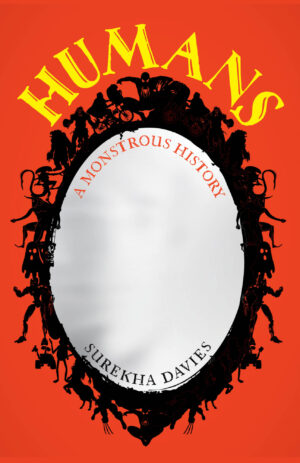
The patriarchal parameters of the category of normal have historically policed women’s speech, dress, appearance, sex, pregnancy, livelihood, autonomy, and mobility. In the West, women who transgressed norms have been laughed at, shunned, imprisoned, committed to asylums, and murdered. In my latest book, Humans: A Monstrous History, I show how the category of woman — and women who fail to fit the category — have been framed as monsters since classical antiquity. The Bride! offers a corrective: the monsters own their distinctiveness.
Post-Prohibition Chicago with its jazz, cocktails, and glamor might well have felt like liberation to Shelley (had she managed to possess a real-life Ida). But peering back from the twenty-first century, it’s a sinkhole of discrimination.
Myrna Mallow (Penélope Cruz), the detective who tracks Ida and Frank, masquerades as the secretary of the male detective Jake Wiles (Peter Sarsgaard) although, as Wiles puts it, “you do the detective work and I seduce the [local] sheriff.” Dr. Euphronius publishes under her initial to circumvent sexism. Sexual assault is endemic. Crime boss Lupino (Zlatko Burić) has had women’s tongues cut and pickled. Yet The Bride! is also a prism that refracts into view how similar behaviors continue today, albeit in a more covert fashion.
Women face gender pay gaps and workplace discrimination. A woman who takes the lead risks being called “bossy.” And while men are more likely to escalate unwanted sexual advances (and worse) in private than at a crowded nightclub table, these private spaces may contain witnesses and enablers, as the Harvey Weinstein and Jeffrey Epstein scandals have revealed.
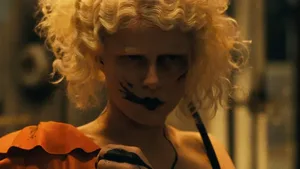
Blasting through the patriarchy is Ida/Shelley in Ida’s reinvigorated body, at once dead and seemingly immortal, pleasingly uncanny. Ida is not a bride so much as the anti-bride. Her glossy red dress and heels are a far cry from classic, mimsy-pimsy, fancy-dress meringue wedding outfits. Her dangling black veil looks right for a funeral. Her bleached hair frizzles like a perm set with a Van de Graff generator. The coiffure has a touch of mad scientist about it, and of the unforgettable Elsa Lanchester in the original Bride of Frankenstein (1935).
Ida’s blue-black tongue and cheek-stain are a consequence of the rejuvenation treatment, which had involved filling her with a murky liquid. The stain spurting from her mouth resembles an ink blot, a persistent reminder that Shelley’s pulling Ida’s strings.
Frank (Christian Bale) is the archetypical monster of the modern age. Here, however, super-strength and stitches aside, he’s mainly Ida’s romantic interest-cum-plot device for resurrecting her, not a bone-chilling monster who prompts screams (although that does happen).
The Bride! is ultimately a caper movie with teeth: a joyful escape and an exhortation to own one’s inner nasty woman, or monster. It’s packed with heroines — or perhaps anti-heroines — in the manner of Ocean’s 8 (2018). It’s also a comic book movie, but better. The characters in their gorgeous, distinctive costumes and makeup are almost, but not quite, larger than life, their performances vivid and memorable, not superhero cheesy even though, apart from Ida and Frank, they lack the screentime to move from archetype to character. As the movie builds to an anarchic climax, it makes a stand for generations of women sabotaged by those who feared women’s ambitions and worked to gaslight them out of believing that they were people at all.
About the Author
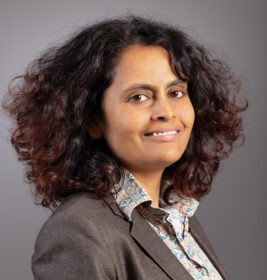
is a British author, speaker, and historian of science, art, and ideas. Her first book, Renaissance Ethnography and the Invention of the Human, won the Morris D. Forkosch Prize for the best first book in intellectual history from the Journal of the History of Ideas and the Roland H. Bainton Prize in History and Theology. She has written essays and reviews about the histories of biology, anthropology, and monsters in the Times Literary Supplement, Nature, Science, and Aeon.