Rethinking the American Revolution from California: A Q&A with Dee E. Andrews and Jason Daniels
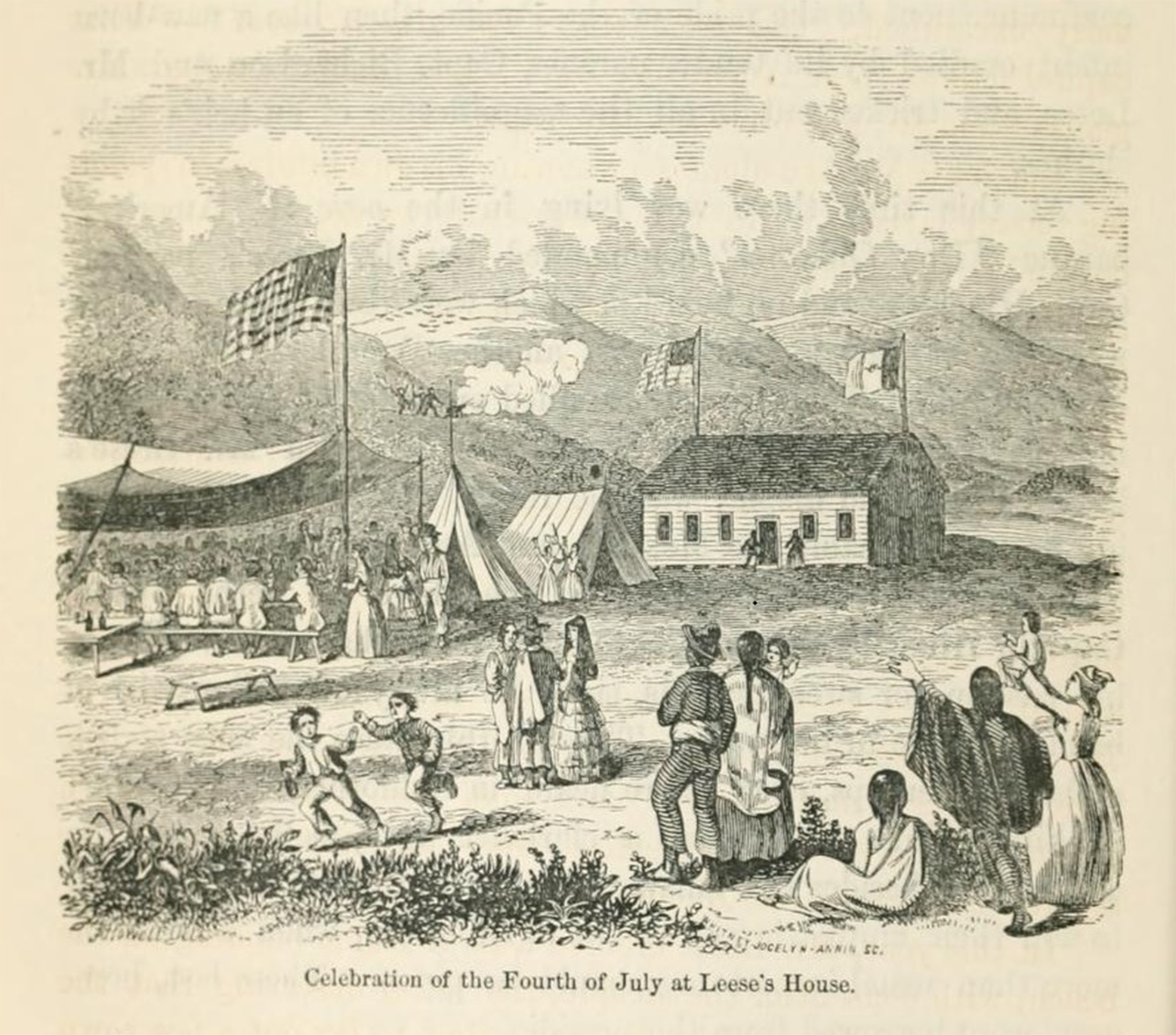
What happens when we tell the story of the American Revolution from the Pacific rather than the Atlantic? That's the question at the heart of "American Revolutions in California," a new special issue of California History. Bringing together scholars of early California, Indigenous history, public history, and the history of race and citizenship, the issue reveals California not as a distant outpost but as a vital site for understanding the Revolution's long and complex legacies. We spoke with the issue's guest editors, Dee E. Andrews and Jason Daniels, about the inspiration behind the issue, the surprising directions it took, and why these conversations feel especially timely during this year's national semiquincentennial.
Where did the idea for a special 2026 issue of California History come from?
We are both Early American historians, and Dee was curious whether anyone in California was planning commemorations for the 250th anniversary of the Declaration of Independence. Jason hadn't heard of anything, so Dee sent an email to colleagues around the state.
The responses were remarkably similar. Most people were involved in projects on the East Coast rather than in California. That immediately pointed us toward one of the central themes of this special issue: the tendency to think of Early American history as primarily an Atlantic story. Early American scholarship has expanded enormously over the past two decades to include what is often called "Vast Early America," stretching across much of North America. But even with that welcome expansion, the perspective usually remains east to west, rather than the other way around.
At that point, our department chair, Bridget Ford, had a wonderful idea. Why not propose a special 2026 issue of California History? We brought the idea to Mary Ann Irwin, the journal's editor and another member of our department, and she immediately embraced it. From there, the project took on its own life.
What were some of the challenges of putting this issue together?
The biggest challenge was time. Edited collections like this often take several years to assemble. We had just two years to recruit contributors, shepherd every article through peer review, work with authors on revisions, and prepare everything for publication.
We also wanted the issue to be visually rich. California History has always placed a premium on illustrations, but locating appropriate images and securing permissions from archives and libraries is often a project in itself. Historians are busy people, and all of this represented a significant commitment. Fortunately, our contributors were tremendously generous with their time and enthusiasm.
Perhaps the biggest surprise came from the call for papers itself. We deliberately cast a wide net. We imagined receiving essays spanning California's long history, including topics related to what we called the "Three Revolutions"—the American Revolution, the Civil War, and the Civil Rights Movement. Instead, almost all of the research essays clustered around the period from the late eighteenth century through the first years of California statehood. At the same time, the public history submissions explored museums, state parks, local history, and classroom teaching connected directly or indirectly to the nation's 250th anniversary.
In the end, the essays complemented one another beautifully. Together they demonstrate just how many different ways California's history intersects with the American Revolution and its long aftermath.
How did you decide on "American Revolutions in California"—plural—as the overall theme?
At first, we actually thought about calling the issue "The American Revolution in California." But as the essays began to arrive, it became clear that there wasn't just one story to tell.
The American Revolution certainly mattered, but it reached California through many different pathways. Some essays examine its immediate consequences for the Spanish Empire and for California's place within it. Others explore Mexican independence, constitutional politics, Indigenous resistance, the creation of California's first state government, or later struggles over citizenship, race, and public memory. Still others examine how museums, teachers, and public historians interpret those revolutionary legacies today.
The plural—American Revolutions—gave us the flexibility to embrace all of those perspectives without forcing every contributor into the same narrative. It also reflects the reality that revolutionary ideas about liberty, sovereignty, citizenship, and rights were continually debated, adapted, challenged, and reimagined across California over many generations.
Ultimately, the issue asks a broader question than whether California participated in the American Revolution. It asks how Californians—Native peoples, Californios, African Americans, Asian Americans, immigrants, teachers, students, and public historians—have understood, experienced, and reshaped the revolutionary ideas that transformed North America.
What are some of the unusual characteristics of the special issue?
In addition to its focus on early California, the issue developed a remarkable coherence, almost like the proceedings of a focused scholarly conference.
The research essays by Steven Hackel, Emmanuelle Perez Tisserant, and Rose Marie Beebe and Robert Senkewicz read like a chronological narrative spanning the late eighteenth century through the first years of California statehood. Together they explore shifts in Spanish imperial policy after the American Revolution, one Chumash man's struggle for freedom during the era of the missions, the 1836 Californio revolt against the Mexican central government, and the constitutional and political challenges Californios faced during California's transition into the United States.
The public history essays by Lauren O'Brien, Virginia Scharff and Carolyn Brucken, and Cecilia Tsu show how these larger historical questions continue to shape California today. Their essays explore the lives of the first African American proprietors of the San Diego House adobe, the making of the Autry Museum of the American West's 2026 exhibition Life, Liberty, and Los Angeles, and a collaborative local-history project led by University of California, Davis students that culminated in a Woodland Opera House exhibit on the Yolo Singing Club, an all-Black musical ensemble of the late nineteenth century.
We were also fortunate to recruit two of the country's leading historians, Claudio Saunt and Alan Taylor, to frame the volume. Saunt's opening essay invites readers to view eighteenth-century California through Indigenous networks and continental connections that predated European settlement, while Taylor's closing essay situates California within the broader consequences of the American Revolution and westward expansion. Together, they remind us that California's history has always been connected to larger North American and global stories.
What is the ultimate goal of the special issue?
Our goal is to encourage a broader conversation among historians about the continental connections linking the Atlantic and Pacific worlds during and after the American Revolution, and Californians’ awareness of these connections.
Scholars increasingly recognize that the Revolution was an international event whose consequences extended far beyond the original thirteen colonies. California offers an especially valuable perspective because it allows us to examine those consequences from west to east, rather than following the more familiar east-to-west narrative of American expansion.
We also hope the issue demonstrates that California is not peripheral to the history of the American Revolution. Instead, it offers an essential vantage point for understanding how revolutionary ideas about empire, sovereignty, citizenship, race, and liberty evolved across North America over the next century and beyond.
We're pleased to report that this conversation is already continuing. We will be hosting several of our contributors on panels at the AMERICA 2026 conference outside Paris in October and at the Organization of American Historians Annual Meeting in San Francisco in April 2027. The interest in viewing the American Revolution from California's perspective is clearly growing, and we hope this special issue helps move that conversation forward.
We invite you to read the special issue, "American Revolutions in California," for free online for a limited time. You may purchase single print copies of the issue (103.3) and/or other issues of California History on the journal's site. For ongoing access to California History, please subscribe to the journal and/or ask your library to subscribe.
About the Authors
Dee E. Andrews is professor emerita of history at California State University, East Bay.She received the Ph.D. from the University of Pennsylvania and has held a Barra Faculty Fellowship at the McNeil Center for Early American Studies at Penn. Her publications include an award-winning book, articles, and reviews. Her latest work, a two-volume book-history study of the writings of abolitionist Thomas Clarkson—the first co-authored with Christopher Parmenter of the Ohio State University, and the second a solo effort—will be published by the American Philosophical Society Press in May 2027. She is grateful for the enthusiasm, commitment, and talent of her Cal State students.
Jason Daniels is an Associate Professor of History and Chair of the Department of History and Global Cultures at California State University, East Bay. He holds the Ph.D. from the University of Warwick, UK, and his research focuses on the eighteenth-century Anglo-Atlantic world, especially the Caribbean. He is the author of numerous scholarly articles and the co-editor, with Amy Turner Bushnell, of Jonathan Dickinson's Journal or God's Protecting Providence: An Early American Castaway Narrative (Florida Historical Society Press, 2023).