How Hollywood Dramatized the Berlin Airlift: A Q&A with Joseph Pearson
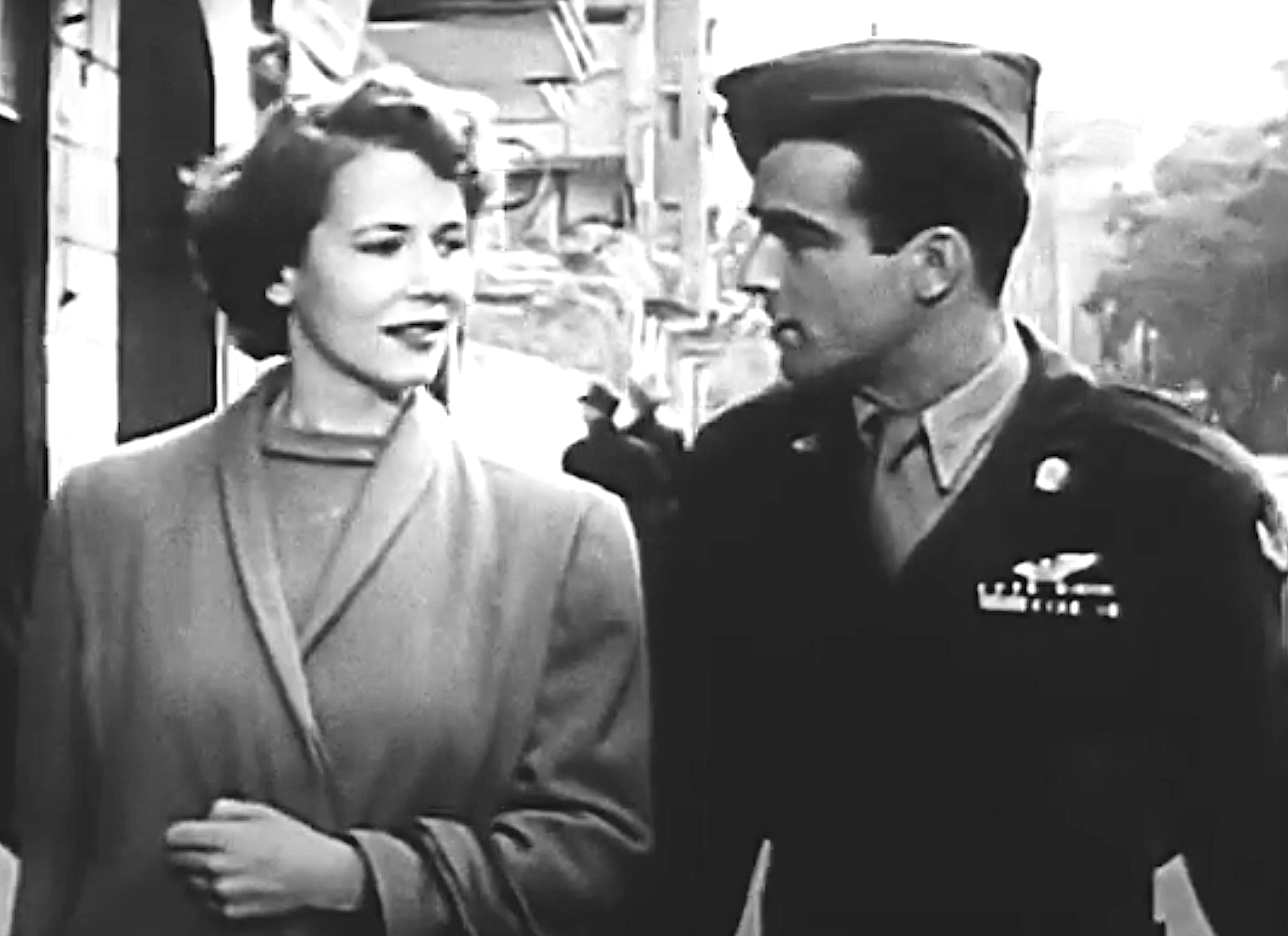
George Seaton’s film, The Big Lift, released in 1950, starring Montgomery Clift, saw Hollywood dramatize the struggles of post-war Berlin and the Berlin Airlift. Marking the 75th anniversary of the film, Film Quarterly has published an excerpt from Joseph Pearson's new book, Sweet Victory: How the Berlin Airlift Divided East and West. The excerpt, "The Hollywood Version: Cold Wars On and Off Set in The Big Lift (1950)," details how, in May 1949, Berlin became an enormous set for a film about the Berlin Airlift.
Film Quarterly: The Big Lift celebrates its 75th anniversary. What drew you to rewatch a largely forgotten Cold War film?
Joseph Pearson: I approached The Big Lift as a cultural historian while working on my book Sweet Victory, about the 1948–49 Berlin Airlift. I was looking for materials that could give us a sense of the everyday history of what was the world’s largest air relief operation. As it turns out, this film is one of the major documents. Only a handful of professional actors were involved, and the historical event itself becomes a majestically detailed backdrop to what is, at times, a rather formulaic plot. Of course, one has to be careful: the film was made with the cooperation of the U.S. military and was intended as propaganda. Still, it allows us to watch a slice of the Airlift as it happens—planes delivering coal, flour, and even candy and chocolate to a city that Stalin wanted to suffocate.
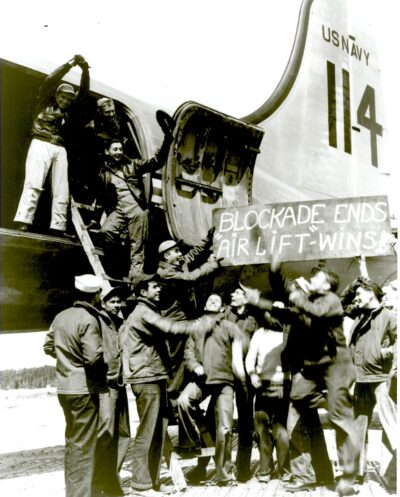
FQ: Your research draws heavily on untapped archival materials from the Margaret Herrick Library. What are some of the things that the production files, press books, and censorship records told you that informed your work?
Joseph Pearson: I probably shouldn’t have been astonished by how closely the studio worked with the U.S. military on the production, or by the extent to which the film was later maximized for military recruitment. The press books are also full of delightful anecdotes about the making of The Big Lift. These, along with letters and other primary documents in the collections, allowed me to make comparisons with what Montgomery Clift’s biographers have said about his lead role in the production. Taken together, the film and the production files offer a view both into both the wider political significance of the production, and into the private lives of the actors, as the press material humanises them and their experiences off set in Berlin.
FQ: Montgomery Clift, however, appears in your account as a disruptive force.
Joseph Pearson: There’s a struggle over Clift’s memory and reputation. Patricia Bosworth’s 1978 biography portrays him as a difficult narcissist. On the other hand, Clift’s family has worked hard to rehabilitate his image—a project taken up most explicitly in the 2018 documentary Making Montgomery Clift, directed by his nephew. I was grateful to be able to triangulate, and even quadrangulate, these accounts with other sources in the Margaret Herrick Library, and I came away thinking that Bosworth was not so far off the mark.
FQ: George Seaton’s encounters with Soviet obstruction while filming in Berlin feel theatrical. What do these episodes reveal about the Cold War as something performed in public space, not just fought through policy or military planning?
Joseph Pearson: I would have liked to have seen a film about the making of The Big Lift, recording the Soviets as they disrupted scenes filmed near their zonal boundary. They found some creative ways to make a mess of things. Berlin was often described as a Schaufenster, or shop window, for the competing ideologies of East and West, and that was true not only of the very public struggles over filming The Big Lift but also of the cultural performances sponsored by the great powers during the Airlift. There is more about this in Sweet Victory, but the British brought Cambridge students to stage Shakespeare plays, and the Soviets imported the Red Army Choir to perform in bombed-out squares. One could say that the conspicuous, on-location filming of The Big Lift was one of the United States’ own contributions to this theatrical Cold War.
We invite you to read Joseph Pearson's, "The Hollywood Version: Cold Wars On and Off Set in The Big Lift (1950)" for free online for a limited time.
Print copies of Film Quarterly's Winter 2025 issue (issue 79.2), in which Pearson's piece is published, as well as other individual issues of FQ, can be purchased on the journal’s site.
To ensure ongoing access to Film Quarterly, please ask your librarian to subscribe and/or purchase an individual subscription.
About the Author
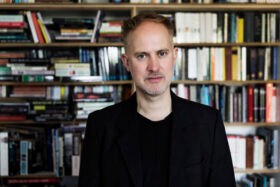
Joseph Pearson is a writer and cultural historian, author of Sweet Victory: How the Berlin Airlift Divided East and West (Pegasus Books, 2025). His work has appeared in The Guardian, Lettre International, and the New England Review. In Berlin, he is the House Essayist at the Schaubühne in Berlin, and lectures at the Barenboim-Said-Akademie and New York University. (Photo credit: Gianmarco Bresadola)