How Brazilian Cinema Captured the Moment: A Q&A with Gerd Gemünden
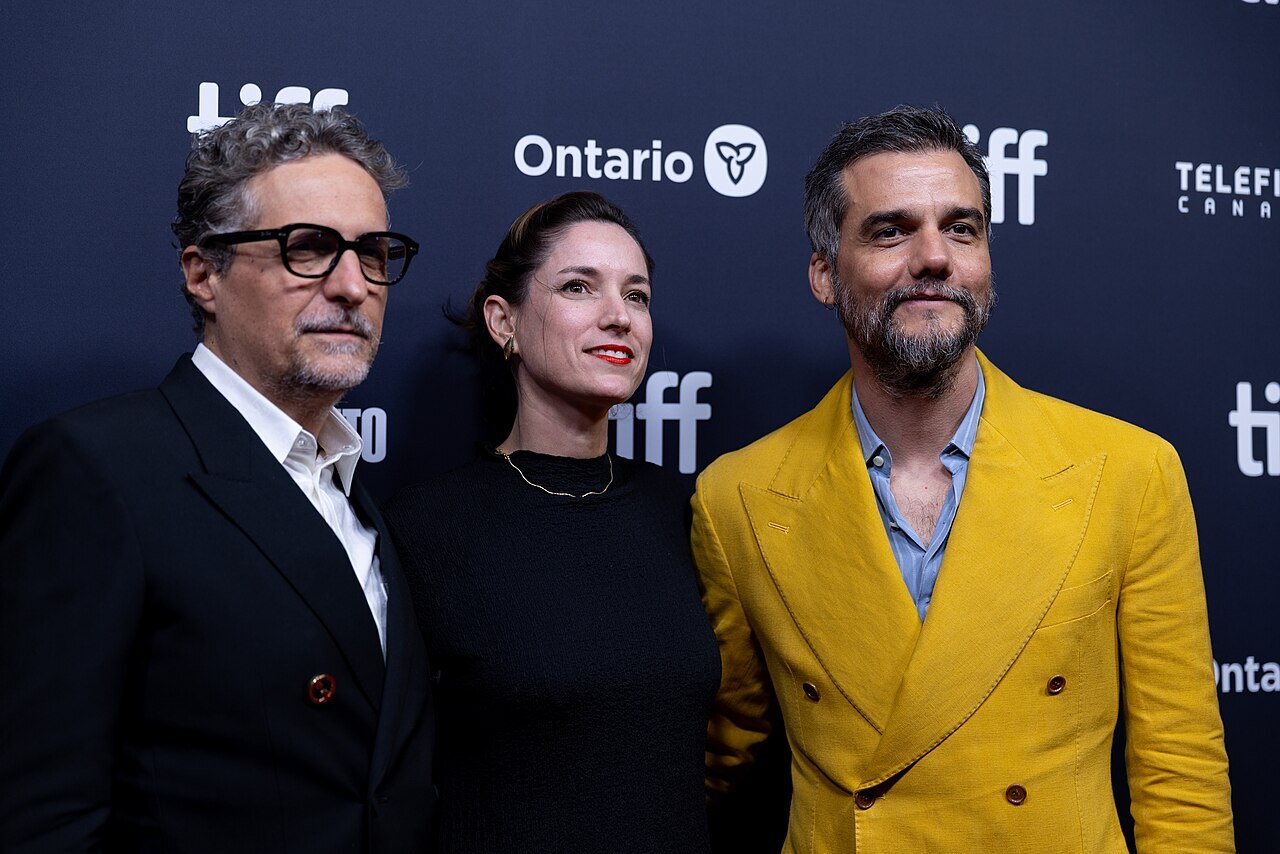
Kleber Mendonça Filho’s fourth feature, The Secret Agent/O Agente Secreto, is the latest film from Brazil to be in the running for an Academy Award. It is nominated in four categories: Best Picture, Best Actor (Wagner Moura), Best International Film, and Best Casting (Gabriel Domingues), the first time this category is included in the race. Only last year, Walter Salles’ drama I’m Still Here/Ainda estou aqui, won an Oscar for Best Foreign Picture, the first Brazilian film to ever win in that category, while Fernanda Torres won a Golden Globe for her role in that film. What is more, both films have also been extremely popular with audiences at home, making them extraordinary back-to-back success stories. We asked film scholar Gerd Gemünden, who interviews director Kleber Mendonça Filho in the current issue of Film Quarterly, to talk to us about the popularity of Brazilian film.
Brazilian cinema has always produced outstanding works, from Central Station/Central do Brasil (Walter Salles, 1998) and City of God/Cidade de deus (Fernando Meirelles & Kátia Lund, 2002) to Elite Squad/Tropa de Elite (José Padhila, 2007), but these were more isolated events. What explains this recent sustained boom in Brazilian cinema?
To put it simply: Talent, hard work, and a solid infrastructure. The recent success stories are not exceptions but the result of continuous efforts. Over the last two decades, Brazil’s film industry, while traditionally centered in the Southeast, has diversified, with funds now available in Pernambuco, Brasilia, and the Amazon region. And there is ample, if competitive public funding available. In 2020, for example, some 20 Brazilian (co-) productions were part of the Berlin Film Festival. At that festival, Kleber Mendonça Filho noted that this was “one of the best moments in the history of Brazilian cinema.”
There was a downturn when Jair Bolsonaro became president in 2019; he slashed funding in the audiovisual sector by almost half and threatened to shut down the national film agency if it did not “vet” its projects in line with his ideology. (He was defeated by Lula in 2023 and currently serves a 27-year prison term.) As a result, during the four years of his presidency the number of Brazilian productions declined rapidly.
Now, in 2026, the industry is rebuilding and gaining strength again. At this year’s Berlinale, Brazil was back with 10 (co-)productions, among them Karim Aïnouz’ English-language Rosebush Pruning, which was in contention for a Golden Bear, and Feito Pipa/Gugu’s World (Allan Deberton) won a Crystal Bear in generation Kplus. And of course, The Secret Agent has had a remarkable run, winning numerous international awards while breaking audience records at home.
From the Brazilian reception of both I’m Still Here and The Secret Agent it becomes clear that the success of these films is very much a point of national pride. The prestigious awards they have received are celebrated almost like a victory at the World Cup. How come?
No matter what these films are about and or what stories they tell, their existence is seen as an act of overcoming adversity and of prevailing under difficult political circumstances. They are a victory for democracy. And the politicians who were in the opposition, or in jail, during the Bolsonaro years, are now the first to claim that victory. The minister of Culture, Margareth Menezes, attended the Cannes premiere of The Secret Agent. After the success at that festival, Kleber Mendonça Filho was invited to meet President Lula in Brasilia, the nation’s capital, just like Walter Salles was last year. This honor has also been bestowed on filmmakers such as Anna Muylaert, Petra Costa, and Gabriel Mascaro, who have all been recognized internationally in recent years.
Why do films like I’m Still Here and The Secret Agent resonate with US audiences?
Both films are set during the time of the Brazilian dictatorship, and the repression and violence they depict clearly speak to our present moment in the United States and elsewhere. While at some point such films would have been seen as merely compelling historical dramas, they now resonate with what people are experiencing here, from state-enforced violence in the street and targeting of perceived enemies of the state to attacks on academia and freedom of the press. And both films are built on stellar performances by outstanding leads, Fernanda Torres and Wagner Moura, respectively. Moura is well-known to US audiences from the Netflix series Narcos, while in The Secret Agent he excels in the role of a scientist on the run from hired hitmen. It also helps that he is fluent in English and has been showing his charm and wit on the talk show circuit. I’d say he is a serious contender for Best Actor.
We invite you to read Gerd Gemünden's interview with The Secret Agent's director, Kleber Mendonça Filho, "When the Fantastic Meets Reality: An Interview with Kleber Mendonça Filho," as well as other articles in FQ's Spring 2026 issue, for free online for a limited time.
Print copies of Film Quarterly's Spring 2026 issue (issue 79.3), in which the interview appears, as well as other individual issues of FQ, can be purchased on the journal’s site.
To ensure ongoing access to Film Quarterly, please ask your librarian to subscribe and/or purchase an individual subscription.
About the Author

Gerd Gemünden is the Sherman Fairchild Professor in the Humanities at Dartmouth College, where he teaches in the Departments of Film & Media Studies and German Studies. The author of numerous books and essays, he is currently working on a book on O som ao redor/Neighboring Sounds, the first film by Kleber Mendonça Filho.