Q&A with Claire Zimmerman, Editor of the "Journal of the Society of Architectural Historians"
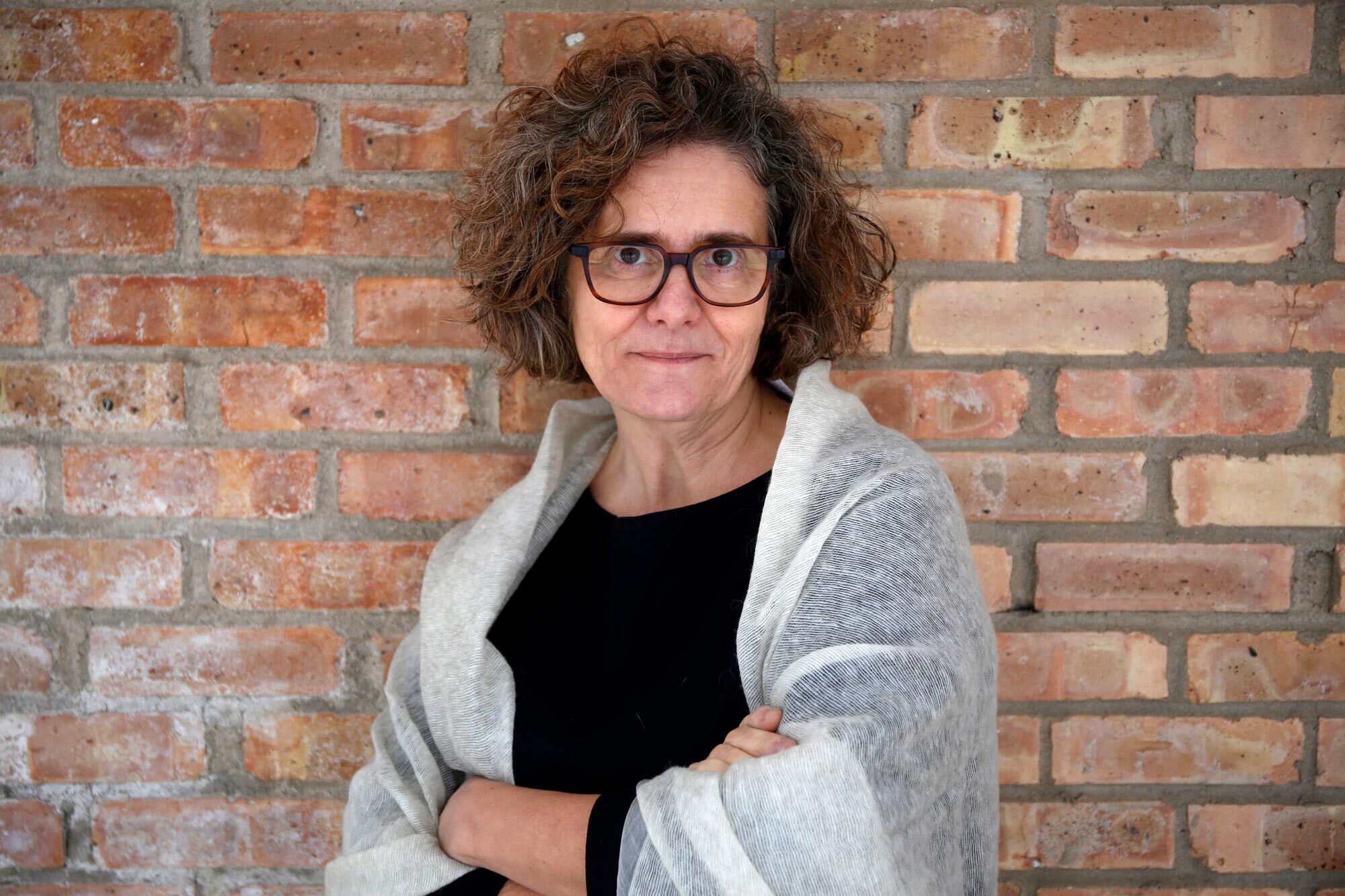
Claire Zimmerman assumed the Editor-in-Chief position of the Journal of the Society of Architectural Historians (JSAH) in January 2026, after serving as the Associate Editor for the journal for the past two years and following the completion of Alice Tseng's editorial term in December of last year. Zimmerman is Professor of Architecture at the University of Toronto, where she directs the PhD program in Architecture, Landscape, and Design. With the publication of JSAH‘s first issue under Zimmerman's purview (issue 85.1) and the upcoming conference of the Society of Architectural Historians in Mexico City, we thought it a good time to ask her more about herself and her plans for the journal.
What are your research interests and areas of expertise?
My first serious research project began with a simple set of questions. How was it that western architecture—a field that prided itself on artistry, authorship, and elite culture—adapted to 19th– and 20th century modernization, with its increasing emphasis on mass culture through industrial production and mass circulation? That project first focused on photography of buildings as a contact zone and a conflict zone between modern architecture and what I generally call “protocols of modernization.” Both photography and modern architecture inflected around the other medium in the development of a powerful marketing tool for architects competing for notoriety and clients in commercial environments. But underpinning this project was a longstanding interest in mass production and the built environment more generally, that I didn’t initially know how to frame (I considered a dissertation on Hannes Meyer, and one on “remote architecture,” but I landed on photography).
After my PhD, I grew increasingly interested in industrialization and the effect that mass production—assembly line production in particular—had on architecture between the nineteenth and twentieth centuries. This led to a second major project, on the prolific industrial architects of the US auto industry before WWII. I wound up focusing on one firm in this project, because I was interested in the thin line between “architecture” and “building.” What is this distinction? The firm Albert Kahn Inc, the subject of two recent books (one that I co-edited, another that I authored), sought to maintain its identity as an architecture firm, even as it strayed ever closer to the profession of engineering, or so-called “mere building.” I was drawn to industrial architecture because it defined, initially, the place where a lot of people worked, and where they were supposed to find “good building.”
What drew you to the editorship of JSAH?
Completing a major phase of work in 2023, I was ready for a new challenge. I also needed time and space to survey the landscape of our fields. I have been a member of SAH for many years, and this seemed like a time when I could give back to the field, gesturing to all the excellent editors who have helped me over the years by paying the debt forward, as it were, to contributors to the JSAH, at whatever career stage.
One of the things I like and admire about the JSAH is its effort to pitch a big tent, and to include material from the span of human history, from geographies and time periods that are distant from the Society’s home base in Chicago. There is an agnosticism in the journal’s stated remit, about “correct” ways of writing history. I believe that such skepticism, about any correct theory or method, is crucial for the development of new work in any field.
What are your aims for the journal?
The JSAH is a big ship, and it doesn’t turn on a dime. I want, first, to be adequate to the demands of the job—to maintain the Journal’s quality, to turn out issues on time, and to make sure their contents constitute meaningful discourse in our field. There are now a number of special features in the journal, including Field Notes, Findings, and Roundtables, in addition to three different kinds of reviews (books, exhibitions, and multimedia outputs). Of these, Field Notes go back several decades; Findings and Roundtables date to 2007 and 2017 respectively. Maintaining all of these is no small task.
In addition, I would like to continue the “Curator’s Voice” series that began with Patricio del Real, and I am working with our current exhibition review editor, Vanessa Grossman, to find the right way to do that. Both Vanessa and I are acutely conscious of how important exhibitions are to the shaping of knowledge about architecture, buildings, and cities. Both of us worked closely with Jean-Louis Cohen, a firm believer in the exhibition as a place to develop ideas and share knowledge.
In terms of specific issues that the journal might address, I would like to continue sponsoring roundtables and editing articles that probe the limits of the field; this might include greater focus on topics like Indigenous environments, architecture beyond human construction, sustainability, disability studies, and neglected geographies or time periods.
In response to the semiquincentennial of the US, I am working with Associate Editor Sheila Crane on a special issue on American democracy and JSAH, a crucial issue at the present moment that all academic fields might address. We have ambitions for this special issue, which provides an opportunity for contemporary Americanists to reflect back on the journal’s history of work.
Other than these efforts at continuity, I hope to encourage greater awareness of the trajectory of the journal over its lifespan. Studying back issues myself allows me to pull some of these past threads forward to readers, to be taken up in the future.
Meet Claire Zimmerman in person at the SAH conference in Mexico City (April 16-19, 2026)
Thursday, April 16, 1:30-3:00 pm
Meet the Editors Roundtable
Friday, April 17, 1:30-3:00 pm
Roundtable: Editors and Automata: Academic Journals in the Age of Information Automation
We are pleased to make Claire Zimmerman’s inaugural issue, including her editorial, "Historical Activity," free to read online for a limited time. To purchase a print copy of this issue (85.1) or previous issues, please visit our shopcart page.
For ongoing access to JSAH, ask your library to subscribe and/or become a member of the Society of Architectural Historians (SAH) to receive access to JSAH, as well as member grants and fellowships, annual conference opportunities, and online academic resources.