"Mexican Studies/Estudios Mexicanos" Announces the 2024–2025 Christian Zlolniski Award Winners
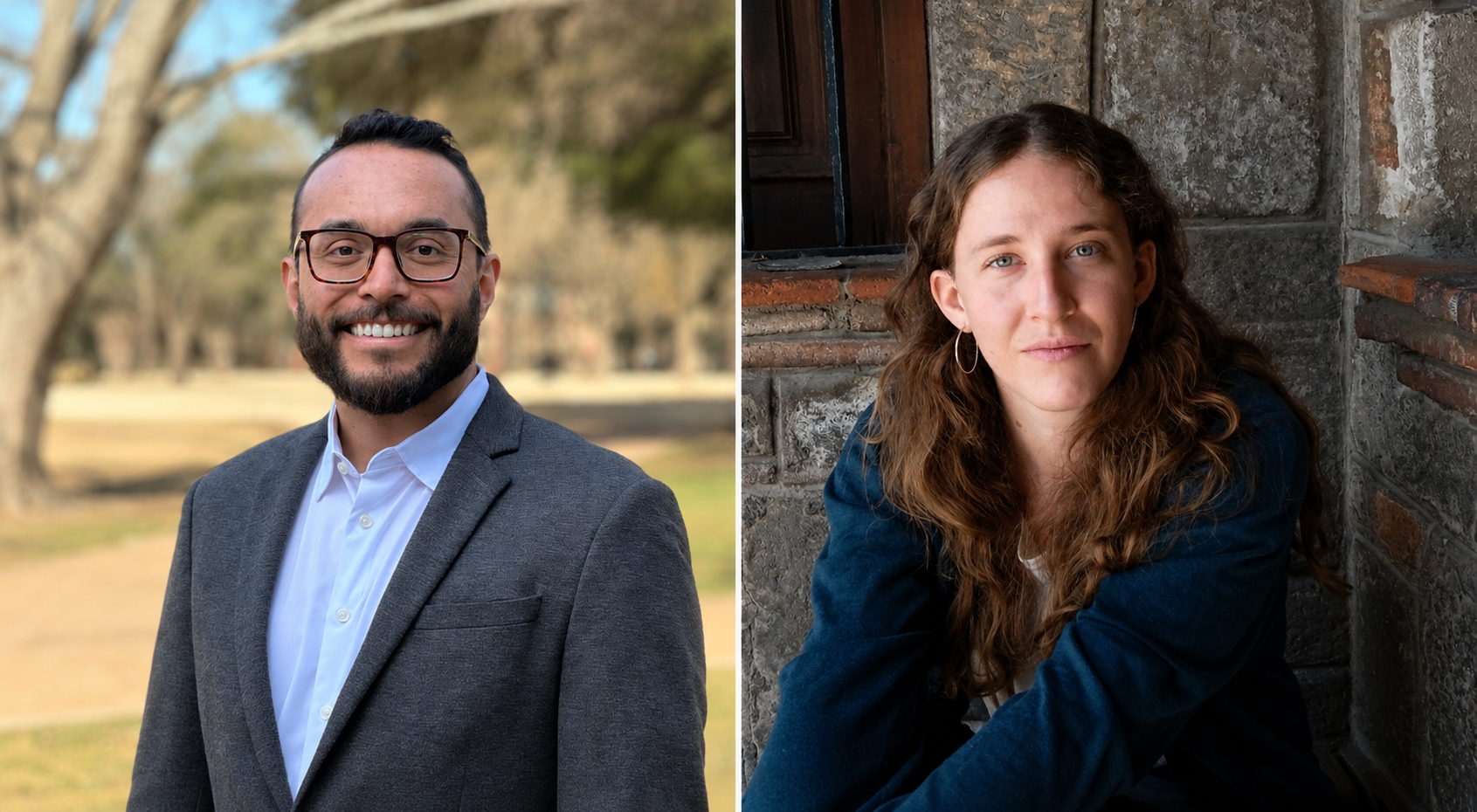
UC Press and Mexican Studies/Estudios Mexicanos (MSEM) are pleased to announce the recipients of the 2024–2025 Christian Zlolniski Award for Best Early-Career Article published in MSEM. The annual award recognizes outstanding contributions in the multidisciplinary field of Mexican studies for the originality of their topics, theoretical perspectives, and methodological approaches. In addition to the prize for best article, the editorial committee also recognizes one honorable mention.
First Place
The 2024–2025 Christian Zlolniski Award for Best Early-Career Article has been awarded to Ricardo Álvarez-Pimentel for the article, “Mexican Catholic Women and Their Gendered Racial Politics: The Juventud Católica Femenina Mexicana (JCFM), 1926–1939.”
The committee has selected Álvarez-Pimentel’s article as the winning entry due to the original nature of the primary sources underpinning the study’s analysis and also because of the valuable scholarly dialog that the piece conducts with well-established areas of research relating to rural education and religious conflict in postrevolutionary Mexico. In so doing, the article puts forth a significant contribution to the historiography of Catholicism and social movements in the country. One primary aspect of this study’s value lies in its illustration of how the Juventud Católica Femenina Mexicana fomented the mobilization of conservative Catholic women who implemented pedagogical campaigns for rural Indigenous and Mestiza females in a highly prescriptive manner that promoted a non-liberal perspective. With such a project, rural women’s individual material aspirations were discouraged in favor of a perspective requiring their spiritual sacrifice for the nation, ultimately reproducing familiar racial and cultural hierarchies. This study’s examination of understudied sources such as pedagogical materials and Catholic youth magazines illuminates how some elite women’s vigorous activity in the public sphere in the 1920s and 1930s took the form of experimentation with ideologies contrary to liberalism and secularism.
Álvarez-Pimentel reflected on the recognition:
“Given the quality of scholarship published in Mexican Studies/Estudios Mexicanos, I am incredibly grateful and humbled to be receiving this award. I would like to thank my colleagues and anonymous peer reviewers for helping me write the best version of this article.”
Honorable Mention
The committee also awarded an honorable mention to Bárbara Pérez Curiel for the article, “Violence, between Realism and Tragedy in Auteur Mexican Cinema: Sin señas particulares (2020) by Fernanda Valadez.”
The committee found that Pérez Curiel’s article is deserving of the honorable mention due to its innovative intervention with respect to contemporary Mexican cinema’s mediation of narco violence. Pérez Curiel proposes that after nearly two decades of Mexican auteurs’ implementation of realist aesthetics to criticize the impact of drug-related atrocities, director Fernanda Valadez’s film, Sin señas particulares (2020), constitutes an alternative approach. Deftly engaging theories of realism and tragedy, Pérez Curiel argues that the film refuses a detailed visualization of violence and affirms a denunciatory position centering the experiences of victims. In particular, Pérez Curiel illustrates how through the film’s tragic aesthetics, Valadez negates one of the fundamental premises of the state’s discourse on narco violence: the mutual exclusivity of the perpetrators and government actors. Moreover, the article skillfully argues that the film makes a significant break with recent auteur cinema on this topic in the way that it conveys the effects of violence. It does this by showing violence as a condition of an unresolved tension that inheres in the consciousness of those—often rural and racialized—Mexicans who must contend with ongoing atrocities and their aftermaths.
Pérez Curiel shared:
“I am very grateful to receive this recognition. It is especially rewarding to see critical reflections on the representation of violence in Mexico resonate with a wider scholarly community.”

We invite you to read both award-winning articles, “Mexican Catholic Women and Their Gendered Racial Politics: The Juventud Católica Femenina Mexicana (JCFM), 1926–1939” and “Violence, between Realism and Tragedy in Auteur Mexican Cinema: Sin señas particulares (2020) by Fernanda Valadez” for free online for a limited time.
Print copies of Mexican Studies/Estudios Mexicanos's issues 40.2 and 41.2, in which the articles appear, as well as other individual issues of MS/EM, can be purchased on the journal’s site.
For ongoing access to Mexican Studies/Estudios Mexicanos, please ask your librarian to subscribe and/or purchase an individual subscription.