Hollywood's Last Golden Age
by Thomas Schatz, author of Power Surge: Conglomerate Hollywood and the Studio System's Last Hurrah
Coming out of this year’s Academy Awards, it’s hard to ignore the fact – and the overriding irony – that the two top Oscar-winning films of 2025, One Battle After Another and Sinners, were from Warner Bros., a studio that’s about to be swallowed up by the Ellison dynasty and merged with Paramount Pictures. Shades of Disney-Fox and Amazon-MGM, yet another legacy Hollywood studio is about to go by the boards. And the Motion Picture Association will again adjust its lineup of designated Hollywood studios, after adding Netflix and removing Fox in 2019 and adding Amazon MGM in 2024.
This shakeup marks a sea change for the US movie industry, which had been ruled by the same half-dozen studios since the classical era. Indeed, their survival since then has been simply astounding, as they withstood one lethal threat after another, from the Supreme Court’s antitrust rulings to the successive onslaughts of commercial television, cable, VCRs and DVDs. But the one-two punch of streaming and the pandemic proved to be too much, forcing the weaker studios either to consolidate with one another or to submit to a buyout by the likes Amazon or Netflix – tech giants with little interest in Old Hollywood’s theater-driven business model.
Which brings us to another irony – that the legacy studios were stronger than ever in 1990s and early 2000s, enjoying historic success on a global scale. What’s more, that success came during an era of rampant consolidation that actually worked in Hollywood’s favor. Spurred by Reagan-era economic policies and the FCC deregulation campaign, the US media industries were swept up in a succession of media-and-acquisition (M&A) waves that began in 1989 with the Time-Warner and Sony-Columbia mergers, and that culminated in 2004 with the launch of NBC Universal (by GE, the owner of NBC). By 2004, the so-called Big Six media conglomerates owned all the major studios, all the broadcast networks, and some 80 percent of the top cable channels. They dominated other media industries as well, but film and TV ruled the roost. And the conglomerates’ crown jewels were their Hollywood studios, while their television holdings carried the freight, paid the bills, and provided pipelines for studio-produced content.
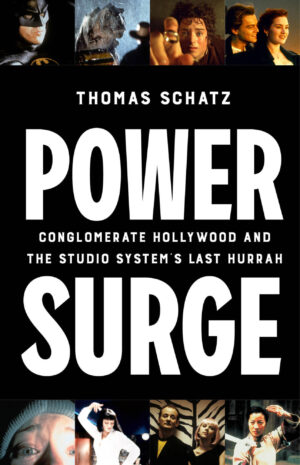
I chart this era in my forthcoming book, Power Surge: Conglomerate Hollywood and the Studio System’s Last Hurrah, which covers the tumultuous and wildly successful 15-year span from 1989 to 2004. This includes a vital and unexpected aspect of the system’s renewal – and what makes this a last hurrah rather than merely the studios’ last stand – which was the onset of an indie movement just as conglomeration took hold. The ideal product for the studios and their parent companies was blockbuster hits like Batman, a 1989 Warner picture that returned over a billion dollars from all markets within a year of its release. But 1989 also saw a remarkable run of low-budget, offbeat, auteur-driven hits topped by sex, lies, and videotape and Do the Right Thing, which sparked an indie movement that was quickly annexed and amplified by the Hollywood powers. Sony started that trend with Sony Pictures Classics in 1992, and Disney followed with the buyout of Miramax in 1993. By the mid-1990s, five of the six major studios had at least one indie counterpart, and by the early 2000s this “Indiewood” contingent comprised over a dozen conglomerate-owned indies.
The conglomerate era peaked in the early aughts, when Hollywood went on an absolute tear. Theater admissions in the US spiked to their highest level in a half-century from 2002 to 2004, and all sectors were thriving – the major powers with their Harry Potter, Lord of the Rings, Shrek and Spider-Man franchises; Indiewood with innovative gems like Lost in Translation (2003) and Eternal Sunshine of the Spotless Mind (2004); and the true independents with arthouse (and grindhouse) films and occasional runaway hits like My Big Fat Greek Wedding (2002), Fahrenheit 9/11 (2004) and The Passion of the Christ (2004). Not only was the movie industry booming, but it was striking a balance between art and commerce that hadn’t been seen since its vaunted Golden Age.
That equilibrium didn’t hold, however. After the dot-com bust and the consolidation of the Big Six, the studios retrenched, doubling down on the traditional theater-driven business and their blockbuster franchises. They fixated, too, on the exploding overseas markets, which began to far outpace the domestic box office in 2004 and couldn’t get enough of Hollywood’s franchise fare. The conservative turn paid off, as the studios reaped record profits on their high-stakes franchise films, which put the squeeze on midrange pictures and the Indiewood contingent, while the independent sector steadily imploded. The M&A action also stalled after 2004, as 15 years of churn and profound change gave way to nearly 15 years of relative calm. The Big Six grew more ruthlessly commercial with each passing year, as the routine risk-taking of the earlier years was stifled and the major studios’ grip on the industry became a veritable stranglehold. While business was better than ever, however, movies just kept getting worse – or less innovative and interesting, at any rate, with the studios’ release slates increasingly overrun by franchise fodder.
The onslaught of streaming would eventually roust the Big Six from their lucrative stupor, leading to the disarray discussed at the outset. I chart those developments in my epilogue, which covers post-2004 Hollywood in some detail. But my primary focus in Power Surge is the formative phase of Conglomerate Hollywood from 1989 to 2004, which stands in sharp contrast to the periods that preceded and followed it in terms of the structure and operation of the industry and the range and quality of its films. I argue, in fact, that it stands as the most important period in Hollywood annals since the collapse of the studio system a half-century earlier, and the first that warrants serious consideration as another golden age.
About the Author

is Professor Emeritus in the Department of Radio-Television-Film at the University of Texas at Austin. He is author of The Genius of the System: Hollywood Filmmaking in the Studio Era, ranked by The Hollywood Reporter as one of the twenty greatest film books.