Rolling Stone Magazine and the Bay Area
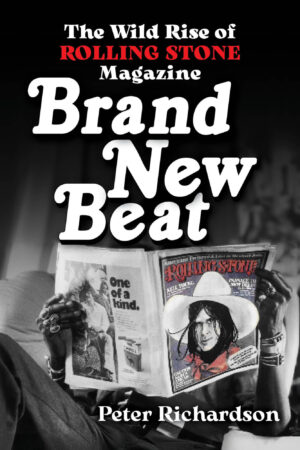
by Peter Richardson, author of Brand New Beat: The Wild Rise of Rolling Stone Magazine
The earliest years of Rolling Stone magazine tell us a great deal about the media ecology of that period. Immediately before the magazine's inception in 1967, national media outlets were reporting intensively on the so-called Summer of Love in San Francisco. One might even say that the Summer of Love was a creature of the media. The more these national outlets featured San Francisco hippies, the more young people set out for Haight-Ashbury to join the party.
Though intense, that national media coverage missed important aspects of what would soon be called the counterculture. Much of the mainstream coverage focused on drugs, politics, and general weirdness. Most of it was disparaging. Very little of it explored how San Francisco hippies were revolutionizing rock music as well as its staging, promotion, marketing, and consumption. The combination of long jams, light shows, drug use, psychedelic posters, FM radio, and freestyle dancing contrasted sharply with the three-minute songs, identically clad musicians, and screeching teenyboppers on display when the Beatles played Candlestick Park in August 1966.
A few journalists clocked those changes and their significance. Rolling Stone cofounders Jann Wenner and Ralph J. Gleason believed that the counterculture and its music were animating a social revolution already in progress. Gleason, a seasoned music columnist at the San Francisco Chronicle, and Wenner, his 21-year-old protege, had reported on the Free Speech Movement in Berkeley and worked for Ramparts, the muckraking San Francisco magazine and its spinoff newspaper. When it came to the local scene, Gleason and Wenner thought the mainstream media outlets were missing the point. In that sense, their magazine began as an act of what we would now call media criticism.
Unlike Ramparts, Rolling Stone attracted a healthy flow of advertising revenue. Music labels quickly discovered that its readers bought albums--lots of them. The ad revenue fueled the magazine's growth and permitted it to cover bigger stories, including the lethal mayhem at the Altamont concert and the Manson Family murder trial in Los Angeles. On the strength of those stories, which appeared less than three years after its debut issue, Rolling Stone landed its first National Magazine Award. Rolling Stone was no longer seen as a mere cheerleader for the counterculture and its music. Rather, it developed a reputation as one of the counterculture's shrewdest observers.
Rolling Stone was quickly recognized as the nation's finest rock magazine, but it was always more than that. In fact, its chief writer during this period didn't cover music at all. Hunter S. Thompson, an Air Force veteran who lived in the Rocky Mountains, was famous for his Gonzo blend of political and social commentary, satire, hyperbole, invective, and hallucination. When Thompson brought that style to bear on the presidential campaign trail in 1972, he produced what one political strategist called the least factual and most accurate account of the race. Annie Leibovitz's photographs and Ralph Steadman's ink-splattered illustrations, which matched Thompson's fevered imagination, were an indispensable part of the magazine's success.
Rolling Stone also published Timothy Crouse's study of the campaign press corps, which eventually appeared as The Boys on the Bus. Even more than Thompson, Crouse pulled back the curtain on the press corps, its internal hierarchy, and what passed for "objective journalism." Both Crouse and Thompson revealed that these dry, mindlessly neutral dispatches didn't reflect what skilled journalists knew to be true about the candidates and their campaigns. In contrast, Rolling Stone's writers were free to tell the truth as they understood it. Given the mainstream media's spotty record on the war in Vietnam, the dangers of marijuana, and the nature of the counterculture, many young readers were drawn to this alternative source of political news and commentary.
In the wake of that campaign coverage, there was no going back to business as usual. Indeed, Thompson's dispatches snuffed out Theodore White's award-winning campaign franchise. Beginning in 1960, White offered novelistic accounts of presidential campaigns that cast the winning candidate as a kind of hero. Almost nothing in White's accounts indicated that anything was amiss in American politics. But when the Watergate scandal brought down Richard Nixon shortly after his landslide victory, White looked hopelessly old-fashioned while Thompson seemed prophetic.
Rolling Stone was more than a rock magazine in another way as well. It always ran film reviews, but when New Hollywood emerged as a significant development in American cinema, Rolling Stone expanded its film coverage. Moreover, many of its stories were converted into major American films. Rolling Stone wasn't unique in this respect, but it was exceptional. The Right Stuff, Silkwood, Born on the Fourth of July, and Fear and Loathing in Las Vegas all began in the pages of Rolling Stone. One of the magazine's staff writers, Cameron Crowe, started his own Hollywood career with the screenplay for Fast Times at Ridgemont High. After adding Jerry Maguire and Say Anything to his film credits, Crowe won an Academy Award for Almost Famous, which he wrote and directed. The film, which was based on Crowe's experience at Rolling Stone in the 1970s, was a winning blend of a family portrait, a coming-of-age story, and rock nostalgia.
One veteran observer recently described Rolling Stone as "the journalist voice of its generation." That standing reflected the quality of the magazine's reporting, editing, commentary, satire, media criticism, design, illustrations, and photography. But its ability to navigate the swirling social energies of that period was another important part of its success. Well before Rolling Stone moved its headquarters to New York in 1977, it had created a brand new beat--the rock music beat--which became the seedbed for a generation of music, cultural, and political journalism.
About the Author

is author of Savage Journey: Hunter S. Thompson and the Weird Road to Gonzo as well as critically acclaimed books about the Grateful Dead, Ramparts magazine, and radical author and editor Carey McWilliams. His essays appear in The Nation, The New Republic, the Los Angeles Times, and elsewhere.