Futures Beyond Control
by Jia-Lin Liu, author of Far from the Model Minority: Face, Class, and the Transnational Chinese Families
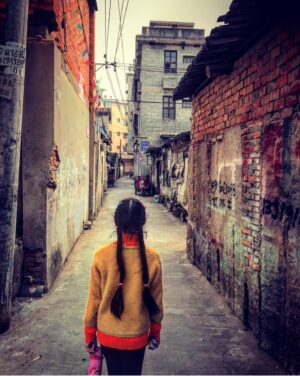
I took this photograph during my fieldwork in Fuzhou, China, in 2019. This is Lily, one of the youngest participants in my book, Far from the Model Minority: Face, Class, and Transnational Chinese Families.
Lily's future was being decided long before she had the chance to decide it for herself.
After her mother, Xiaoling, remarried and immigrated to Spain for work, Lily remained in China under the care of her great-grandparents, Mama Li and Papa Li. The family saw her academic performance as determining her future: if she excelled in school, she could stay in China. If not, she would be sent to Spain to reunite with her mother. Although Lily was an above-average student, the expectations placed upon her were difficult to meet, especially because her family could not afford the private tutoring and educational resources that many of her classmates received.
The adults around Lily all wanted what they believed was best for her, but their perspectives were shaped by their cultural values and lived experiences. Xiaoling regretted not having the opportunity to pursue more education and hoped Lily could one day have a less physically demanding life. At the same time, she—like many others in her community—questioned whether investing heavily in education made sense when many university graduates still struggled to find stable, well-paying jobs. Other relatives believed that, because Lily was a girl, marrying into a financially secure family offered a more practical path than higher education.
Most importantly, in this community, face shaped many of life's most important decisions. For many of the families I came to know, education was not viewed as the most attainable path to gaining face. Instead, immigrating abroad for work was often seen as the more realistic path to improving the family’s social standing.
But Lily had dreams of her own.
She did not want to leave the great-grandparents who had raised her since birth, nor did she want to move to Spain. When I asked her about the possibility, she responded with remarkable conviction: she would "rather die" than leave the place she called home.
Lily's story reminds us that children's futures are often shaped by forces far beyond their control. Like her mother before her, Lily's future was deeply influenced by her family's pursuit of face. After her divorce, Xiaoling felt she had little choice but to remarry and move to Spain in order to restore her family's standing. Years later, Lily's future was being negotiated through those same expectations.
Lily never knew I took this photograph.
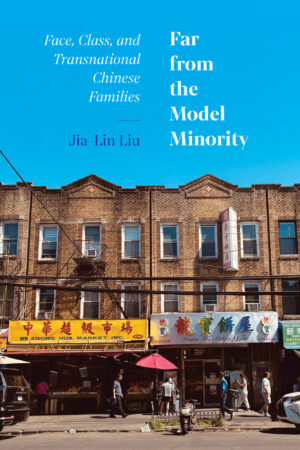
Just a year ago, I reached out to Ms. Li—Lily's aunt and one of my participants—to ask whether I could use it in the book. She graciously gave me permission. Before ending our conversation, I couldn't help but ask about Lily. Had she remained in China? Had life unfolded the way she had hoped?
I was almost afraid to ask.
Ms. Li wrote back to tell me that Lily is now a high school student in China studying photography.
I felt an overwhelming sense of relief and pride. Lily had been able to remain in the place she called home while pursuing something she loves.
I hope to return to Fuzhou one day with this photograph framed and give it to her. More than anything, I look forward to hearing what she sees in it.
About the Author
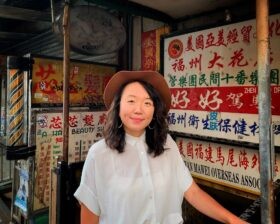
is Assistant Professor at Cal State LA. Informed by her years as a bilingual social worker, her work examines how Chinese immigrant families experience US immigration and education, with attention to social class, culture, and trauma.