“Are You Slow?”: Seven Years with San Francisco's Hit Doctors
by Sarah Brothers, author of Hit Doctors: Care, Harm, and the Art of Survival
David and I met one morning at his new place. He was eager to show it off. After years in a tiny, light-less room in a downtown SRO, he had received Section 8 housing in a quiet, garden-filled neighborhood on the edge of San Francisco. A long, newly planted bed of succulents stretched from the sidewalk to his front door. I suspected he had planted them himself, and I was right. We spent the morning drinking coffee and eating cherries while listening to an audiobook of Gibbon's Decline and Fall of the Roman Empire, which David loved for the narrator's crisp diction. “People don't talk like that anymore!” he exclaimed. “Ah, that cadence.”
Later, we took a bus downtown to his methadone clinic. He had stopped injecting drugs when he received housing. On the way, we talked about this project. David asked me what the difference was between ethnography and ethnicity, and I tried to explain that what we were doing together was ethnography. It felt awkward and small to describe a six-year relationship as a research method. David frowned, then asked, with a gentle dig: “Are you slow? Shouldn't you be done by now?”
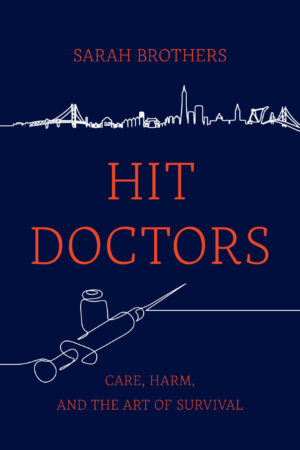
He had a point. The impetus for my book, Hit Doctors: Care, Harm, and the Art of Survival, began back in 2010. I was attending community college and working as a site supervisor at a San Francisco syringe exchange, and I could not find some of what I was witnessing in the academic literature. This literature mattered because it shaped how new volunteers saw the people we served.
As an undergraduate at UC Berkeley, I began a study of people who exchanged syringes on behalf of others, and in one of my first interviews I met Matt, a frail older man, very sad and kind, with a doctorate in the environmental sciences. He cared most about protecting creeks. After he came out as gay, he lost his family, fell into a depression, lost his job, and started injecting drugs. Now he provided sterile syringes to his entire extended network, trying to protect them from infection. Still getting my bearings as an interviewer, I nervously asked what else he did for people. He replied, with more confidence than he had shown to that point: “Well, I'm a doctor, actually.” He injected other people for compensation. He was quite good at it, he said, though the work wasn't always enjoyable, because his clients were so annoying.
I added questions to my interview guide, and I found that serving as what people called a hit doctor was common and complex. I extended the study through my PhD, interviewing eighty people who injected drugs, thirty-six of whom served as hit doctors, and conducting longitudinal fieldwork from 2013 to 2020 with additional fieldwork in 2021 and 2024.
I found many of the people I spent time with to be skilled practitioners. They developed anatomical knowledge, standardized practices, and held ethical lines. I refer to this as uncredentialed expertise. It is a form of expertise that emerges through necessity, develops through embodied practice, and operates entirely outside professional institutions, addressing needs those institutions exclude or criminalize. Hit doctors’ expertise acted directly on other people's bodies, with life-or-death stakes, legitimated by nothing but trust. It had its limits. Even the most skilled providers missed veins and struck arteries. They practiced without sterile conditions, oversight, or recourse.
I did not set out to study the overdose crisis. When I began, the opioid epidemic was still subtle, faintly on the periphery. Then, halfway through my fieldwork, fentanyl arrived and overdoses spiked. I was still working as a syringe exchange site supervisor when a woman overdosed outside our door one summer afternoon. A week later, four separate people ran the long blocks from the civic center for naloxone refills because so many people around them were overdosing. The people I was writing about were suddenly facing much harsher stakes, and the book changed with them. It became, in part, an account of what a poisoned drug supply did to their expertise and to the people who practiced it.
Through all of it, participants carried this project as much as I did. They vouched for me with their clients and scheduled my visits with tact. They fed me, reviewed my findings, and checked on me as much as I checked on them. For years my messages read: “How are you? When do you graduate? When are you coming back?”
I did not have a satisfying answer for David that afternoon. But working slowly meant I was still around, all those years later, for that morning of weak coffee by his garden, David housed and well. I got a glimpse of what everyone in this book deserved to hold, if not forever, then for a time.
Being slow also meant staying past the happy endings. Too many of the people who taught me died before I could check in with them, read them their quotes, or ask whether they agreed with how I wrote about them. What remains is the book. It carries a smudge of what they built and what they knew, and mornings like David’s: the cherries, the cadence, a garden he planted himself.
About the Author
is Assistant Professor of Sociology at Penn State University.