What Food Justice Gets Wrong and How to Build a Better Movement
By Hanna Garth, author of Food Justice Undone: Lessons for Building a Better Movement
During the early 2000s there was a widespread turn toward eating “real food” in the US and many other places across the globe. This “real food turn” grew out of a widespread surge in popular media and academic work on the problems with our global industrial food system, the pitfalls of diets filled with processed foods, and a push toward eating food that “grew in the ground or had a mother.”
At the same time the media, scholars, and federal level policies turned our attention to inequities in the food system which were often juxtaposed with the obesity “crisis.” Concern over “food deserts” and rising rates of obesity and obesogenic diseases, motivated different groups of activists to try to do something about this problem. These two converging narratives gave rise to a burgeoning food justice movement.
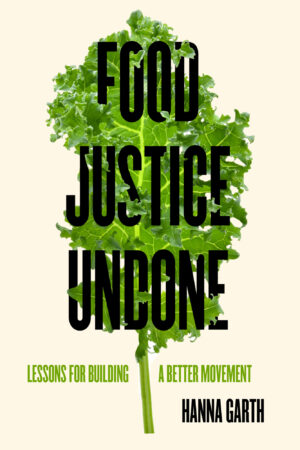
My new book, Food Justice Undone: Lessons for Building a Better Movement, examines this growing food justice movement in South Central Los Angeles. As I began working on the book, I hoped to document a radical, grassroots movement comprised of South Central residents fighting for justice in our food system.
I was surprised and disappointed to discover a very different reality.
As I reveal in the book, food justice has been mostly unsuccessful at increasing access to healthy food in South Central. One key issue was that the food justice activists, who mainly came from outside of the area, did not understand the everyday realities that South Central families face. Rather than use time and resources to better understand the core of the problem, many activists felt pressure to produce tangible results. So, they forged ahead with interventions based on assumptions about what these community members ate and what they needed.
What guided their assumptions and their actions? How was this group of well-meaning outsiders able to leverage hundreds of thousands of dollars to create ineffective, marginally effective, or damaging projects in South Central? To understand these questions, I draw on anthropological theories of power to reveal how the dynamics of race and whiteness have shaped the food justice movement.
Cooking demonstrations came up a lot in my research. In one example, Melissa, a recent MA graduate, was tasked with conducting a cooking demonstration for a group of South Central middle school parents. The organization that she worked for decided that she should show these families how to cook baked chicken and make a raw kale salad — an alternative to the fried chicken, fat laden cooked greens, and other foods full of sugar and fat that they assumed these families were eating.
These organizers thought they were being culturally sensitive. But instead they were drawing on stereotypes that did not reflect reality. The parents and grandparents attending Melissa’s cooking demonstration had been cooking meals—usually healthy meals—for their families for generations.
So, why did they attend this cooking workshop? They were told they would receive the ingredients for cooking that meal at the end. However, the organization ultimately did not provide the chicken, instead only giving people the ingredients for the salad. This kind of bait and switch was common. Most people left the cooking demonstration disappointed, but did not complain out of respect. Melissa and her organization walked away thinking the event was a success, which allowed them to say they had achieved the outcomes their funders wanted. They continued to receive funding to do more of these kinds of interventions. Yet in addition to being ineffective, these kinds of projects end up making food justice into individual level behavior change interventions rather than the structural interventions that the movement originally set out to tackle.
Not all of what I observed fell into these dynamics. Some food justice work has been successful. These projects, often created and sustained by residents themselves, engage in dynamic processes of placemaking and work toward liberation, while constantly re-evaluating how their work is aligned with community needs.
How can the food justice movement forge a new, more liberatory path forward? The first step is to actually spend time in the communities and talk to the people that programs are designed to help.
Jamarcus Green, the executive director of Rooting Change, was one of the figures in the movement who approached food justice differently from many of the organizations I studied. Jamarcus and his organization constantly re-evaluate their programming and continuously dialogue with the community to make sure their programming is serving the needs of the population they care most about—the lowest income members of the community. For Rooting Change that meant letting go of programs that did not serve the demographic they were targeting, like their CSA program and their community garden. Instead, they shifted their focus toward giving food away because that was what the most economically vulnerable community members needed.
I analyze the approach of Rooting Change and other more grassroots-style organizations as part of a broader radical, liberatory approach to food justice. These organizations make a concerted effort to constantly re-evaluate their programming considering the needs of the community—needs they know are complex, dynamic, and require ongoing monitoring.
So how can the food justice movement forge a new, more liberatory path forward? The first step is to actually spend time in the communities and talk to the people that programs are designed to help. Ask them what they need, rather than making assumptions. Observe what their lives are like, rather than assume that you know. In a sense the more successful organizations were using the same methods that I used for my research to assess community need. They are talking to and observing the lives of community members. In other words, community-centered ethnographic-like work to understand community need was critical for the creation of effective programming and the ongoing success of these organizations.
About the Author
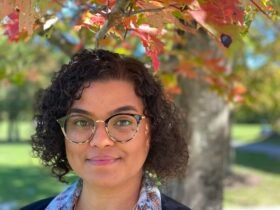
is Assistant Professor of Anthropology at Princeton University, author of Food in Cuba: The Pursuit of a Decent Meal, and coeditor of Black Food Matters: Racial Justice in the Wake of Food Justice.