Q&A with author and FirstGen scholar Cindy Nguyen
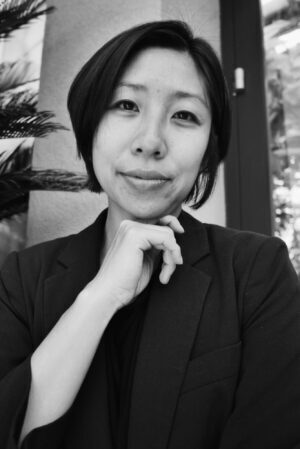
Cindy Anh Nguyen is Assistant Professor in the Department of Information Studies and the Digital Humanities program at the University of California, Los Angeles.
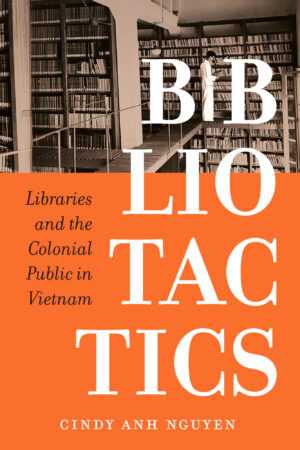
Her book, Bibliotactics: Libraries and the Colonial Public in Vietnam, examines the Hanoi and Saigon state libraries in colonial and postcolonial Vietnam, uncovering the emergence of a colonial public who reimagined the political meaning and social space of the library through public critique and day-to-day practice.
Tell us about your journey to your current position as an Assistant Professor at UCLA. As a first-generation scholar, what motivated you to go into academia?
To be honest, I went into academia because my ancestors could not. I come from (at least) three generations of those without formal education and was born in a refugee camp when my family fled post-war Vietnam in the 1980s. Growing up as an immigrant refugee, academia felt like a foreign world and a privilege that I slowly came to understand through genuinely supportive mentors and teachers, as well as through the infrastructure of public libraries and public education. I studied history and Southeast Asia at UCLA as an undergraduate, which instilled the intellectual curiosity to pursue big questions about historical change and cultural belonging. As I reflect upon how I ended up and stay in academia, I zoom out from my own motivations and solitary pursuit, to instead recognize the many feminist, radical kinship networks and structural transformation programs like the Institute for the Recruitment of Teachers (helped me apply to graduate programs) and Presidential and Chancellor’s Postdoctoral Fellowship Program (opened the pathway for my current position), that make academia a possibility and reality for me.
What was the process of writing and publishing Bibliotactics like for you? How did the FirstGen Program support you?
The FirstGen Program was such an important resource for me pragmatically offering me a grant that I used towards developmental editing to hone in the core arguments of the book as well as childcare for the time and mental space for the last revisions after the peer reviews. The publishing workshops offered a sense of community and clarity in the publishing process, which initially felt opaque and uncertain. During a time when diversity and inclusion efforts are being dismantled, I value this program even more deeply in its critical role to address structural inequities in academia through publishing.
You received your PhD from a history department, your postdoc was in a literature department, and you are currently in an information studies program. How did you think about these different academic audiences while writing your book?
Writing a book about libraries and reading culture definitely keeps me in these introspective existential wonderings about big questions like form, audience, narrative, and knowledge transmission. Yet I think for me one of the big realizations in writing this book was I actually didn’t really write a book about books, but it was everything “around the book”—the people, the spaces, the social interactions, the defiance and misreading, the dreams, the cultural identity that is associated with building library collections of the past, present, and future. It’s through that active, “bibliotactical” reimagining of the book as situated within people and practices that I also think about my “scholarly book.” It’s not just an academic book, speaking to siloed disciplinary audiences, but I see it as an opportunity for a conversation between big questions: the meaning of the public and who comprises the public, the cultural significance and often divergent motivations of building library collections from nation-states to grassroots communities, and the sense of agency and self-direction that can come with reading. I’m still a cultural historian because of my approach to historical change and analytical frames, yet I found myself in such a scholarly abundance when I moved across all these scholarly identities and departments—literature, digital humanities, information studies, and more.
Recognizing the form of the book as a scholarly book, I am excited and honored to bring all these exciting scholarly fields, thinkers, activists, practitioners together to think about library pasts and presents. Bibliotactics addresses and centers defiant reading in so many ways, which I took to heart through my public book rollout. I was intentional that my first book talk took place where the intellectual journey began, in Saigon, and with young people, artists, and feminists through the Nguyen Art Foundation. Besides many academic book talks, I have also led experimental book talks with multigenerational public audiences, teachers, and librarians. The most fun and capacious “book talk” I held took place in the open-air laboratory in the woods in New York with the Metropolitan New York Library Council. Together with my former student now co-thinker Malery Nguyen, we explored the form and feelings of libraries as ecosystems through global library histories and papermaking. Much of this journey and public talks is documented through my website bibliotactics.com that also provides reading guides, videos, and teaching materials for the book. In other words, I really dreamt of Bibliotactics as everything around and beyond the book.
To learn more about Bibliotactics, check out our Q&A with Cindy from earlier this year.