Imagining Feminist Futures in Chinese Science Fiction: A Conversation with Award-winning Author Regina Kanyu Wang
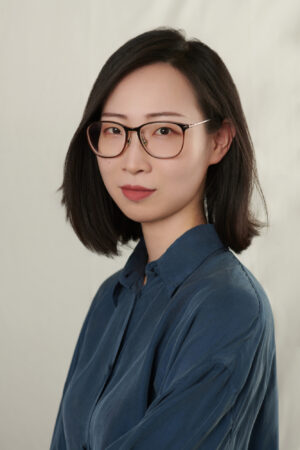
Congratulations to Regina Kanyu Wang. whose article published in Science Fiction Studies, “Growth, Resource, Population: The GRP Triangle in Contemporary Chinese Science Fiction by Female Writers,” was awarded the Science Fiction Research Association’s 2026 Innovative Research Award. In the conversation below, Veronica Hollinger, co-editor of Science Fiction Studies and a previous winner of the award, speaks with Wang about the research behind the essay, her use of “distant reading,” and the feminist futures Chinese women writers imagine.
=====================
Veronica Hollinger
Regina, let me open our conversation by saying how pleased I am that you’ve won this year’s SFRA Innovative Research award for your essay, “The GRP Triangle in Contemporary Chinese Science Fiction by Female Writers.” First of all, I had the pleasure of working as your editor while the essay was in preparation for publication in Science Fiction Studies, and I know how well deserved it is. Also, by a lovely coincidence, in 1990 I was the first winner of this particular award, which was then called the Pioneer Award (I certainly approve of the new name). And by another fine coincidence, both our awards are for feminist projects. I am moved by how you open and close your essay with Ursula K. Le Guin’s commentary on the utopian imagination.
By way of introducing yourself to readers, maybe you can begin by talking about your current academic work and general interests.
Regina Kanyu Wang
I have a very mixed academic background—a bachelor’s degree in management science, an MFA in creative writing, and a PhD in cultural studies—but science fiction has always been at the center of both my life and career. I have been an active member of fandom and co-founded the largest fan group in Eastern China during my college years. I began writing science fiction in my early twenties and have won several awards. Before joining CoFUTURES and starting my PhD, I worked in the science fiction industry for some years.
So my academic interests lie at the intersection of Chinese science fiction, creative writing, culture industries, gender studies, environmental humanities, Global South futurisms, and more. Currently, I am doing my postdoc at the University of Oslo, where I look at artificial intelligence from a humanities perspective. AI has been rapidly transforming our world, and I am interested in the intersection of science fiction and reality—how AI enters our daily lives and changes our understanding of life, intelligence, technology, and more.
Veronica Hollinger
What can you tell us about the scope of this essay, which is certainly an ambitious project? For example, what kinds of diverse materials did you draw on and integrate into your discussion?
Regina Kanyu Wang
In preparation for this essay, as well as for my entire PhD thesis, I analyzed and categorized over 300 stories by Chinese women writers before mapping out the GRP Triangle. I built my own database of these fictional texts, recording each story as an entry with its basic information, plot synopsis, key themes, relationships to other works, and so on.
Another important type of material integrated into this essay is the interviews I conducted during my fieldwork. I conducted 53 interviews with writers, scholars, editors, artists, entrepreneurs, and others working on science fiction and futurism. Most of these interviews will soon be available in the CoFUTURES media library, together with interviews conducted by my colleagues in different parts of the world.
Of course, not all of the stories and interviews were directly used in this particular essay, but my discussion and conclusions grew out of this broader body of material. I also drew on materials related to the science fiction industry, including official reports, firsthand observations from company visits and conventions, economic data, and other sources.
Veronica Hollinger
What about your research method? You refer to your work as “macro-level analysis” and “distant reading.” What are the advantages of this kind of reading? Did you find there were also disadvantages as you were working on this project?
Regina Kanyu Wang
Yes, I used “macro-level analysis” and “distant reading” in this essay. I zoom out to look for the larger patterns that emerge from these materials as a whole, rather than diving into individual stories. In this way, I am able to examine why a particular demographic group of authors has attracted widespread attention, the socioeconomic contexts in which they write, and what can be identified or extracted from their writing.
It is quite challenging, and also very experimental, because it requires me to move away from the close reading of individual texts. At the same time, it allows me to work with a large number of texts and relate what I find in them to the socioeconomic contexts in which they are situated. One disadvantage is that I have very limited space to discuss each story, so I have to strike a balance between the details of individual stories and the broader themes I want to explore.
Veronica Hollinger
Your discussions of these stories reminded me of Joanna Russ’s comments in her classic 1981 essay “Recent Feminist Utopias,” about how domesticity, especially as it impacts women, takes place offstage in so many sf worlds. Do you think that the work of these Chinese women authors suggests that not much has changed? Or, indeed, is their work exactly proof of at least some kind of change in gendered lives both in science fiction and in the real world.
Regina Kanyu Wang
I think women’s situations in different countries and eras do share something in common, but they also differ greatly. In the writing of Chinese women writers, I do observe the impacts of domesticity, but I also see how differently domesticity can be imagined in their sf worlds compared with those of American women writers in the 1980s, for example.
Chinese women writers today are imagining family clans composed of a single person’s genes, regardless of gender; couples of women and their boy trees; android babies in alien colonies; while also writing stories that have little or nothing to do with domesticity or gendered lives. Many of the authors I interviewed used not to consider gender an important aspect of their writing. They told me that they themselves had not perceived gender discrimination in their writing careers, and that they would rather be science fiction writers than female science fiction writers.
Things are also changing. More younger writers are actively embracing their gendered experiences in their science fiction writing. Through their speculative narratives, Chinese women writers are participating in the construction of feminist utopias in the real world—utopias not only for women, but for people of all genders and other marginalized groups.
Veronica Hollinger
Has your work always been feminist? Was there a moment when it made sense to you to engage with women’s writing?
Regina Kanyu Wang
When I first started writing science fiction, I did write from a female perspective, but I never regarded my work as feminist. I found it strange that people asked me why I chose to write science fiction as a girl. Simply because I dealt with themes such as emotions, love, and relationships in my science fiction stories, I was sometimes encouraged to write romance instead. In my mind, science fiction can be many different things, and it is the openness and vastness of the genre that make it unique.
Later, I learned that other women writers had experienced similar things. They were considered fantasy writers or magical realist writers rather than science fiction writers. When we talk about representative Chinese science fiction writers, male authors often come first—and sometimes they are the only ones mentioned.
At Worldcon 75 in Helsinki in 2017, female authors were introduced before the male authors during a panel on contemporary Chinese science fiction. I realized: of course you can do that—why not? After that, I began to notice more details, such as gender imbalances in anthologies, jury panels, and research. So I decided to focus on Chinese female science fiction in my PhD project.
Since then, more anthologies, discussions, and research on Chinese female science fiction have appeared, and I think it has become a broader cultural phenomenon.
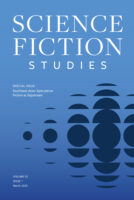
We invite you to read Regina Kanyu Wang's award-winning article, "The GRP Triangle in Contemporary Chinese Science Fiction by Female Writers," for free for a limited time.
Print copies of Science Fiction Studies issue 52.2, in which the article appears, as well as other individual issues of SFS can be purchased on the journal’s site.
For ongoing access to Science Fiction Studies, please ask your librarian to subscribe and/or purchase an individual subscription.
About the Authors
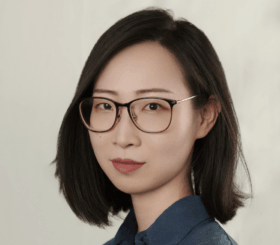
Regina Kanyu Wang is a writer, researcher, and editor, who holds a PhD in cultural studies from the University of Oslo. She writes science fiction, nonfiction and academic essays in both Chinese and English. She is a winner of the SFRA Innovative Research Award, Chinese Nebula Award, SF Planet Award, Future Literary Talent Award, Shanghai Award for Culture and the Arts, and a finalist of Hugo Award and Locus Award.
Veronica Hollinger is professor emerita in the Cultural Studies Department of Trent University in Ontario, Canada. She was the first recipient of the SFRA Pioneer Award (now the Innovative Research award), and is a long-time co-editor of Science Fiction Studies.