The British Empire and the Cannabis Plant Species in India
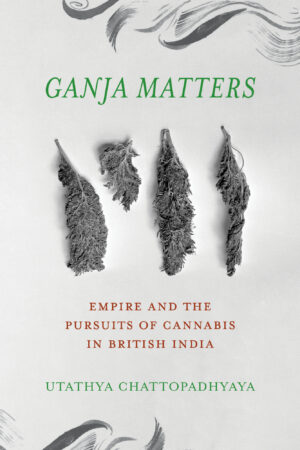
By Utathya Chattopadhyaya, author of Ganja Matters: Empire and the Pursuits of Cannabis in British India.
The plant botanically known as "cannabis sativa" generated remarkable histories of empire.
Take, for example, Charles Cornwallis, the British major who surrendered to the United States and French armies in 1781, five years after the U.S. Revolutionary war began. Ten years later, as Commander-in-Chief of the British armies in India, and marching against the Kingdom of Mysore (led by Tipu Sultan, with French support), three men charged at him outside Bangalore on 4th March, 1791. Cornwallis’ escorting soldiers killed two and the third was overpowered. One contemporary writer briefly speculated that the men were intoxicated.
However, in the next hundred years and more, something revealing happened – historians, writers, and essayists narrated the same moment but with definitive claims that the attackers were high on bhang, a liquid concoction of cannabis grown in South Asia. With an unwarranted assurance, editors of Cornwallis’ correspondences like Charles Ross (1859), popular books like James Grant’s Cassell’s Illustrated History of India (1878), historical dramas like George A. Henty’s The Tiger of Mysore (1895), academic works of military history like L.H. Thornton’s Light and Shade in Bygone India (1927), and collections of heroic tales for children like William Patten’s The Junior Classics (1918), all insisted, whether in the plotline, the main text, or in footnotes, that the three men from Mysore intoxicated themselves before attacking Cornwallis in 1791.
Why did it matter what the attackers drank and why keep reinserting it in textual niches and repeating it in plotlines and children’s books? Grand imperial narratives routinely described how men, horses, elephants, not to mention cannons and swords, of opposing armies had risen up only to be eventually defeated by Britain, but why is the cannabis plant, and its many manufactured products in British India, of consequence alongside these human and animal entanglements in empire?
There are many answers to this question, some of which I explore in Ganja Matters. All of them have to do with how forms of liquid, solid, and gaseous (smoked) matter derived from cannabis plants were enfolded into British imperial systems of rule as objects of revenue, medicine, policing, and knowledge. These processes, lasting between the eighteenth to the twentieth centuries, were thoroughly uneven and produced very different outcomes because the plant species was itself very mercurial and sensitive. It depended on highly rigorous cultivation techniques in open field and, based on methods of manufacturing, the plants’ products had different amounts of intoxicating principle in different climates, soils, and their quality hinged on different points in the growth cycle of a cannabis stalk. The species also had tremendous gender variance in, and among, stalks which complicated imperial economic systems even further.
Narratives like that of Cornwallis served to carpet over such systematic complexities. The noun, “bhang,” became a homogenized object in imperial discourse that signaled irrational and anti-European violence. The specter of bhang-induced violence by racialized Indian, often Muslim, soldiers against symbols of British power thoroughly eclipsed and overrode the social lives of the plant in various corners of British India and the world. This was particularly notable around the Indian Rebellion of 1857, when Indian insurgents were routinely depicted in English-language media as acting under the influence of cannabis intoxication. As that representation became a type of imperial common sense in the late 19th and 20th centuries, it either filtered into, or was read back onto, narratives of older 18th century moments of imperial violence and anxiety, and eventually made its way to both children and adults.
Such processes that flattened the material life of the cannabis plant species into a drug that primed one for violence reveal key facets of how the British empire was shot through with anxiety, vulnerability, fragility, and panic. Superficially, empire to Britons implied territories spanning the globe and visualized confidently on maps, objects, and paintings, but that façade of stability was turbulent and shaky on the ground as anti-colonial actors caused setbacks every day. Problems, and reams of paper about those problems, piled up by the hour, particularly because British imperial governments gradually came to govern various regional circuits of licit cannabis commodities in South Asia but failed to understand the elaborate, concurrent, and crisscrossing set of economic, therapeutic, spiritual, and utopian meanings and uses which the plant and its parts generated.
Historians, and particularly scholars of critical imperial history, today are showing how animals, plants, wetlands, spirit-beings, insects, and other species in Asia and Africa made up an interspecies world of relations and epistemologies that challenged British imperialism from below. Within that context, intoxicating matter from plants like cannabis played their own role. In British India, bhang illuminated the shakiness of Britain’s control on drug economies in the heyday of imperialism in the late 19th century. Even in the smallest books that rehearsed British military victories, bhang’s presence oriented the reader to threats, both real and imagined, and yet, in doing so, it also opened the window onto a fuller world of relations between plant matter and human bodies that empire could neither fully grasp nor ably govern.