Nobody’s Life: The World Before Experience
By Lawrence Kramer, author of Experience: A History.
So many words have been spilled about Christopher Nolan’s film version of Homer’s Odyssey that there may seem to be no room for any more. But Nolan’s depiction of Odysseus forms a useful starting point for some thoughts about the nature of experience—the declared subject of my Experience: A History from UC Press. Nolan’s Odysseus is a proto-modern man troubled by a bad conscience. Experience is a burden for him. And why not? It’s a truism that every era gets the heroes it wants—or that it deserves. If Nolan’s Odysseus is about as far removed from Homer’s as possible, so be it. But the reasons for the difference deserve a closer look. Homer’s Odysseus is a great storyteller, and he has lots of stories to tell. But he has no experience at all.
What could that strange last statement mean? We all have experiences, don’t we? Haven’t we always? These questions belong to a modern attitude that takes the possibility of experience for granted. Doing so is a mistake. The answer to the questions is, well, no.
To see why, it helps to think about a German-Jewish literary scholar who fled Nazi Germany for a safe haven in Istanbul after being stripped of his university post in Marburg. Between 1942 and 1945, the scholar Erich Auerbach wrote a book that quickly became a classic: Mimesis: The Representation of Reality in Western Literature. The first chapter is titled “Odysseus’s Scar” with reference to the old wound by which this “Nobody,” as he names himself to the Cyclops, is recognized by his old nurse after returning at long last to Ithaca. (“Nobody has blinded me!” roars the Cyclops. “Then why are you complaining?" roar his neighbors.)
The recognition scene, which includes a detailed narration of how a wild boar inflicted the wound, stands for Auerbach as the epitome of Homer’s narrative form and, by implication, of Homer’s world. “Homer,” he says, “knows no background. What he narrates is for the time being the only present and . . . fills the reader’s mind completely.” What happens, happens, and the event and its story are one and the same. Everything in it is clearly outlined, brightly and uniformly illuminated, men and things stand out in a realm where everything is visible; and not less clear—wholly expressed, orderly, even, in their ardor—are the feelings and thoughts of the persons involved.
Like the surface of a krater adorned by mythological figures, Odysseus’s world is both luminous and one-dimensional. It is built up of “fully externalized description, uniform illumination, uninterrupted connection, free expression, all events in the foreground, displaying unmistakable meanings, few elements of historical development and of psychological perspective.” Odysseus is one of the figures on the urn.
In other words, as I said at the outset, Odysseus has stories to burn, but he has—he has had—no experience. To turn an event into an experience requires reversing virtually every aspect of Homer’s world as Auerbach describes it, and then some. In Margaret Atwood’s poetic sequence Circe (1995), Odysseus’s time with the sorceress who turns his men into swine becomes an experience for her. For Circe, if not for Odysseus, the encounter assumes the weight of experience because it changes continually while remaining the same. It lacks the finality of the Homeric event, even when it retains Homer’s uniform illumination. It does not happen once and for all.
Atwood’s Circe speaks to Odysseus about his “flawed body,” scarred and battered, but the way it looks to her is not fixed. She tells him that his imperfectly mended body “includes everything / you have done, you have had done to you,” but she also says it goes beyond all that. She just doesn’t say where. Perhaps she does not yet know: “This is not what I want / but I want this also.”
In modern terms, Homer’s Odysseus really is Nobody because he lacks the experience that would make him Somebody. All that his nurse restores to him is his name. This bareness of experience is why Odysseus can become Anybody, as he does in Nolan’s film—the latest avatar in a very long series running from Sophocles and Euripides through Dante, Shakespeare, Tennyson, and Joyce, to name only the most famous.
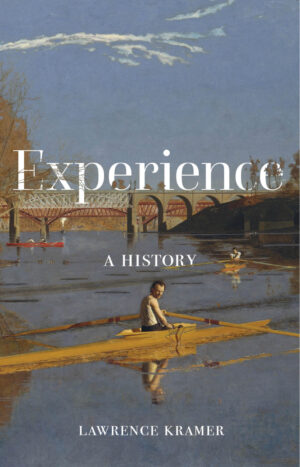
Experience: A History is about how events learned to become experiences. The book picks up its topic at a symbolic turning point in 1350, when the poet and humanist Francis Petrach walked to the peak of Mt. Ventoux in his native Provence. The aim of the hard climb was just to see the world from the mountaintop. In a letter about the event, Petrarch turns it into an experience. It would be some time, though, before his model inspired others. Petrarch was a forerunner. As the centuries wheel by, his successors proliferate, first in a trickle, then in a flood.
I count myself as one of them. The history the book traces builds up to an experience of my own that turns out to have many points of contact with figures from the recent and remote past, together with an old prison, several natural wonders, a famous opera, a modern pilgrimage, a bridge, a river, a scull, and some of the darkest passages in twentieth century history. The history of experience turns out to be inherent to experience. The experience closest to the self turns out to be the experience that binds us most closely to the lives of others.
About the Author

Lawrence Kramer is Distinguished Professor of English and Music at Fordham University. He is the author of fifteen previous books, including The Thought of Music, The Hum of the World, and Music and the Forms of Life. He is also an award-winning composer whose works have been performed throughout the United States and Europe.