University of California Press

About the Book

A lyrical, provocative journey into the art, memory, and meaning of experience.

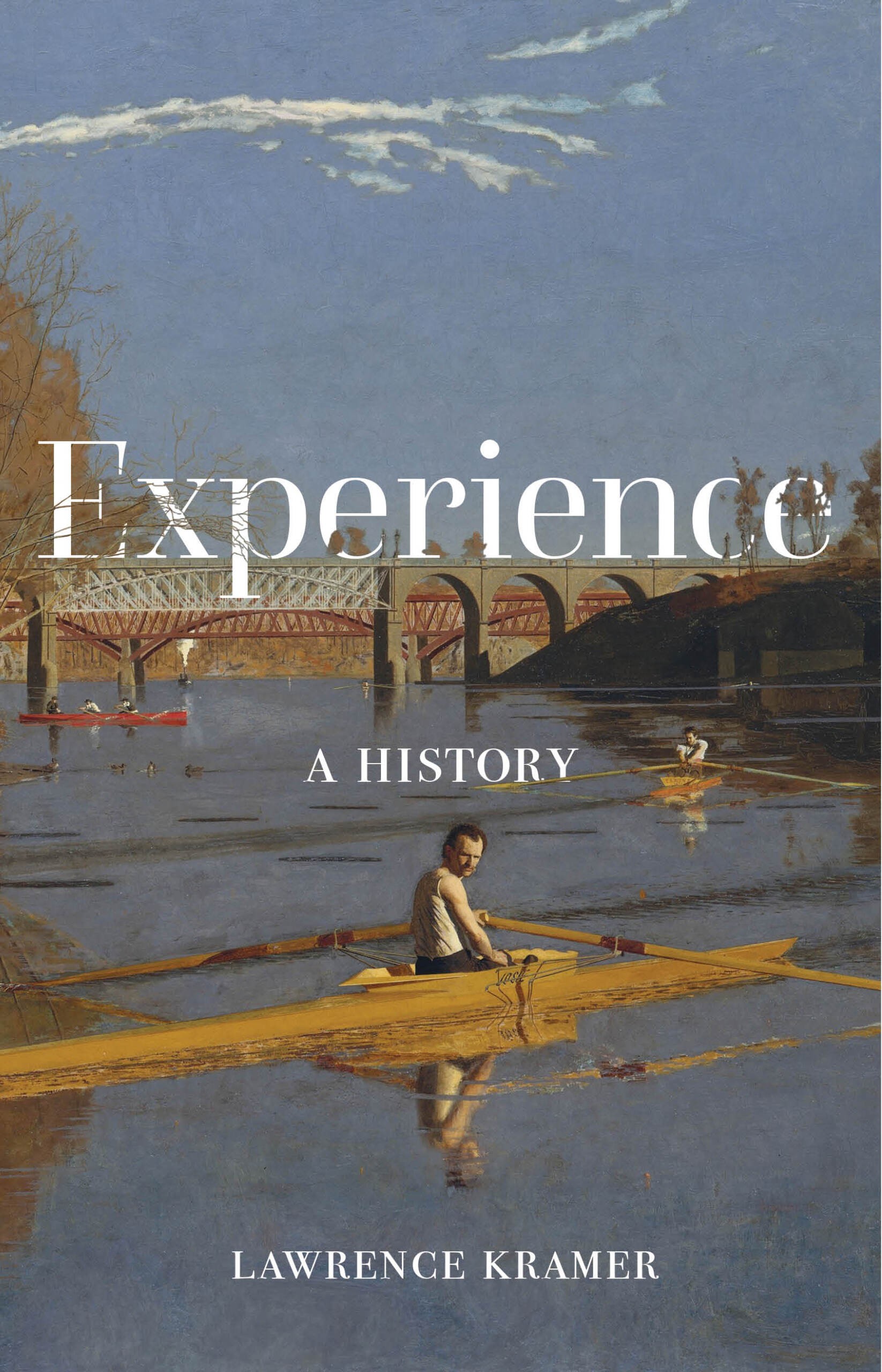
What does it mean to have an experience? When did we begin to believe we could “have" one at all? In Experience: A History, Lawrence Kramer traces the cultural birth of experience as a singular, life-defining event. Moving lyrically between criticism and memoir, he guides readers from Petrarch and Nietzsche to Virginia Woolf and Anne Carson; from Haydn’s Creation to Billie Holiday's searing “Strange Fruit.” Along the way we encounter Niagara Falls and the Galápagos, Parisian department stores and Café Society, Emerson, Henry James, Schubert, and Chopin.

Anticipated as early as the fourteenth century and accelerating after the eighteenth, records of concentrated, unforgettable moments begin to proliferate—until the possibility of having an experience becomes a demand for one. Experience turns into something to seek, curate, even consume. Yet its power lies in its particulars: the convergence of history, art, memory, and self. At once personal and tender, challenging and vulnerable, Experience fuses philosophical argument with intimate recollection. The result is both a sweeping intellectual history and a deeply human reckoning with the experiences that shape and unsettle modern life.

About the Author

Lawrence Kramer is Distinguished Professor of English and Music at Fordham University. He is the author of sixteen previous books, including The Thought of Music, The Hum of the World, Experiencing Sound, and Music and the Forms of Life. He is also an award-winning composer whose works have been performed throughout the United States and Europe.

Table of Contents

CONTENTS

Preface

Introduction: The Concept of Experience

Framing Experience: From Androids to Screens

Experience, Enchantment, and the Ordinary

Experience, Immanence, and Transcendence

Recognizing an Experience

Possibility and Privilege

Language and the Claiming of Experience

I. Having an Experience: From Petrarch to Billie Holiday

Anticipations I: Michel de Montaigne

Anticipations II: Francis Petrarch

Ralph Waldo Emerson

Henry David Thoreau

Henry James

Strange Fruit: Henry James, Robert Hayden, Billie Holiday

Experience and the Penitentiary: Charles Dickens and Henry James

Experience, Commerce, and Wonder: Dickens and James at Niagara Falls

Niagara Falls, Continued: Walt Whitman and Margaret Fuller

An Experience or Not? Sources

An Experience or Not? Standards I: The Frame

An Experience or Not? Standards II: The Unforetold

Phantasmagoria

Moments of Being: Virginia Woolf

II. The Varieties of Aesthetic Experience: From Schubert to William James

Aspect Change

The Aesthetics of Thinking

Music and Modern Experience

The Aesthetic, Entertainment, and Anarchy

Beauty

Two Winter Journeys: Schubert and Thoreau

Another Wanderer: Yee of Toishan

Beauty Revisited: The Return of the Aesthetic

Love, Enlightenment, and the Rise of Ordinary Life

A Turning Point: Franz Joseph Haydn’s The Creation

Aesthetic Understanding: The As-If

Experience, Chance, and Existential Modesty

Trust, Reality, and Chance: From Signification to Experience

The Stream of Consciousness: William James and Virginia Woolf

Experience and Mortality

The Flux of Experience and Modern Life

Sounding Experience: Niagara Falls Revisited (Joyce Carol Oates)

Sounding Experience: Walk, Water, Pilgrimage (Anne Carson)

Sounding Experience: Tropical Études (Claude Lévi-Strauss)

Sounding Experience: A Prelude (Frédéric Chopin)

Preserving the Singular: Mourning, Memory, Elegy

III. Experience Regained: Two Walks by the River of Time

Durable Experience

First Encounters: Prison, River, City

A Company of Walkers

Some Personal History

Itineraries

In the Doorway

Henry James and Me

Wordsworth, Too (The Way Home)

Another Walk

A Postscript

Notes

Index

Reviews

"This historical study of aesthetic notions about musical style and human experience turns into a remarkable literary confrontation with the author's early personal memories. The gripping brilliance of the book’s concluding sections are the jewel in the crown of this project—a real literary achievement."—Peter Franklin, Professor of Music, University of Oxford 

"Refreshingly direct and conversational, Experience: A History treats intellectual work as something enjoyable, meaningful, and even practical without sacrificing the rigor of the task at hand. With the essayistic mode of expression now at risk as bite-sized utterance and AI summary seem poised to overtake the pleasures of a woven text, this book offers its own experience of thought-through-writing and makes an implicit argument for slowness in its close reading of human experience through literary, philosophical, musical, and personal histories."—Heidi Hart, coauthor of Piano Decompositions: The Ecology of Destroyed and Decaying Instruments

“Drawing a bead on experience itself, this highly original and utterly unique work aims to understand the historical conditions that birthed the modern experience—and why experience as such may be slipping toward death. Reading with a mixture of intrigue and sadness, I wandered and walked along the banks of this book and caught a glance of myself when I peered over its ledge.”—Jake Johnson, author of Unstaged Grief: Musicals and Mourning in Midcentury America