Musicological Object Lessons: A Conversation with 19th-Century Music Editor Berthold Hoeckner and Journal of the American Musicological Society Editor Jake Johnson
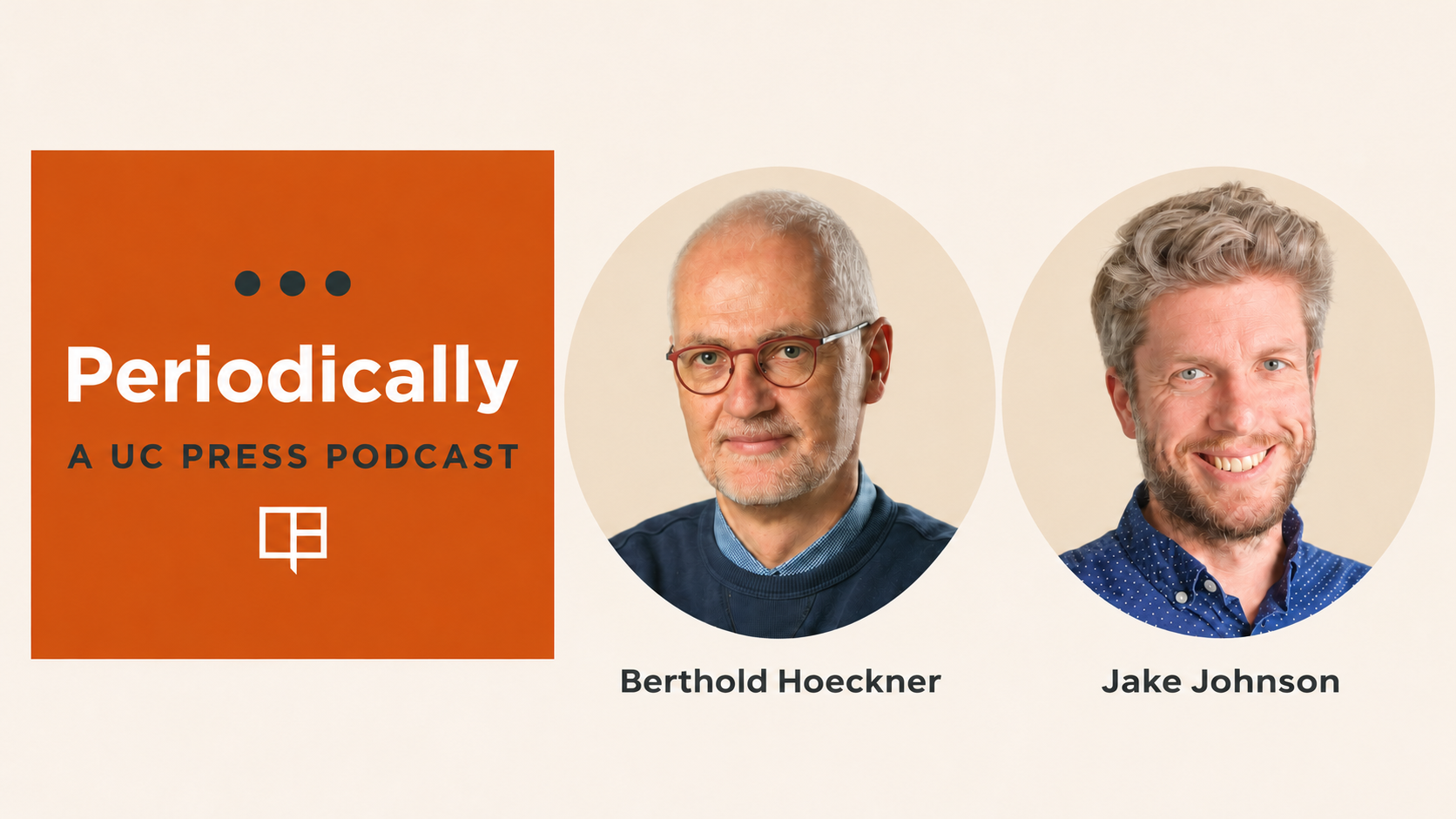
A washing machine’s end-of-cycle chime might seem far removed from the concert hall. But if that chime borrows a melody by Franz Schubert, it can carry a long history of musical ideas into everyday life. This is one of the insights explored in a new episode of "Periodically," the UC Press Journals podcast. In “Musicological Object Lessons,” Berthold Hoeckner, the editor of 19th-Century Music (NCM), talks with Jake Johnson, outgoing editor of the Journal of the American Musicological Society (JAMS), about how scholars can study music through the objects involved in its creation and reception—not only through scores and performances.
For Hoeckner, object lessons began in the classroom: he asked students to bring in what scores and scholarship left out—a music box, a phonograph, a description of the feel of a keyboard. This approach also speaks to fans and collectors, for whom a particular musician’s piano, a performance gown, or an autograph can hold meaning beyond its practical use. Starting with objects people already care about, musicology can meet people where they are and follow those objects into larger histories of music. Hoeckner and Johnson's conversation ranges across object-lesson essays published in JAMS and NCM showing how objects can open new paths into musical discovery.
The episode begins with a discussion of JAMS’s supplemental colloquy, "Touching Music, Making Musicology," which features eighteen different experts on music and music history reflecting on objects that speak to aspects of American music. We invite you to read the colloquy for free online for a limited time and to hear directly from some of the colloquy's contributors (and see the objects they consider) in a series of short videos featured on our blog in "From Harmonicas to Fiddles: JAMS Contributors Explore the History of American Musical Objects." To learn more about the colloquy, see our previous blog post, "The Journal of the American Musicological Society Publishes Colloquy for 250th Anniversary of the United States."
The podcast episode also considers a selection of articles published in NCM, which we also invite you to read for free online for a limited time. In “Object Lesson: Samsung/Schubert,” Samantha Kim Heinle follows Schubert’s “Die Forelle” into a Samsung washing machine’s end-of-cycle alert. Jennifer Ronyak’s “Object Lesson: Four-Hand Nietzsche” asks what changes when Mahler’s music and Nietzsche’s words reach listeners through a four-hand piano arrangement. In “Object Lesson: Mel Bonis’s Hand,” Hoeckner explores the legacy of French composer Mélanie Hélène Bonis through four specific artifacts: her autograph score of the piano piece Mélisande, the 1887 cast of her hand, a pincushion, and a folding fan. MyungJin Oh’s “Object Lesson: The Personified Voice of Chopin’s Last Pleyel Piano” explores the piano as both a historical artifact and a sounding instrument.
The episode is timed to coincide with the American Musicological Society’s online annual meeting, November 14-15 and 19–20, 2026.
Listen to “Musicological Object Lessons" on "Periodically" on the podcast's website or wherever you get your podcasts.
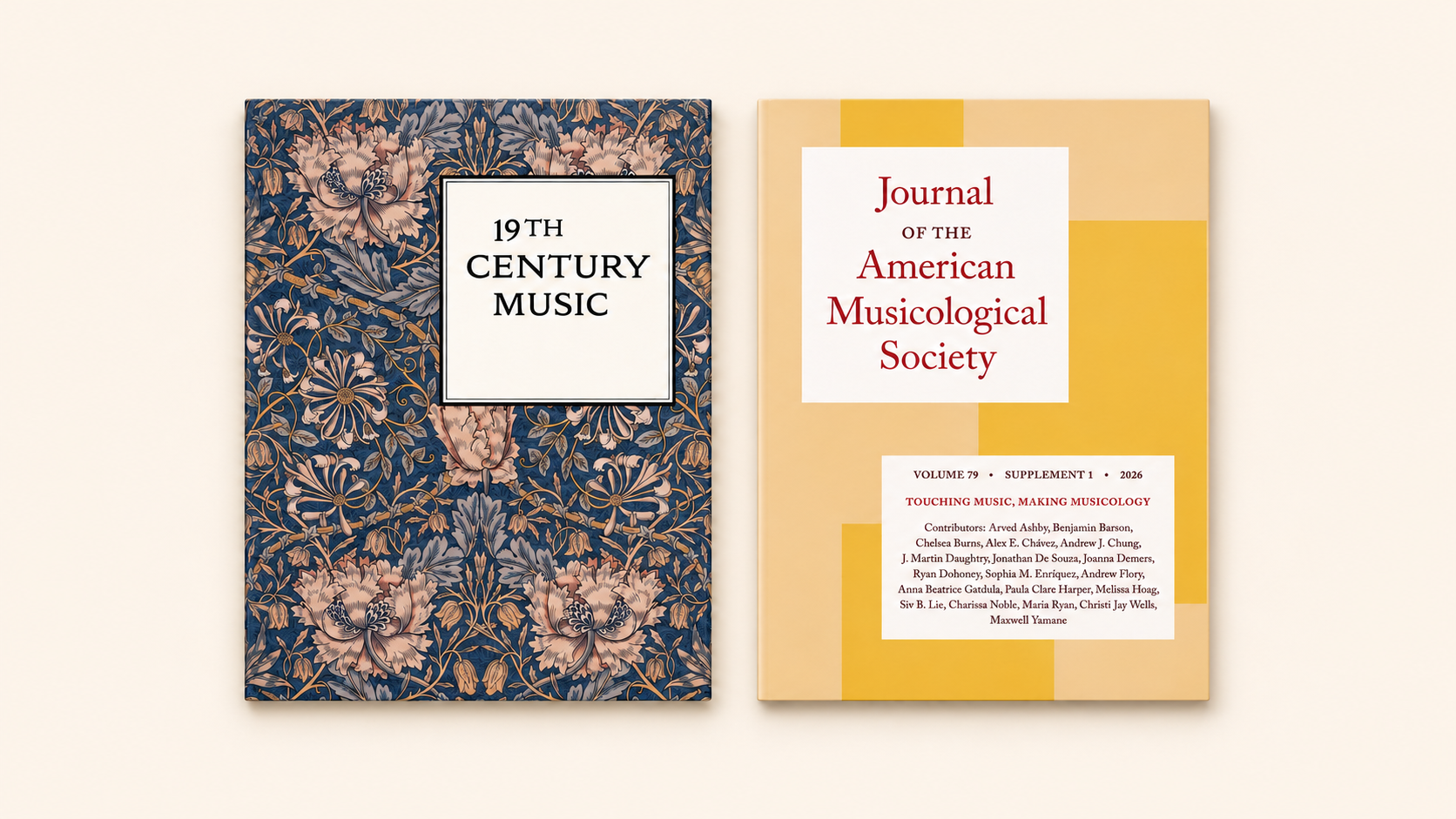
You can receive free access to 19th-Century Music and the Journal of the American Musicological Society if your library subscribes to the journals. We offer library subscriptions to NCM and JAMS as part of our UC Press Music Subject Collection, which packages all of our music journals together for one low subscription price. You can also ask your librarian to subscribe to each journal individually. For your convenience, you may want to use the following library recommendation forms:
UC Press Music Subject Collection library recommendation form
NCM library recommendation form
JAMS library recommendation form.
We offer subscriptions to NCM for individuals on the journal's site. Individual subscriptions to JAMS are a benefit of membership in the American Musicological Society (AMS). If you are interested in becoming an AMS member, information about AMS membership can be found on the Society's website.