Vietnam’s Sound Pandemic Response
by Christina Schwenkel, author of Sonic Socialism: Crisis and Care in Pandemic Hanoi
In an era of global turbulence, what does disaster readiness look—and sound—like? When I returned to the United States in January 2025, Los Angeles was shrouded in toxic haze from the Palisades and Eaton wildfires. Impacted friends and colleagues described a city unprepared for a disaster of such magnitude, resulting in critical infrastructure failures. Water systems collapsed and evacuation communication went silent, not unlike the flash floods in Texas six months later. These local crises mirrored a broader national pattern of unpreparedness headlined in the press, from the spread of avian flu to the resurgence of measles, even after a catastrophic pandemic.
But these gaps in readiness reveal more than just political shortcomings. How people sense, prepare for, and handle crises, especially health emergencies, reveals something deeply cultural. Disaster management reflects our intrinsic moral and social values, offering a window into who and what matters in society—and who is deemed worthy of protection.
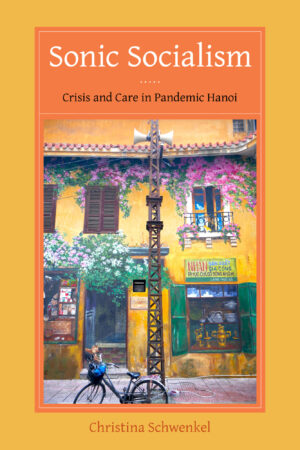
These are questions I explore in my book, Sonic Socialism: Crisis and Care in Pandemic Hanoi. Released in 2025—the 50th anniversary of the end of the war in Vietnam—the book’s arguments feel more urgent than ever. Two decades of ethnographic research on the long-term consequences of US military occupation taught me that human-made disasters are not only profound ruptures but can also open spaces for reimagining social possibility. As my interlocutors rebuilt their lives and cities after infrastructural warfare, they forged unexpected paths forward, guided by bonds of shared purpose—or what I call infrastructures of solidarity—that may offer valuable lessons for our own fractured country. COVID-19, the focus of my latest book, offers another compelling example of how societies manage, respond to, and attune to disaster collectively.
A single statistic encapsulates the stakes of sound and unsound disaster readiness. By the end of 2020, Vietnam had recorded only thirty-five deaths and just under 1,500 infections—among the lowest figures in the world—while the United States counted more than eighteen million cases and 350,000 deaths. The difference is staggering. While much of the world was struggling with how to care for the dead, Vietnam was focused on sustaining and regulating life.
This was not simply a matter of luck. Vietnam was the first country to contain SARS in 2003 and, a year later, it halted the spread of avian flu through decisive state action. Yet little on-the-ground analysis exists of how people navigated these crises as they unfolded, or what these responses reveal about their priorities and cultural practices. Sonic Socialism addresses this gap through an in situ autoethnography of the pandemic’s first year, with an emphasis on the evolving sensory atmospheres that defined isolation experiences.
What had once been described as a major weakness in Vietnam’s public health system, the absence of clear networks of information, became the very basis of its strength. During the pandemic, Vietnam’s proactive communication strategy proved critical to its early success. Authorities broadcast real-time updates across multiple media platforms, from “old” analog to “new” digital and convergent technologies. The transformation from weak to tightly coordinated communication reveals how public health messaging became an instrument of both governance and care, transmitted, as my book examines, through sound.
To study how media infrastructures informed, regulated, and connected people during the pandemic required a new ethnographic toolkit, one oriented toward sonic experience rather than visual observation, of listening rather than looking, of sound rather than sight. The pandemic necessitated a shift from visual to auditory modes of public outreach, and I adapted accordingly, replacing conventional fieldwork, which was not possible, with embodied soundwork, an immersive, ears-first engagement with the state’s penetrating sonic reach.
Sonic cues became central to disaster governance, shaping pandemic temporalities and responses to a declared biosecurity emergency. As I outline in the book, the Vietnamese state exercised power through its acoustic presence to uphold socialist values of solidarity and productivity, keeping factories open and sustaining economic life while shoring up a political legitimacy that corruption scandals would undermine in 2022. Deeply networked into media infrastructures, sound became both an instrument of care and a channel of knowledge, relaying information to an imagined listening public without defaulting to market-driven models of disaster mitigation. I call this disaster socialism: a mode of crisis governance that routes care through public infrastructure and collective mobilization rather than market mechanisms.
The pandemic was not a single event, but a series of events—critical sonic events—that accompanied outbreaks and lulls, noise and silence. Pandemic governance around the world adapted and changed across time, and with it, acoustic environments shifted, as did the modes and contexts of listening. In Vietnam, this meant not only state control over sounding practices but also forms of sonic dissent that emerged alongside them—and, crucially, relational modalities of care rooted in collective responsibility.
At a moment when social fragmentation and political polarization have eroded the public’s capacity to hear one another, Vietnam’s pandemic soundscapes offer an unexpected lesson: that sound can unite as much as it commands, and that collective survival depends, in no small part, on our readiness to listen.