UC Press July Award Winners
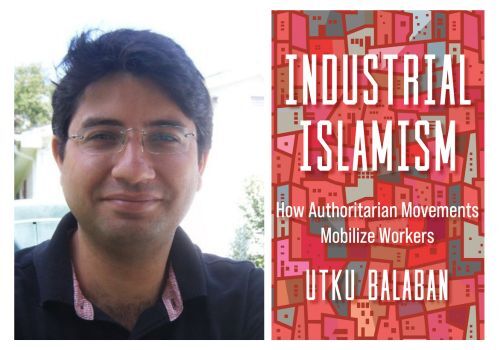
Utku Baris Balaban
Sociology of Development Section Book Award 2026
American Sociological Association Sociology of Development Section
Utku Balaban is Associate Professor of Sociology in the Department of Race, Intersectionality, Gender, and Sociology at Xavier University. He is author of A Conveyor Belt of Flesh and Social Inclusion Policies in Turkey.
Industrial Islamism
How Authoritarian Movements Mobilize Workers
Industrial Islamism analyzes the relationship, since the end of the Cold War, between the rise of political Islamism in Muslim-majority countries and the rise of a new global "middle class" of industrial entrepreneurs. Challenging common assumptions, Utku Balaban questions the idea that political Islamism represents the antithesis of Western modernity and industrialization. On the contrary: the more enthusiastically a Muslim-majority country industrializes, the more "Islamized" its politics becomes.
The book focuses on Turkey, historically the most industrialized Muslim-majority country in the world, with the most successful Islamist movement and a relatively competitive electoral system. It provides a fine-grained historical and ethnographic analysis at the local level of urban-industrial control over workers in sweatshops and working-class neighborhoods by this new global middle class, whom Balaban calls the faubourgeoisie. As the central actor behind Turkey's post–Cold War industrialization, the faubourgeoisie allies with the Islamist movement to control its workers and significantly influence national politics.
A free ebook version of this title is available through Luminos, University of California Press’s Open Access publishing program. Visit www.luminosoa.org to learn more.
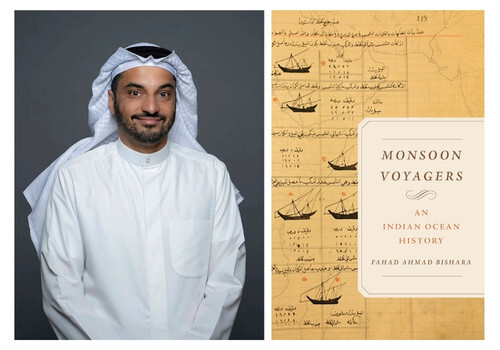
Fahad Ahmad Bishara
WHA Bentley Book Prize Honorable Mention 2026
World History Association
Fahad Ahmad Bishara is Associate Professor of History and Rouhollah Ramazani Professor of Arabian Peninsula and Gulf Studies at the University of Virginia. He is author of A Sea of Debt: Law and Economic Life in the Western Indian Ocean, 1780–1950.
Monsoon Voyagers
An Indian Ocean History
Monsoon Voyagers follows the voyage of a single dhow, the Crooked, along with its captain and crew, from Kuwait to port cities around the Persian Gulf and Western Indian Ocean, from 1924 to 1925. Through his account of the voyage, Fahad Ahmad Bishara unpacks a much broader history of circulation and exchange across the Arabian Sea in the time of empire. From their offices in India, Arabia, and East Africa, Gulf merchants used the technologies of colonial capitalism—banks, steamships, railroads, telegraphs, and more—to remake their own regional bazaar economy. In the process, they remade the Gulf itself. Drawing on the Crooked's first-person logbooks, along with letters, notes, and business accounts from a range of port cities, Monsoon Voyagers narrates the still-untold connected histories of the Gulf and Indian Ocean. The Gulf's past, it suggests, played out across the sea as much as it did the land.
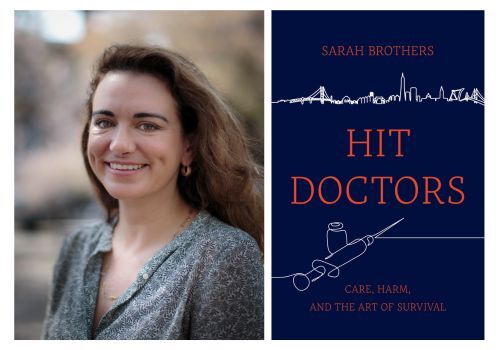
Sarah Brothers
Early Career Award for Community-Engaged Scholarship 2026
American Sociological Association
Sarah Brothers is Assistant Professor of Sociology at Penn State University.
Hit Doctors
Care, Harm, and the Art of Survival
As overdose deaths continue to mount and debates rage over harm reduction, drug policy, and homelessness, Hit Doctors offers a crucial on-the-ground perspective pointing to a humane future.
Finding a vein is difficult. As veins collapse and scar over, it becomes almost impossible. For the millions of Americans who inject drugs and can’t do it alone, the solution is to find someone who can. Enter the “hit doctor.” Though uncredentialed, hit doctors develop expertise through necessity, providing injection assistance and addressing needs that dominant medical systems exclude or criminalize. They share the same conditions as the people they serve: sleeping in encampments and alleys, living in cramped single-room-occupancy hotels, suffering from untreated illness and trauma, and grieving friends who keep dying.
Sarah Brothers spent more than seven years observing and interviewing hit doctors and their clients across San Francisco. Hit Doctors is an intimate portrait of the daily lives, relationships, and ethical worlds of people managing extraordinary hardship at a pivotal moment, when fentanyl arrived and thousands began dying annually. Brothers’s long-term ethnography yields critical insights. People seeking help strongly prefer women hit doctors, perceived as more careful and less likely to turn violent. But even as their expertise is valued, hit doctors are targets for abuse, and they suffer as the people they care for decline and die. That is the cost of trying to keep each other alive when formal systems of support have failed.
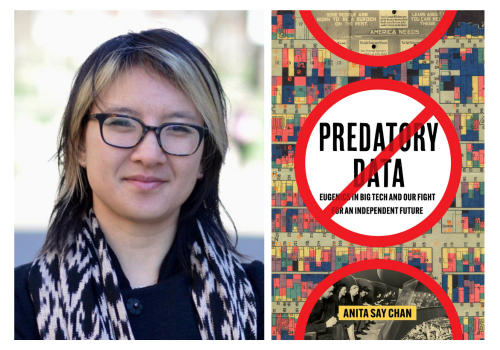
Anita Say Chan
Rachel Carson Prize Shortlist 2026
Society for Social Studies of Science
Anita Say Chan is a feminist and decolonial scholar of Science and Technology Studies and Associate Professor of Information Sciences and Media Studies at the University of Illinois, Urbana-Champaign.
Predatory Data
Eugenics in Big Tech and Our Fight for an Independent Future
The first book to draw a direct line between the datafication and prediction techniques of past eugenicists and today's often violent and extractive "big data" regimes.
Predatory Data illuminates the throughline between the nineteenth century's anti-immigration and eugenics movements and our sprawling systems of techno-surveillance and algorithmic discrimination. With this book, Anita Say Chan offers a historical, globally multisited analysis of the relations of dispossession, misrecognition, and segregation expanded by dominant knowledge institutions in the Age of Big Data.
While technological advancement has a tendency to feel inevitable, it always has a history, including efforts to chart a path for alternative futures and the important parallel story of defiant refusal and liberatory activism. Chan explores how more than a century ago, feminist, immigrant, and other minoritized actors refused dominant institutional research norms and worked to develop alternative data practices whose methods and traditions continue to reverberate through global justice-based data initiatives today. Looking to the past to shape our future, this book charts a path for an alternative historical consciousness grounded in the pursuit of global justice.
A free ebook version of this title is available through Luminos, University of California Press’s Open Access publishing program. Visit www.luminosoa.org to learn more.
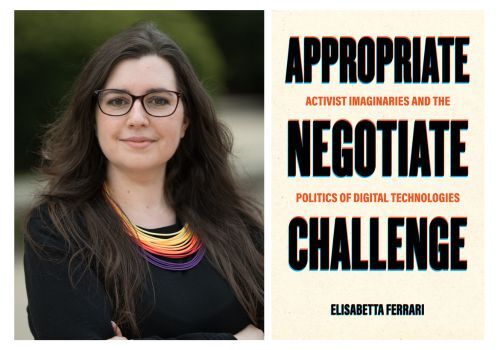
Elisabetta Ferrari
ICA Activism, Communication and Social Justice Division Outstanding Book Award 2026
ICA Activism Communication and Social Justice Division
Elisabetta Ferrari is an AIAS-AUFF Fellow at the Aarhus Institute of Advanced Studies at Aarhus University in Denmark.
Appropriate, Negotiate, Challenge
Activist Imaginaries and the Politics of Digital Technologies
Activists use digital technologies to communicate, coordinate, and organize for social change. But these big corporate digital platforms are also used to spread disinformation, racism, and abuse. Appropriate, Negotiate, Challenge investigates the relationship between activism and technology, focusing on how activists think and talk about technology’s role in social change and what this tells us about the politics of digital technologies.
Researching movements in Italy, Hungary, and the United States, Elisabetta Ferrari examines how leftist activists construct technological imaginaries that appropriate, negotiate, and challenge Silicon Valley’s vision of technology. She argues that these imaginaries reflect and shape the politics of social movements: they matter for how activists think about their political possibilities. Ultimately, Ferrari centers the political and imaginative work that activists need to perform in order to navigate the politics of mainstream digital technologies.
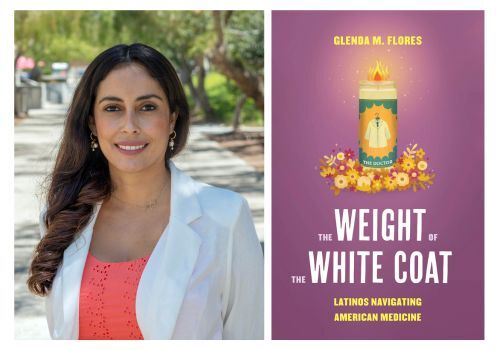
Glenda M. Flores
Race, Gender, and Class Distinguished Contribution to Scholarship Book Award Finalist 2026
American Sociological Association Race, Gender, and Class Section
Glenda M. Flores is Associate Professor of Chicano/Latino Studies at the University of California, Irvine. She is the author of Latina Teachers: Creating Careers and Guarding Culture.
The Weight of the White Coat
Latinos Navigating American Medicine
Little has been written about Latina/o physicians as students, people, or workers in a high-skill occupation in the United States. The Weight of the White Coat traces the life stages that Latina/o physicians follow and the social mechanisms that shape their careers, from the role of the family to different educational trajectories and even the practice of medicine. Glenda M. Flores turns a careful eye to this diverse pan-ethnic group in an elite profession, observing how demographic characteristics such as gender and ethnicity act like cumulative weights in their coat pockets, producing hindrances for some and elevating others as they provide care in poor and wealthy communities. Here, the high occupational status of Latina/o doctors offers a unique lens for examining the varied experiences of physicianhood and the still unsettled contours of Latinidad.
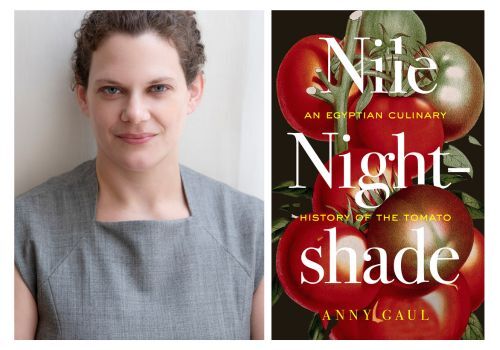
Anny Gaul
James Beard Award (Reference, History, and Scholarship) 2026
James Beard Foundation
ASFS First Book Award 2026
Association for the Study of Food and Society
Anny Gaul is Assistant Professor of Arabic Studies at the University of Maryland, College Park, and coeditor of Making Levantine Cuisine: Modern Foodways of the Eastern Mediterranean. She also runs the popular food blog Cooking with Gaul.
Nile Nightshade
An Egyptian Culinary History of the Tomato
Best Culinary History Book in the World, Gourmand World Cookbook Awards 2025
“Leaves few cultural-societal stones unturned in chronicling how the tomato gradually came to be a constant presence in Egyptian life.”—The Wall Street Journal
A cultural and culinary history of modern Egypt through the nation's beloved tomato.
By the end of the twentieth century, the tomato—indigenous to the Americas—had become Egypt's top horticultural crop and a staple of Egyptian cuisine. The tomato brought together domestic consumers, cookbook readers, and home cooks through a shared culinary culture that sometimes transcended differences of class, region, gender, and ethnicity—and sometimes reinforced them.
In Nile Nightshade, Anny Gaul shows how Egyptians' embrace of the tomato and the emergence of Egypt's modern national identity were both driven by the modernization of the country's food system. Drawing from cookbooks, archival materials, oral histories, and vernacular culture, Gaul follows this commonplace food into the realms of domestic policy and labor through the hands of Egypt's overwhelmingly female home cooks. As they wrote recipes and cooked meals, these women forged key aspects of public culture that defined how Egyptians recognized themselves and one another as Egyptian.
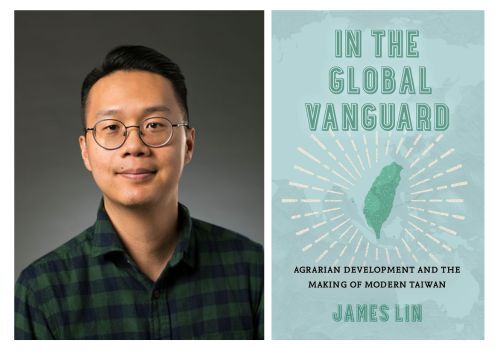
James Lin
Henry A. Wallace Award 2025
Agricultural History Society
James Lin is Assistant Professor of International Studies at the University of Washington in Seattle.
In the Global Vanguard
Agrarian Development and the Making of Modern Taiwan
In just half a century, Taiwan transformed from an agricultural colony into an economic power, spurred by efforts of the authoritarian Republic of China government in land reform, farmers associations, and improved crop varieties. Yet overlooked is how Taiwan brought these practices to the developing world. In the Global Vanguard elucidates the history and impact of the “Taiwan model” of agrarian development by incorporating how Taiwanese experts took the country’s agrarian success and exported it throughout rural communities across Africa and Southeast Asia. Driven by the global Cold War and challenges to the Republic of China’s legitimacy, Taiwanese agricultural technicians and scientists shared their practices, which they claimed were better suited for poor, tropical societies in the developing world. These development missions, James Lin argues, were projected in Taiwan as proof of the ruling government’s modernity and technical prowess and were crucial to how the state sought to hold onto its contested position in the international system and its rule by martial law at home.
A free ebook version of this title is available through Luminos, University of California Press’s Open Access publishing program. Visit www.luminosoa.org to learn more.
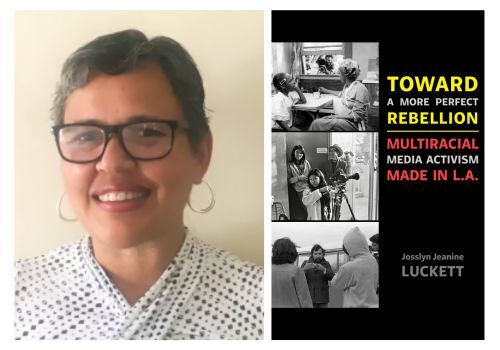
Josslyn Jeanine Luckett
Kraszna-Krausz Book Award (Moving Images) Shortlist 2026
Kraszna-Krausz Foundation
Josslyn Jeanine Luckett is Assistant Professor of Cinema Studies at New York University. She is a former staff writer for Queen Sugar and The Steve Harvey Show, and her original teleplay Love Song was directed by Julie Dash for MTV.
Toward a More Perfect Rebellion
Multiracial Media Activism Made in L.A.
Toward a More Perfect Rebellion tells the riveting story of the socially engaged filmmakers of color who studied in the Ethno-Communications Program at the University of California, Los Angeles, between 1969 and 1973. While the program is best known for training the trailblazing group of Black directors known as the L.A. Rebellion, this book also includes the radical Asian American, Chicana/o, and Native American filmmakers who collaborated alongside their Black classmates to create one of the most expansive and groundbreaking bodies of work of any US university cohort. Through extensive interviews with the filmmakers and cross-racial analysis of their collective filmography, Josslyn Jeanine Luckett sheds light on a largely untold history of media activists working outside Hollywood yet firmly rooted in Los Angeles, aiming their cameras with urgency and tenderness to capture their communities' stories of power, struggle, and improvisational brilliance.
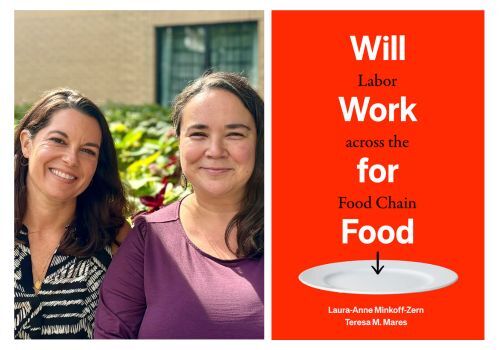
Teresa M. Mares & Laura-Anne Minkoff-Zern
Association for the Study of Food & Society Book Award 2026
Association for the Study of Food and Society
Teresa M. Mares is Associate Professor of Anthropology and Affiliated Faculty of Food Systems at the University of Vermont. She is the author of Life on the Other Border: Farmworkers and Food Justice in Vermont.
Laura-Anne Minkoff-Zern is Associate Professor of Geography and the Environment at Syracuse University. She is the author of The New American Farmer: Immigration, Race, and the Struggle for Sustainability.
Will Work for Food
Labor across the Food Chain
Examining the essential role—and exploitation—of frontline workers across the food chain.
Consumers are demanding a healthier and more sustainable food system. Yet labor is rarely part of the discussion. In Will Work for Food, Laura-Anne Minkoff-Zern and Teresa M. Mares chronicle labor across the food chain, connecting the entire food system—from fields to stores, restaurants, home kitchens, and even garbage dumps.
Using a political economy framework, the authors argue that improving labor standards and building solidarity among frontline workers across sectors is necessary for creating a more just food system. What would it take, they ask, to move toward a food system that is devoid of human exploitation? Combining insights from food systems and labor justice scholarship with actionable recommendations for policy makers, the book is a call to action for labor activists, food studies students and scholars, and anyone interested in food justice.
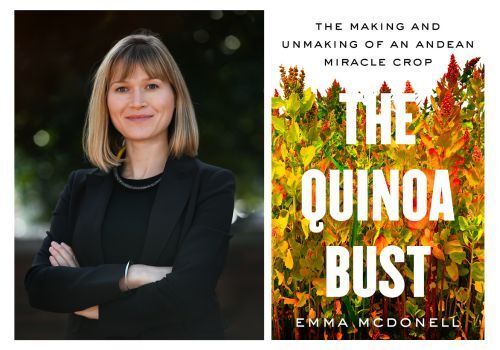
Emma McDonnell
ASFS Book Award Honorable Mention 2026
Association for the Study of Food and Society
Emma McDonell is Assistant Professor of Anthropology at the University of Tennessee at Chattanooga and coauthor of Critical Approaches to Superfoods.
The Quinoa Bust
The Making and Unmaking of an Andean Miracle Crop
Quinoa rose to global stardom pitched as an unparalleled sustainable development opportunity that heralded a bright future for rural communities devastated by decades of rural-urban migration, civil war, and state neglect. The Quinoa Bust is based in a longitudinal ethnography centered around Puno, Peru, the main quinoa production area in the world’s chief quinoa exporting country. This book traces the social, ecological, technological, and political work that went into transforming a humble Andean grain into a development miracle crop and also highlights that project’s unintended consequences. The Quinoa Bust shows how even efforts based in the best of intentions—counteracting the homogenization of global food supply, empowering small-scale farmers, revaluing local food cultures, and adapting agricultural systems to climate change—can generate new kinds of oppression. At a time when so-called forgotten foods are increasingly positioned as sustainable development tools, The Quinoa Bust offers a cautionary tale of fleeting benefits and ambivalent results.
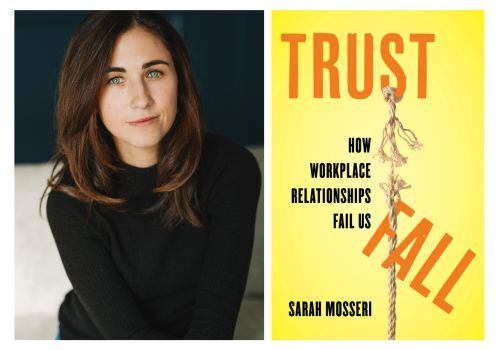
Sarah Mosseri
B.C. Wright Mills Award 2026
Boston College
Labor and Labor Movements Book Award Honorable Mention 2026
American Sociological Association Section on Labor and Labor Movements
Sarah Mosseri is a sociologist and writer whose insights are shaped by years spent working on both sides of the labor divide—from the service counter to the strategy room.
Trust Fall
How Workplace Relationships Fail Us
How do millions of Americans navigate today’s demanding and unpredictable work terrain without the protection of strong labor laws, unions, or a reliable social safety net? They turn to trusted colleagues and supervisors to help find a way through the chaos. But is interpersonal trust truly a solution, or just another source of vulnerability?
In Trust Fall, Sarah Mosseri delves into the intricate web of workplace trust. Drawing on years of immersive research across diverse industries—from bustling restaurants and tech startups to marketing agencies and ride-hail circuits—she uncovers how the very bonds workers rely on to manage instability and insecurity often deepen their exposure to risk and exploitation.
Blending vivid storytelling with sharp sociological insight, Trust Fall reveals the seduction and costs of workplace trust. It gives readers the language to recognize and challenge the unspoken bargains workers make to belong, thrive, and survive in today’s precarious labor landscape.
Etsuko Taketani
Nakahara Nobuyuki Award 2026
The Japanese Association for American Studies
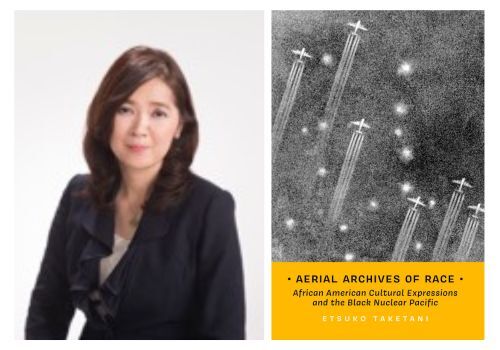
Etsuko Taketani is Professor of American Literature at the University of Tsukuba, Japan.
Aerial Archives of Race
African American Cultural Expressions and the Black Nuclear Pacific
Opening new perspectives in transpacific studies, Etsuko Taketani examines the genealogy and contours of the aerial imaginary and the corollary shifting planetary imaginary that evolved in a transnational space she names the “Black nuclear Pacific.” Following the first dropping of an atom bomb on humans and the subsequent military occupation of Japan by the United States, Black-Japanese encounters happened on a scale unimaginable before World War II. Analyzing texts by a diverse range of artists, writers, and political thinkers who had formative interactions with occupied Japan—including the NAACP’s Walter White, lawyer Edith Sampson, Josephine Baker, Langston Hughes, Lorraine Hansberry, and Malcolm X—Taketani uncovers African American cultural expressions that include a quasi–alien abduction narrative, the literary creation of a new tribe in the image of a rainbow, a Black futuristic apocalypse, and a racial fantasy of the Mother Plane. Aerial Archives of Race tracks the Black networks and exchanges with Japan that provoked new ways of thinking about (human) races on planet Earth.
A free ebook version of this title is available through Luminos, University of California Press’s Open Access publishing program. Visit www.luminosoa.org to learn more.
Emily Yates-Doerr
ASFS Book Award Honorable Mention 2026
Association for the Study of Food and Society
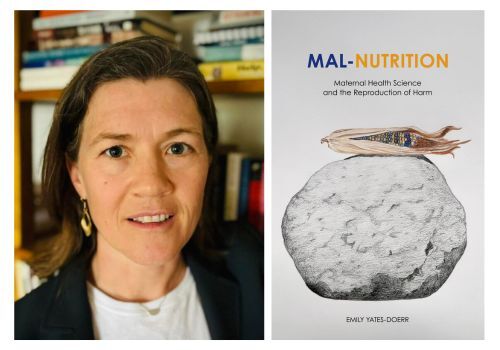
Emily Yates-Doerr is Associate Professor of Anthropology at Oregon State University and author of The Weight of Obesity.
Mal-Nutrition
Maternal Health Science and the Reproduction of Harm
Mal-Nutrition documents how maternal health interventions in Guatemala are complicit in reproducing poverty. Policy makers speak about how a critical window of biological growth around the time of pregnancy—called the "first 1,000 days of life"—determines health and wealth across the life course. They argue that fetal development is the key to global development. In this thought-provoking and timely book, Emily Yates-Doerr shows that the control of mothering is a paradigmatic technique of American violence that serves to control the reproduction of privilege and power. She illustrates the efforts of Guatemalan scientists, midwives, and mothers to counter the harms of such mal-nutrition. Their powerful stories offer a window into a form of nutrition science and policy that encourages collective nourishment and fosters reproductive cycles in which women, children, and their entire communities can flourish.
A free ebook version of this title is available through Luminos, University of California Press’s Open Access publishing program. Visit www.luminosoa.org to learn more.