Queering Economics for a Better Future
By Leanne Roncolato and Michael E. Martell, co-authors of Queering Economics: Reimagining the Dismal Science
The American Economic Association (AEA) will have their annual meeting of its membership the first week of January. It’s an annual tradition and an important meeting of the minds. Leading economists, including Nobel Laureates, come together to discuss the most pressing issues of our day -- inflation, monetary policy, unemployment, and gun violence, for example, are all on the docket. These meetings are important. Society’s need to understand and solve our problems is growing. The interest among economists to attend the largest forum where they’re discussed is not. That is a problem.
Attendance at the AEA meetings is spiraling. The 2024 meeting attracted 5,443 registrants. This is less than half as many that had attended in 2020 during a global pandemic (Rousseau 2024)*. Part of the decline in attendance surely relates to the meeting no longer being a central hub for job interviews for PhD economists entering the world of paid work. This is a good thing. Interviews used to be in hotel rooms, where young women entering the profession would find themselves alone in small hotel rooms with a group of older men aggressively asking questions. The AEA appears to be working to counteract this plunge. The AEA is introducing more opportunities for participants to present their work. They are changing the program. These efforts aren’t paying off. We believe attendance is down because the AEA, and economics more broadly, doesn’t understand the problem. The problem is the profession.
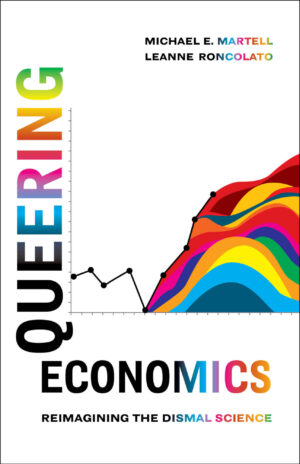
The annual meeting serves for many as a first introduction to the profession. Economists describe it as a rite of passage. Those joining the profession experience it as a survival test. In our book, Queering Economics, we spoke with 31 LGBTQ+ economists. Many of them described their experiences with the AEA meetings to us:
Lynn, a white lesbian now in her sixties, first attended the AEA meetings at the beginning of her career, she described it as “very white male, very uptight, and it’s like, Am I really welcome in this group?” Michelle, a Black bisexual cis woman in her thirties, described her first experience going to the AEAs as “traumatic.” She experienced participants in her session being aggressive and patronizing, and even another panelist telling a racist joke with no recourse. For white gay cis men the AEA has historically not been welcoming either. Peter, a white gay economist who even served on the executive committee of the AEA in the 1990s, decided to not be out to his colleagues on the committee. As such, queer economists have not historically been drawn to the AEA or its meetings. Nor were they welcomed to it. Luke, a gay economist of color in his fifties, told us: “I have stepped away from economics to a large extent. I am still, you know, a member of the AEA, and all that. But I’ve stepped away from it because I found that in the field, I’ve never felt welcome.”
Another interviewee, Gina, like many caregivers and parents, simply prioritizes her family and has stopped going.
Many don’t enjoy the conference, and no longer go, because it has never been designed with them in mind in the first place. The conference—and the discipline at large— has historically been domain of a small number of powerful white cishet men. The AEA presidency has been handed down from one president to the next. And the president’s prerogative shapes the contours of the conference. The presidents have all come from a handful of prestigious schools. The scope of those with influence is narrow – just like those who control the production of knowledge, peer-reviewed research. The result is immense pressure to impress the powerful. To conform to their antiquated culture and perspectives. To outdo others. The careerism is crowding out good research and dissent. It crowds out economic research that explains processes of stratification and marginalization but instead promotes the well-being of the wealthy. It is crowds out queers who – among the thousands of others who no longer attend the conference – are losing interest and don’t see themselves in a cis and heteronormative discipline. And so, it crowds out interest in the conference. It crowds out those who could make economics – and the world – a better place.
How do we return the conference, then, to its former glory? We don’t. We transform it into something that sparks interest and excitement, something that serves society. And to do so, we have to start with the discipline. We have to treat the illness not its symptoms. The AEA does seem a least somewhat aware that the women need to be empowered and there are signs of progress. Four of the last six AEA presidents were women, and Dr. Leah Bouston is delivering this year’s Distinguished Lecture. The AEA has granted more space for queer economists, and they should take note of our successes. The experiences of our interviewers show us that we, and the AEA, need to do much more structural work to transform the discipline. In Queering Economics our interviewees tell us what institutions, departments, and all of us can do to make change. We have to change the way we do economics and are economists. We need to welcome and embrace difference and dissent. We have to queer economics.
* Peter Rousseau “Minutes of the Meeting of the Executive Committee via Zoom, April 5, 2024” AEA Papers and Proceedings 2025, 115: 729–734 https://doi.org/10.1257/pandp.115.729
About the Authors
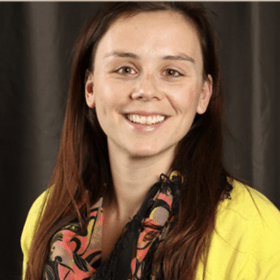
is Associate Professor of Economics at Franklin and Marshall College.
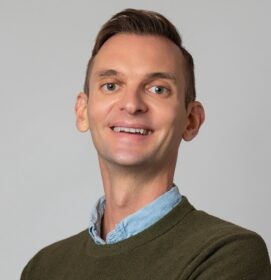
is Associate Professor of Economics at Bard College.