UC Press August Award Winners
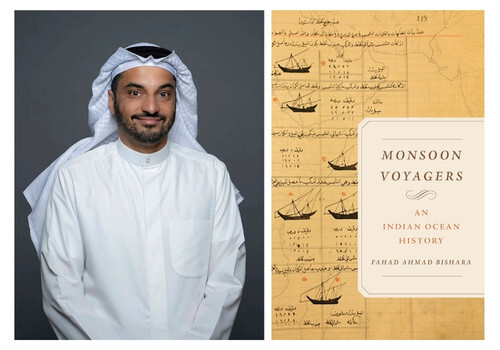
Fahad Ahmad Bishara
British-Kuwait Friendship Society Book Prize 2026
British-Kuwait Friendship Society
Fahad Ahmad Bishara is Associate Professor of History and Rouhollah Ramazani Professor of Arabian Peninsula and Gulf Studies at the University of Virginia. He is author of A Sea of Debt: Law and Economic Life in the Western Indian Ocean, 1780–1950.
Monsoon Voyagers
An Indian Ocean History
Monsoon Voyagers follows the voyage of a single dhow, the Crooked, along with its captain and crew, from Kuwait to port cities around the Persian Gulf and Western Indian Ocean, from 1924 to 1925. Through his account of the voyage, Fahad Ahmad Bishara unpacks a much broader history of circulation and exchange across the Arabian Sea in the time of empire. From their offices in India, Arabia, and East Africa, Gulf merchants used the technologies of colonial capitalism—banks, steamships, railroads, telegraphs, and more—to remake their own regional bazaar economy. In the process, they remade the Gulf itself. Drawing on the Crooked's first-person logbooks, along with letters, notes, and business accounts from a range of port cities, Monsoon Voyagers narrates the still-untold connected histories of the Gulf and Indian Ocean. The Gulf's past, it suggests, played out across the sea as much as it did the land.
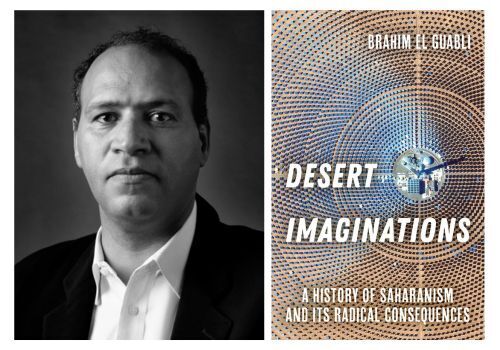
Brahim El Guabli
African Studies Association Best Book Award Finalist 2026
African Studies Association
Brahim El Guabli is Associate Professor of Arabic and Comparative Literature at Williams College. He is author of Moroccan Other-Archives: History and Citizenship after State Violence.
Desert Imaginations
A History of Saharanism and Its Radical Consequences
Desert Imaginations traces the cultural and intellectual histories that have informed the prevalent ideas of deserts across the globe. The book argues that Saharanism—a globalizing imaginary that perceives desert spaces as empty, exploitable, and dangerous—has been at the center of all desert-focused enterprises. Encompassing spiritual practices, military thinking, sexual fantasies, experiential quests, extractive economies, and experimental schemes, among other projects, Saharanism has shaped the way deserts not only are constructed intellectually but are acted upon. From nuclear testing to border walls, and much more, Brahim El Guabli articulates some of Saharanism's consequential manifestations across different deserts. Desert Imaginations draws on the abundant historical literature and cultural output in multiple languages and across disciplines to delineate the parameters of Saharanism. Against Saharanism's powerful and reductive vision of deserts, the book rehabilitates a tradition of desert eco-care that has been at work in desert Indigenous people's literary, artistic, scholarly, and ritualistic practices.
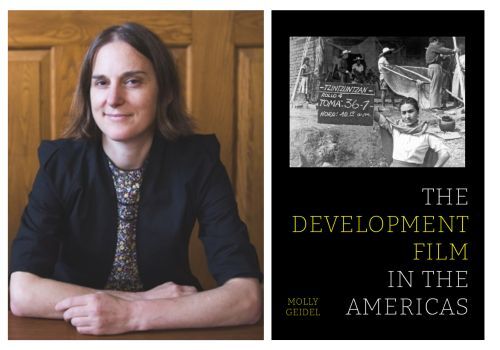
Molly Geidel
Lois P. Rudnick Book Prize 2026
New England American Studies Association
Molly Geidel is Associate Professor of Women's, Gender, and Sexuality Studies at Dartmouth College and author of Peace Corps Fantasies: How Development Shaped the Global Sixties.
The Development Film in the Americas
In this book, Molly Geidel traces the rise and fall of the development film, an overlooked film genre that circulated widely in the Americas from the 1940s through the 1970s. Development films, often short documentaries, were made at the behest of state agencies, global governance organizations, and private corporations to link capitalist conceptions of economic growth to improved quality of life. Development films made this link beautifully compelling, blending elements from ethnography and socially committed leftist film traditions to create indelible narratives of underdevelopment and modernization. The Development Film in the Americas tells the story of these films and the hemispheric cohort of filmmakers who crafted them, chronicling the filmmakers' fraught relationships with both the organizations they worked for and the actors in their films.
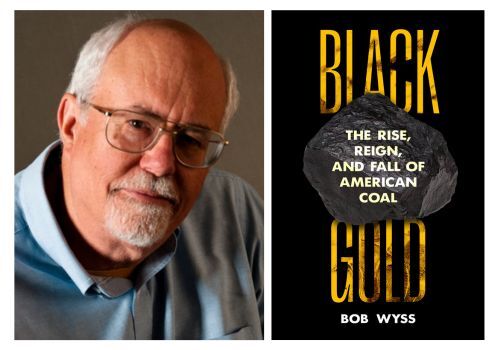
Bob Wyss
Washington State Book Award (General Nonfiction/Biography) Finalist 2026
Washington State Library and the Washington Commission for the Humanities
Bob Wyss was a reporter and editor at the Providence Journal for thirty years, a journalism professor at the University of Connecticut for fifteen years, and is currently Professor Emeritus.
Black Gold
The Rise, Reign, and Fall of American Coal
For decades coal has been crucial to America's culture, society, and environment, an essential ingredient in driving out winter's cold, cooking meals, and lighting the dark. In the coalfields and beyond, Bob Wyss describes how this magical elixir sparked the Industrial Revolution, powered railroads, and built urban skylines, while providing home comforts for families.
Coal's history and heritage are fundamental to understanding its legacy of threats to America's well-being. As industry developed so did clashes between powerful tycoons, coal miners, and innocent families. Exploitation and avarice led to victimization, deadly violence, and ultimately the American labor movement. More recently coal has endangered American lives and safety, brought on by two centuries of carbon combustion, and here the threat remains unresolved. This is coal's most enduring legacy, and Black Gold is pivotal in helping us understand how we got to this point.
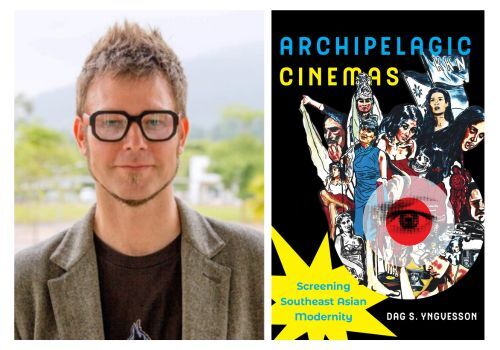
Dag S. Yngvesson
EuroSEAS Humanities Book Prize Shortlist 2026
European Association for Southeast Asian Studies
Dag S. Yngvesson is a filmmaker and Assistant Professor of Cinema and Cultural Studies in the School of Humanities at the University of Nottingham Malaysia.
Archipelagic Cinemas
Screening Southeast Asian Modernity
Archipelagic Cinemas compares trajectories of cinematic and political development across Southeast Asia from the mid-twentieth century to the present, taking the Indonesian island of Java as a key point of departure. Its "archipelagic" approach reflects a region of tanah air (land-water) where strategies of communication are shaped by the inevitability of difference and constant change. Archipelagic Cinemas foregrounds the outgrowth of local motion pictures from established regional modes of expression, such as touring vernacular theaters, known for their improvised assemblies of narratives and aesthetics from diverse places and times. Similarly, Southeast Asian movies have distinguished themselves by rejecting the imposition of a single, sovereign, or necessarily masculine point of reference. Filmmakers respond to political and social shifts with populist shows of unruliness, mockery, and often horror while challenging binary interpretations of good and evil, self and other, and on- and off-screen space. A common cinematic "matrifocal gaze" takes the blurring of women's and men's roles in the region as a tool of engagement with nationalist contests over gender and power. Together, regional cinemas set the stage for a multifarious modern visuality rooted in the unique, intertwined histories of Southeast Asian nations.
A free ebook version of this title is available through Luminos, University of California Press’s Open Access publishing program. Visit www.luminosoa.org to learn more.