The Celia Ramos Ruling and the Long Fight for Justice in Peru
by Ñusta Carranza Ko, author of Together We Fight: Surviving Peru's Campaign of Coercive Sterilizations
On March 5, 2026, the Inter-American Court of Human Rights issued its ruling in the case of Celia Ramos Durand vs. Peru. The Court found the Peruvian state responsible for grave human rights violations—including violations of the right to life, personal integrity, health, liberty, equality, and non-discrimination—committed against Celia Ramos and resulting in her death. Ramos was one of the thousands of victims of coercive sterilization carried out under the Program of Reproductive Health and Family Planning (PSRPF), instituted during the second term of Alberto Fujimori’s presidency. The Court ruled that the Peruvian state was responsible for implementing a policy of mass sterilization that specifically targeted women of rural, economically marginalized, and Indigenous descent.
As someone who studies this family planning campaign, I was beyond excited to hear the news. This marked the Inter-American Court’s first historic ruling on a coercive sterilization case.
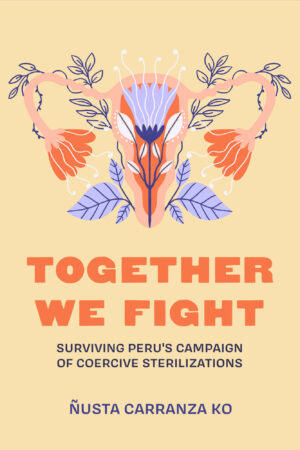
By the time I was done writing my book, Together We Fight, the Inter-American Court had yet to set a date for its ruling. Still, I remained hopeful that progress was finally being made in this long search for legal or retributive justice. Rocío Silva Santisteban, the head of the human rights nongovernmental organization representing Celia’s family before the Inter-American Court, remarked to me:
“The main obstacle lies in the willful ignorance and rejection by the state about this case…justice has been lentíssimo (very slow) in coming”
This frustration was understandable. Several other human rights activists I spoke with—many of whom worked directly with victim-survivors of coercive sterilization—expressed similar concerns.
While there was clear bureaucratic stalling in the case, likely influenced by political interests tied to Fujimori’s enduring support base in Peru, there was perhaps more at stake. The case involving thousands of predominantly Indigenous women who were coercively sterilized was being deliberately delayed within the Peruvian legal system not only because it implicated violations of the rights to life and non-discrimination, among the many abuses identified by the Inter-American Court of Human Rights. As I argue in the book, this was also a case of genocide.
Ketty López Marcelo, the president of an Indigenous human rights organization involved in advocacy efforts for victim-survivors of coercive sterilization, explained:
“We feel that from the state, they have [been] trying to exterminate us in different ways…. [F]orced sterilizations also are there, as an example of how they have tried to disappear us, so that the sisters can no longer have descendants as it occurred in native and campesino communities”
Atrocities, such as genocide must be named explicitly, because doing so underscores the gravity of the crimes committed by the Peruvian government. Disguised as a family planning campaign, the government forcibly sterilized thousands of Indigenous women of rural and economically marginalized status between 1996 to 2000.
Hilaria Supa, former parliamentarian of the Andean Community and an Indigenous activist, explained that being “Indigenous” ought not to serve as a justification for the government to “disparage” Indigenous peoples. And yet, that is precisely what the government did.
Still, not all is lost. The tireless struggle of human rights activists and Celia Ramos’s family helped bring about the Celia Ramos ruling from the Inter-American Court of Human Rights, while the human rights nongovernmental organizations supporting the case of other victim-survivors of forced sterilizations continue to fight relentless within Peru. So, who knows if Peru’s incoming president in July 2026 will finally heed these demands and lend support for the long struggle for retributive justice?
About the Author

is Associate Professor in the School of Public and International Affairs at the University of Baltimore.