UC Press January Award Winners
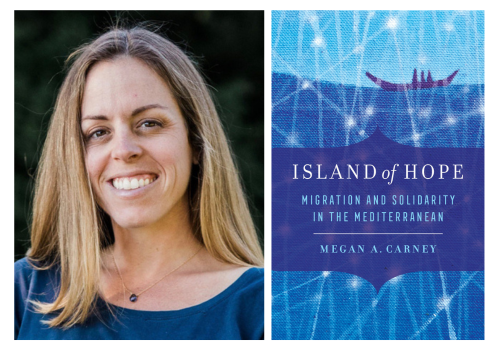
Megan Carney
Center for Global Health Book Award 2025-2026
ASU Center for Global Health
Megan A. Carney is Assistant Professor in the School of Anthropology and Director of the Center for Regional Food Studies at the University of Arizona. Her writing has appeared in The Hill, The Conversation, and Civil Eats. She is the author of the award-winning book The Unending Hunger.
Island of Hope
Migration and Solidarity in the Mediterranean
With thousands of migrants attempting the perilous maritime journey from North Africa to Europe each year, transnational migration is a defining feature of social life in the Mediterranean today. On the island of Sicily, where many migrants first arrive and ultimately remain, the contours of migrant reception and integration are frequently animated by broader concerns for human rights and social justice. Island of Hope sheds light on the emergence of social solidarity initiatives and networks forged between citizens and noncitizens who work together to improve local livelihoods and mobilize for radical political change. Basing her argument on years of ethnographic fieldwork with frontline communities in Sicily, anthropologist Megan Carney asserts that such mobilizations hold significance not only for the rights of migrants, but for the material and affective well-being of society at large.
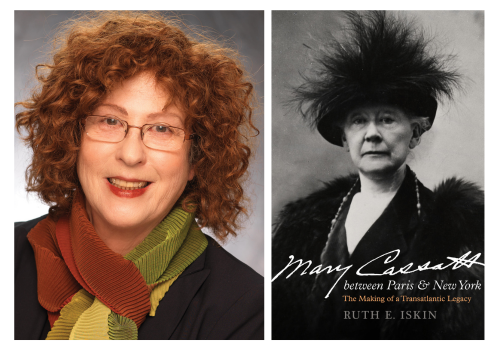
Ruth E. Iskin
Marfield Prize Finalist 2025
Arts Club of Washington
Ruth E. Iskin is author of Modern Women and Parisian Consumer Culture in Impressionist Painting and The Poster: Art, Advertising, Design, and Collecting, 1860s–1900s, editor of Re-envisioning the Contemporary Art Canon, and coeditor of Collecting Prints, Posters, and Ephemera. She is Professor Emerita at Ben-Gurion University of the Negev. Her work has been translated into eight languages.
Mary Cassatt between Paris and New York
The Making of a Transatlantic Legacy
This book re-envisions Mary Cassatt in the context of her transatlantic network, friendships, exhibitions, politics, and legacy. Rather than defining her as either an American artist or a French impressionist, author Ruth E. Iskin argues that we can best understand Cassatt through the complexity of her multiple identifications as an American patriot, a committed French impressionist, and a suffragist.
Contextualizing Cassatt’s feminist outlook within the intense pro- and anti-suffrage debates in the United States, Iskin shows how these impacted her artistic representations of motherhood, fatherhood, and older women. Mary Cassatt between Paris and New York also argues for the historical importance of her work as an advisor to American collectors, and demonstrates the role of museums in shaping her legacy, highlighting the combined impact of gender, national, and transnational dynamics.
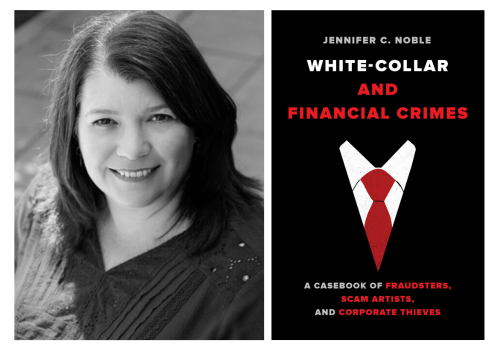
Jennifer C. Noble
Section on Pre-Law Education and Admission to Law School Excellence in Pre-Law Advising Award 2026
American Association of Law Schools
Jennifer C. Noble is Assistant Professor of Criminal Justice at California State University, Sacramento.
White-Collar and Financial Crimes
A Casebook of Fraudsters, Scam Artists, and Corporate Thieves
Examining a shocking array of fraud, corruption, theft, and embezzlement cases, this vivid collection reveals the practice of detecting, investigating, prosecuting, defending, and resolving white-collar crimes. Each chapter is a case study of an illustrative criminal case and draws on extensive public records around both obscure and high-profile crimes of the powerful, such as money laundering, mortgage fraud, public corruption, securities fraud, environmental crimes, and Ponzi schemes. Organized around a consistent analytic framework, each case tells a unique story and provides an engaging introduction to these complex crimes, while also introducing students to the practical aspects of investigation and prosecution of white-collar offenses. Jennifer C. Noble’s text takes students to the front lines of these vastly understudied crimes, preparing them for future practice and policy work.
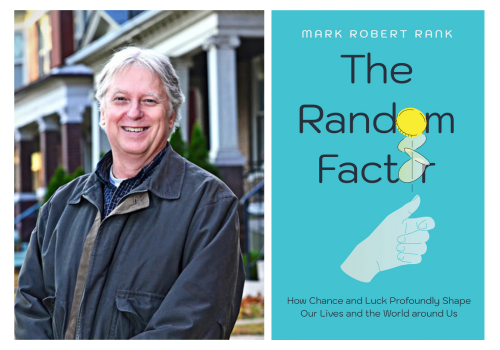
Mark Robert Rank
Independent Press Award (Sociology) 2026
Independent Press Awards
Mark Robert Rank is Herbert S. Hadley Professor of Social Welfare at Washington University in St. Louis. He has received numerous awards for his scholarship and books, and his research has been reported in a wide range of national and international media.
The Random Factor
How Chance and Luck Profoundly Shape Our Lives and the World around Us
It’s comforting to think that we can be successful because we work hard, climb ladders, and get what we deserve, but each of us has been profoundly touched by randomness. Chance is shown to play a crucial role in shaping outcomes across history, throughout the natural world, and in our everyday lives. In The Random Factor, Mark Robert Rank draws from a wealth of evidence, including interviews and research, to explain how luck and chance play out and reveals how we can use these lessons to guide our personal lives and public policies.
The Random Factor traverses luck from macro to micro, from events like the Cuban Missile Crisis to our personal encounters and relationships. From his perspective as a scholar of poverty, Rank also delves into the class and race dynamics of chance, emphasizing the stark disparities it brings to light. This transformative book prompts a new understanding of the twists and turns in our daily lives and encourages readers to fully appreciate the surprising world of randomness in which we live.
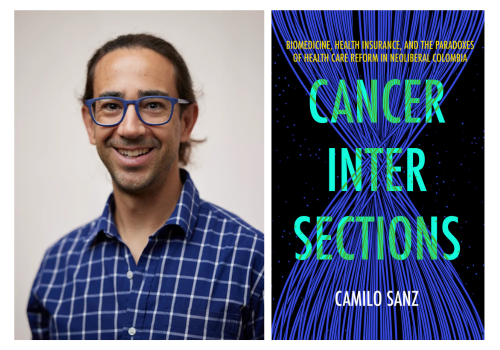
Camilo Sanz
Arthur J. Rubel Book Prize 2024
Society for Latin American and Caribbean Anthropology
Camilo Sanz is Assistant Professor of Anthropology at the University of Oklahoma.
Cancer Intersections
Biomedicine, Health Insurance, and the Paradoxes of Health Care Reform in Neoliberal Colombia
Cancer Intersections is an ethnographic analysis of the complex and paradoxical efforts to access neoliberal, market-based oncological treatments in Colombia, a country where all patients are legally guaranteed access to medical services, including high-cost ones. Drawing on years of fieldwork in the city of Cali, Camilo Sanz explores the deep entanglements between medical, legal, and policy practices that share a common goal of treating and curing cancer but are hindered by bureaucratic procedures, pernicious financial interests, and class politics. Cancer Intersections shows how the interplay of these hurdles dictates the rhythm at which patients access treatment and how even in resource-rich settings, patients suffer because of market imperatives that shape how cancer treatments unfold. Through careful and measured observation, Sanz unveils how a neoliberal universal health care regime delays access to care for those reliant on public assistance, which means that some patients will start expensive treatments only after it is unlikely to change the course of the disease.