An Exclusive Look at “Self-Realization Nation”
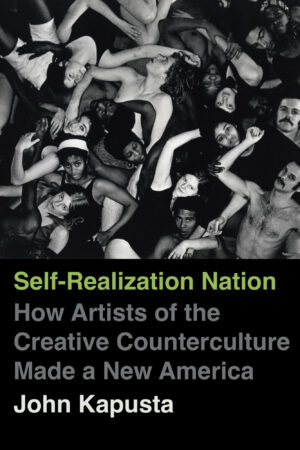
UC Press is delighted to offer an exclusive excerpt from the introduction of Self-Realization Nation: How Artists of the Creative Counterculture Made a New America by John Kapusta.
This book tells the story of a group of musicians, dancers, and actors who embraced the ideal of self-realization in the postwar United States. They were rich and poor, queer and straight, white and people of color. Some are household names, like saxophonists Sonny Rollins and John Coltrane, composers John Cage and John Adams, and guitarist Jerry Garcia; others, cult figures, like dancers Al Huang and Anna Halprin, the improviser Joseph Jarman, and the actor Viola Spolin; still others have largely been forgotten. They specialized in everything from improvisatory theater and modern dance to rock, jazz, and classical music. They were composers, choreographers, performers, and educators. What united them was an audacious, even inflammatory idea: that they could use their arts to realize their true selves and help others do the same. Self-realization, to them, meant letting go of limiting beliefs, subverting oppressive social norms, and creating a new America where everyone was free to be themselves, together. In this book, I call their movement the “creative counterculture.”
This artistic movement did not have a single leader or central organization. Instead, it looked more like a network of like-minded artists that became denser and more interconnected over time. These artists did not all know one another—though many did know and collaborate with others in the movement—but they operated with an awareness that they were part of a larger community with shared assumptions and shared goals. Like many others at the time, creative counterculturists tended to believe, in historian Joshua Clark Davis’s words, that “American society was sick from inequality, conformity, materialism, hypocritical moralism, and alienation.”
For many artists who would lead the creative counterculture, this critique was not abstract. Before they helped start the movement, they suffered nervous breakdowns, debilitating drug addictions, race-fueled violence, and other traumas. Eventually they came to believe that self-realization was the key to healing themselves and their sick society, and that they could achieve that goal using performing arts as a tool.
Creative counterculturists understood self-realization in a specific way. For them, self-realization was a natural process of growth or becoming. In order to achieve it, you had to “let go,” as they often said, of the various “tensions” that stopped the growth in its tracks. Such tensions could be physical—tense muscles, for instance. Or they could be psychological, such as self-judgment or fear. Creative counterculturists used their arts to let go of tensions and realize or become their truer selves. When they did this, they often had the feeling that they were not so much creating art as being created or coming into being. Put another way, they had the feeling that they were realizing themselves through the act of making art.
This concept was different from the conventional notion of self-expression through the arts, involving self-conscious communication of thoughts, emotions, a story, or even one’s genius. Artists of the creative counterculture tried to use their art-making to let go so that they could express themselves the way an acorn expresses its potential when it grows into an oak, as the psychologist Karen Horney described in the 1950s. “You need not, and in fact cannot, teach an acorn to grow into an oak tree, but when given a chance, its intrinsic potentialities will develop,” Horney explained. “Similarly, the human individual, given a chance, tends to develop his particular human potentialities.” Artists of the creative counterculture used their arts to give themselves and others the chance for their potential selves to be expressed.
About the Author

is Assistant Professor of Musicology at the Eastman School of Music, University of Rochester.