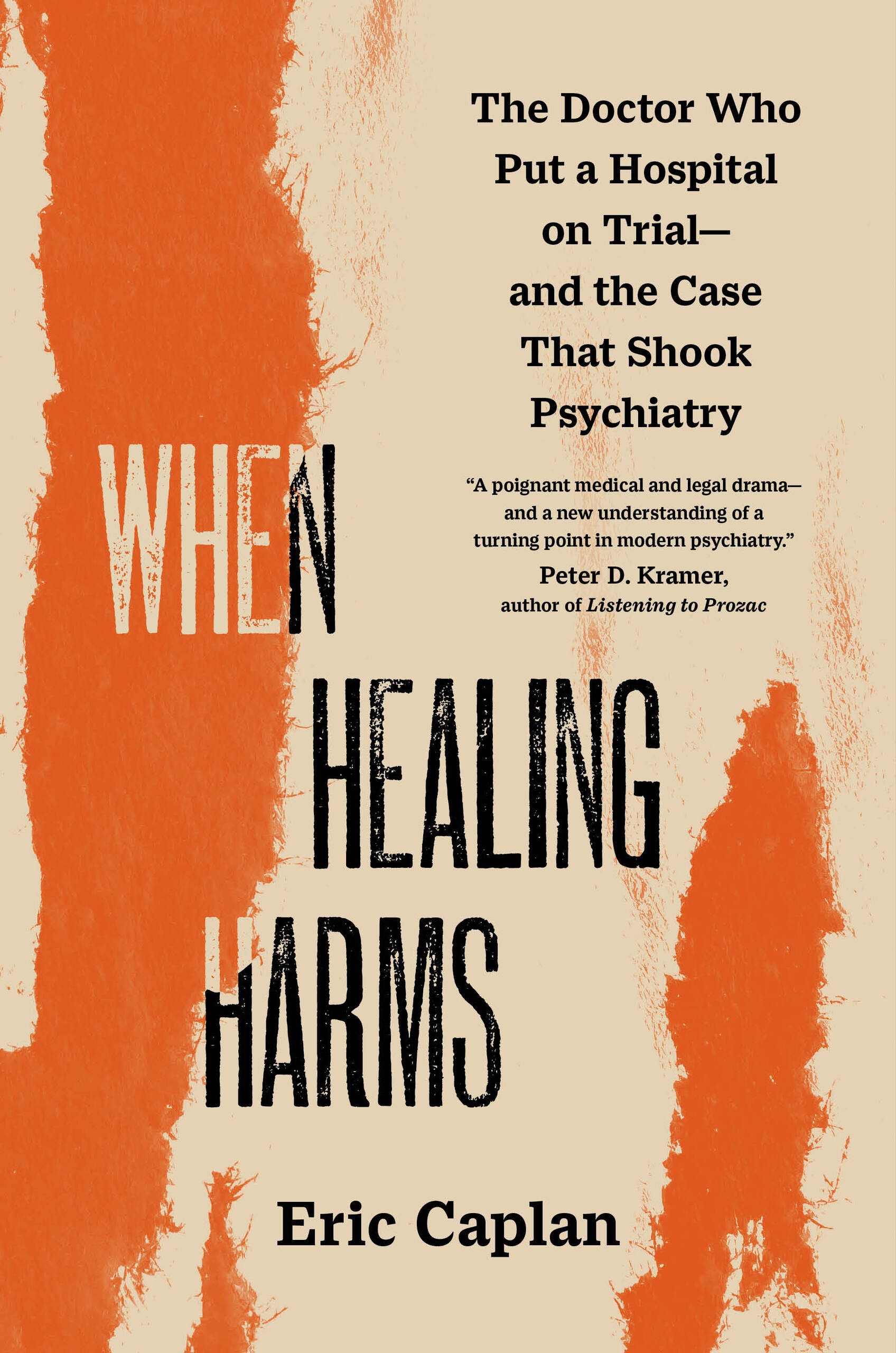
"In When Healing Harms, Eric Caplan reexamines one of the most influential legal cases in the history of American psychiatry. Osheroff v. Chestnut Lodge has been written about before but never with the care and thoroughness that Caplan brings to the story. What emerges from his research is a poignant medical and legal drama—and a new understanding of a turning point in modern psychiatry and the patient who brought it about."—Peter D. Kramer, author of Listening to Prozac
"Caplan has done a masterful job of showing that previous interpretations of the famous Osheroff case are sharply at odds with its real significance. Written with verve and style and using a dazzling array of novel source material, he documents a striking but often misunderstood example of psychiatric malpractice."—Andrew Scull, author of Desperate Remedies
“A must-read! This book masterfully explores the landmark Osheroff v. Chestnut Lodge case that transformed American psychiatry. Through rigorous research and compassionate storytelling, Caplan reveals how ideological battles and professional disputes shaped modern psychiatric care. This compelling account not only uncovers the historical significance of the case but also provides essential insights into the enduring dilemmas of mental health treatment. An invaluable resource for professionals and laypersons alike.”—Becca Levy, author of Breaking the Age Code
"A fascinating dive into the world of Raphael Osheroff, whose lawsuit over his inept treatment at a famed psychiatric hospital sealed the fate of psychoanalytic models of care for serious mental disorders. Caplan has produced an engrossing account that humanizes the person behind the lawsuit, illuminating his suffering and vividly portraying the end of an era in psychiatry."—Paul S. Appelbaum, Dollard Professor of Psychiatry, Medicine and Law at Columbia University and Past President of the American Psychiatric Association
"This masterful exploration of the Osheroff case offers an urgent meditation on psychiatry's enduring dilemmas. Through meticulous research, Caplan reveals how even well-intentioned practitioners can inflict profound harm when ideology overshadows evidence and certainty substitutes for curiosity. By illuminating the patterns in Osheroff's ordeal—therapeutic dogma, a penchant for abstraction, professional turf wars, and the human cost of theoretical rigidity—he provides essential insights for contemporary mental health care. This is more than historical documentation; it's a road map for transcending the destructive binaries that have long prevented truly integrated, humane treatment."—Holly Prigerson, Irving Sherwood Wright Professor of Geriatrics at Weill Cornell Medicine and Co-Director of the Cornell Center for Research on End-of-Life Care
“The legal case of Osheroff v. Chestnut Lodge occupies a pivotal moment in American psychiatry, as it ultimately pushed psychiatrists to prescribe antidepressants to depressed patients, lest failure to do so—particularly over an extended period—be seen an medical negligence. Caplan provides a compelling exploration of all aspects of this story, legal and personal, and perhaps the most memorable is that it provides an in-depth biography of nephrologist Ray Osheroff, telling of how his life was upended by depression and his subsequent legal battles with Chestnut Lodge.”—Robert Whitaker, author of Mad in America and Anatomy of an Epidemic
“Raphael Osheroff’s treatment at and subsequent legal action against Chestnut Lodge are seminal events in the history of modern clinical medicine, not just mental health. With comprehensive access to the medical and legal records and correspondence between the key players, Caplan offers the definitive account of the interplay of factors before, during, and after the headline events that have shaped—sometimes misleadingly—our perceptions of what was and still is at stake.”—David Healy, FRC Psych, Professor of Psychiatry at Bangor University and author of 20 books, including The Antidepressant Era, The Creation of Psychopharmacology, The Psychopharmacologists Volumes 1–3, Let Them Eat Prozac, and Mania: A Short History of Bipolar Disorder
“As president and medical director of Silver Hill Hospital—the institution where Dr. Osheroff finally received the treatment that Chestnut Lodge had refused—I have long felt that the full story of this case deserved to be told. Caplan has told it brilliantly, letting the details reveal something far more important: the enduring dilemma at the heart of psychiatry itself. This is a story the field urgently needs, told with the nuance it deserves. More histories like this would serve us well as we navigate the challenges psychiatry faces today."—Andrew Gerber, President and Medical Director, Silver Hill Hospital