
About the Book
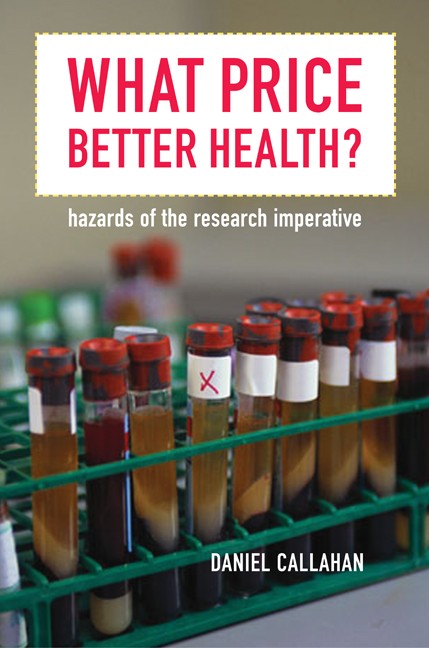
The idea that we have an unlimited moral imperative to pursue medical research is deeply rooted in American society and medicine. In this provocative work, Daniel Callahan exposes the ways in which such a seemingly high and humane ideal can be corrupted and distorted into a harmful practice.
Medical research, with its power to attract money and political support, and its promise of cures for a wide range of medical burdens, has good and bad sides—which are often indistinguishable. In What Price Better Health?, Callahan teases out the distinctions and differences, revealing the difficulties that result when the research imperative is suffused with excessive zeal, adulterated by the profit motive, or used to justify cutting moral corners. Exploring the National Institutes of Health's annual budget, the inflated estimates of health care cost savings that result from research, the high prices charged by drug companies, the use and misuse of human subjects for medical testing, and the controversies surrounding human cloning and stem cell research, Callahan clarifies the fine line between doing good and doing harm in the name of medical progress. His work shows that medical research must be understood in light of other social and economic needs and how even the research imperative, dedicated to the highest human good, has its limits.
Medical research, with its power to attract money and political support, and its promise of cures for a wide range of medical burdens, has good and bad sides—which are often indistinguishable. In What Price Better Health?, Callahan teases out the distinctions and differences, revealing the difficulties that result when the research imperative is suffused with excessive zeal, adulterated by the profit motive, or used to justify cutting moral corners. Exploring the National Institutes of Health's annual budget, the inflated estimates of health care cost savings that result from research, the high prices charged by drug companies, the use and misuse of human subjects for medical testing, and the controversies surrounding human cloning and stem cell research, Callahan clarifies the fine line between doing good and doing harm in the name of medical progress. His work shows that medical research must be understood in light of other social and economic needs and how even the research imperative, dedicated to the highest human good, has its limits.