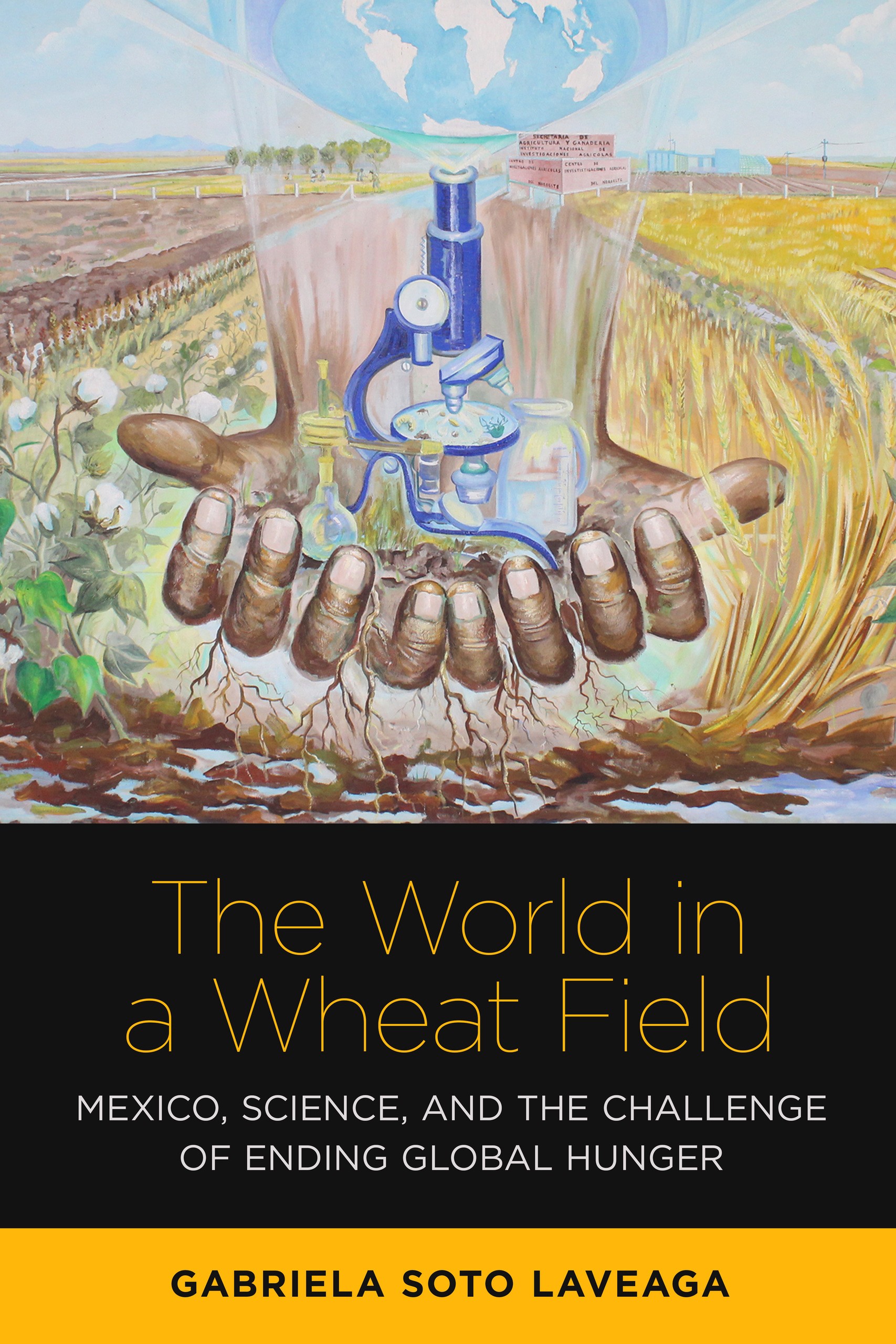

About the Book
In the mid-twentieth century, researchers at an experiment station in Sonora's Yaqui Valley designed high-yielding wheat seeds with the promise that increasing crop productivity would end world hunger. The seeds made their way across the world, where accompanying inputs such as fertilizer, pesticides, and irrigation systems transformed global farming in what came to be known as the Green Revolution. Gabriela Soto Laveaga challenges this history—often told from the point of view of philanthropic organizations, development proselytizers, or heroic American scientists—by placing native lands, Sonoran farmers, Mexican innovation, and Mexico-India connections at the center. Presenting groundbreaking archival research, The World in a Wheat Field sheds new light on how global initiatives changed a local place and points to why so many development projects failed to eradicate hunger worldwide.