University of California Press

About the Book

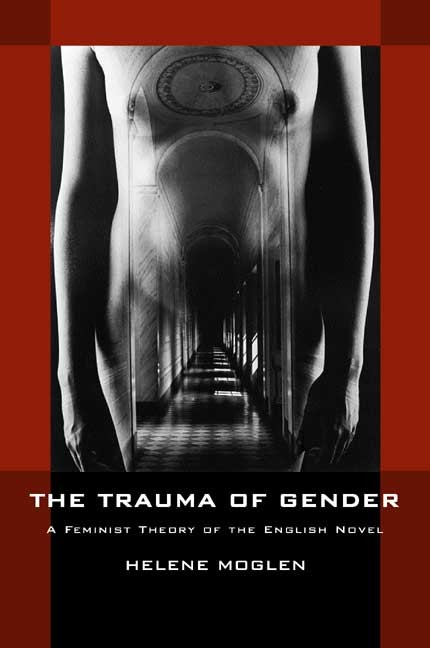
Helene Moglen offers a revisionary feminist argument about the origins, cultural function, and formal structure of the English novel. While most critics and historians have associated the novel's emergence and development with the burgeoning of capitalism and the rise of the middle classes, Moglen contends that the novel princi- pally came into being in order to manage the social and psychological strains of the modern sex-gender system. Rejecting the familiar claim that realism represents the novel's dominant tradition, she shows that, from its inception in the eighteenth century, the English novel has contained both realistic and fantastic narratives, which compete for primacy within individual texts.

About the Author

Helene Moglen is Professor of English Literature at the University of California, Santa Cruz. Among her publications are The Philosophical Irony of Laurence Sterne (1975), Charlotte Brontë The Self Conceived (1976), and Female Subjects in Black and White: Race, Psychoanalysis, Feminism (California, 1997), which she coedited with Elizabeth Abel and Barbara Christian.

Table of Contents

Acknowledgments
Introduction: The Gender Politics of Narrative Modes
1. Daniel Defoe and the Gendered Subject of Individualism
2. Clarissa and the Pornographic Imagination
3. (W)holes and Noses: The Indeterminacies of Tristram Shandy
4. Horace Walpole and the Nightmare of History
Conclusion: The Relation of Fiction and Theory
Notes
Works Cited
Index
Reviews

“. . . the novel’s development down into two separate traditions: the fantastic and the realistic. The two ideas are interrelated by their expression of rising individualism.”
Eighteenth Century: A Current Bibliography
"The Trauma of Gender is a wonderfully crafted text, provocative, insightful, and imaginative. Moglen not only shows us how to read the intrapsychic processes at work in fiction, but offers a careful consideration of the social form that loss, mourning, and desire take in the fictions she considers. Along the way, she develops a nuanced account of the origin of the novel, showing her readers in subtle ways how the beginnings of fiction and the beginnings of fantasy are interwoven. Her text exemplifies psychoanalytic literary criticism at its best, offering a fine and probing study of the social and psychic dimensions of literary works."—Judith Butler, author of Gender Trouble

"These extremely powerful and authoritative new readings of important canonical texts will set a new standard for discussions of the novel as a genre. Moglen's work as an interpreter of literary texts and of psychoanalytic theories is superior, and her muscular writing style is well-suited to the pleasurably pessimistic bent of her critical mind."—Lisa L. Moore, author of Dangerous Intimacies: Toward a Sapphic History of the British Novel

"In this lucid and perceptive study, Helene Moglen looks steadily at the shadow side of canonical eighteenth-century fiction and sees the psychic costs of waxing individualism. The book is an excellent corrective to the view that the novel is a triumphant expression of bourgeois values."—Catherine Gallagher, author of Nobody's Story: The Vanishing Acts of Women Writers in the Marketplace, 1670-1820