University of California Press

About the Book

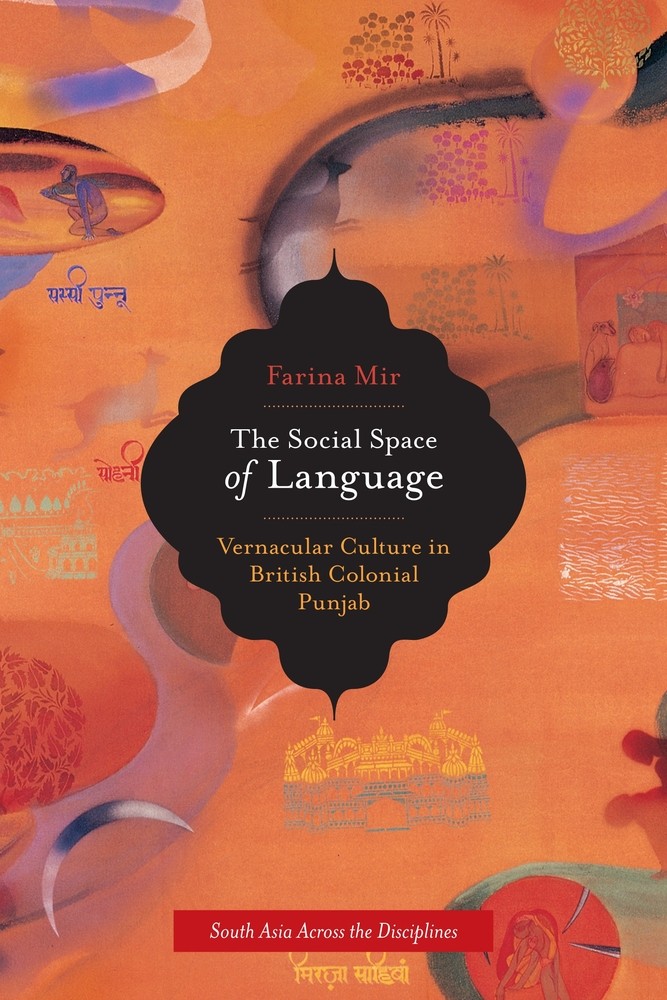
This rich cultural history set in Punjab examines a little-studied body of popular literature to illustrate both the durability of a vernacular literary tradition and the limits of colonial dominance in British India. Farina Mir asks how qisse, a vibrant genre of epics and romances, flourished in colonial Punjab despite British efforts to marginalize the Punjabi language. She explores topics including Punjabi linguistic practices, print and performance, and the symbolic content of qisse. She finds that although the British denied Punjabi language and literature almost all forms of state patronage, the resilience of this popular genre came from its old but dynamic corpus of stories, their representations of place, and the moral sensibility that suffused them. Her multidisciplinary study reframes inquiry into cultural formations in late-colonial north India away from a focus on religious communal identities and nationalist politics and toward a widespread, ecumenical, and place-centered poetics of belonging in the region.

About the Author

Farina Mir is Associate Professor of History at the University of Michigan.

Table of Contents

List of Illustrations
Acknowledgments
A Note on Translation, Transliteration, and Use of Foreign Terms

Introduction

1. Forging a Language Policy
2. Punjabi Print Culture
3. A Punjabi Literary Formation
4. Place and Personhood
5. Piety and Devotion

Conclusion

Appendix A. Colonial-Era Hir-Ranjha Texts Consulted
Appendix B. Punjabi Newspapers, 1880–1905
Appendix C. Punjabi Books Published Prior to 1867

Notes
Bibliography
Index

Reviews

"This is a pioneering study. Mir draws upon largely unfamiliar material and suggests new approaches to religio-cultural questions of great importance to South Asianists across a wide disciplinary spectrum."—Christopher Shackle, SOAS, University of London

"Mir makes creative use of archival and folkloric material to tell the history of a composite, modern, and gendered Punjabi self in colonial India that was sadly lost in the welter of partition politics and violence. The story of the legendary lovers Heer and Ranjha haunts her narrative like an artistic lament about a lost Punjabi self without in any way compromising the academic quality of her research and the rigor of her exposition. A very significant contribution to South Asian history."—Dipesh Chakrabarty, The University of Chicago

"Farina Mir has given us an outstanding work of literary and cultural history. She skillfully unravels the many versions of the famous folk-tale about Hir and Ranjha to illuminate gender, class and community relations in Punjab. This book will compel historians to rethink the links between language, religion and power and to reconsider the contingencies of union and partition in late colonial India."—Sugata Bose, author of A Hundred Horizons

"Mir's archival work covers and foregrounds the breadth of the story-telling or qissa tradition, great and little, high and low, Sufi, Sikh and Hindu, showing its wide dissemination. Mir's findings are of immense significance, given the turbulent history of the region in post-independence India and the political turmoil today, particularly on the Pakistani side of the border. Panjabi seldom finds this kind of focus in cultural history."—Vasudha Dalmia, University of California, Berkeley

Awards

  • John Richards Prize in South Asian History 2011, American Historical Association
  • Bernard S. Cohn Book Prize 2012, Association of Asian Studies