University of California Press

About the Book

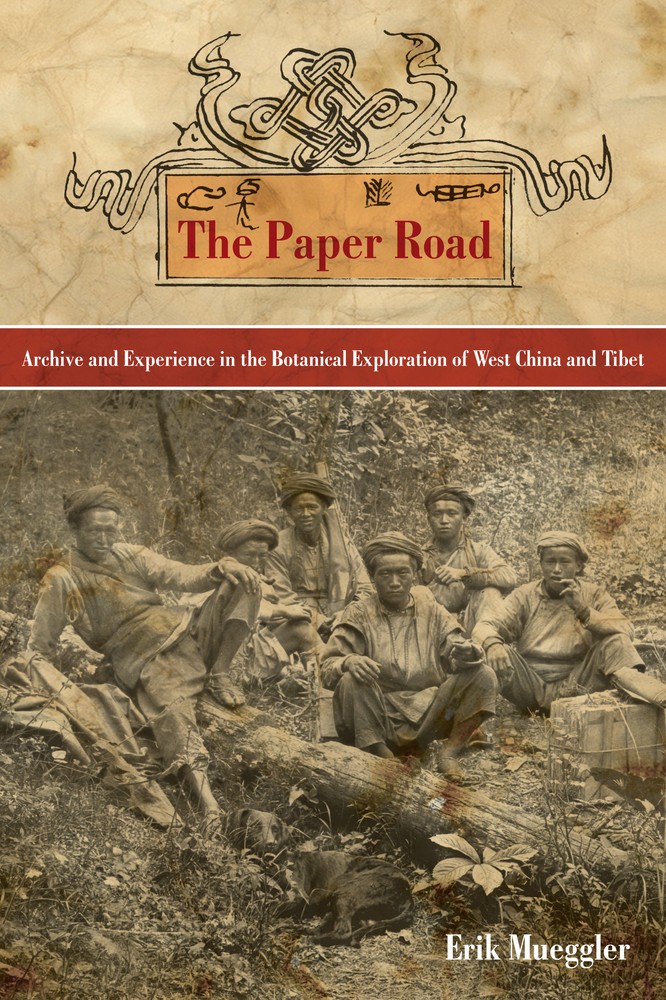
This exhilarating book interweaves the stories of two early twentieth-century botanists to explore the collaborative relationships each formed with Yunnan villagers in gathering botanical specimens from the borderlands between China, Tibet, and Burma. Erik Mueggler introduces Scottish botanist George Forrest, who employed Naxi adventurers in his fieldwork from 1906 until his death in 1932. We also meet American Joseph Francis Charles Rock, who, in 1924, undertook a dangerous expedition to Gansu and Tibet with the sons and nephews of Forrest’s workers. Mueggler describes how the Naxi workers and their Western employers rendered the earth into specimens, notes, maps, diaries, letters, books, photographs, and ritual manuscripts. Drawing on an ancient metaphor of the earth as a book, Mueggler provides a sustained meditation on what can be copied, translated, and revised and what can be folded back into the earth.

About the Author

Erik Mueggler is Professor of Anthropology at the University of Michigan. He is the author of The Age of Wild Ghosts: Memory, Violence, and Place in Southwest China (UC Press).

Table of Contents

List of Illustrations
Acknowledgments
Note on Transliteration

Introduction

Part I
1. The Eyes of Others
2. Farmers and Kings
3. The Paper Road
4. The Golden Mountain Gate

Part II
5. Bodies Real and Virtual
6. Lost Worlds
7. The Mountain
8. Adventurers
9. The Book of the Earth

Notes
Bibliography
Index

Reviews

"There is no question that this is a superb book. It is bold, innovative, stylish, and captivating."
The Journal of Asian Studies
“First things first: this is an outstanding book. . . . Mueggler weaves together . . . a lyrically-written story that treats the nature of writing, bodies, beauty, images, violence, and history in creating experiences of the earth. The characters are compelling, the story is important, and the work speaks to readers well beyond the field of East Asian Studies.”
New Bks In East Asian Stds
“This work provides the reader with a remarkable look into another place and culture in a time gone by.”
Chicago Botanic Garden
“A richly textured history that ranges across China, Burma, and Tibet. . . . The book will provide lively, informative reading for ambitious readers and specialists interested in the history of science, natural history, and Southeast Asian ethnography. . . . Highly recommended.”
Choice
"Erik Mueggler has given us a book about the earth, and it is an exquisite and evocative text. I have eagerly begun the process of recommending it widely to scholars . . . with passions every bit as diverse as the subject matter of this beautifully crafted narrative."
The British Journal for the History of Science
“Though this book is not aimed for archivists, it demonstrates exquisitely the breadth of existing archives and also how much information has simply been lost. It is an excellent reminder of why we keep archives and how archivists can always strive to document more completely the world in which we live.”
Archival Issues
“An absolutely breathtaking book -- in its thoughtfulness and imaginativeness, in the breadth and depth of the research which it entailed, in its geographical, cultural, and historical situatedness, and in its profound critical empathy for all of the key players. Beautifully and skillfully written.” – Sydney White, Associate Professor of Anthropology, Asian Studies, and Women's Studies at Temple University

"The Paper Road is an eloquent, even haunting narrative of the relationships between colonial explorers/scientists and their native collaborators that makes vivid the theme of 'colonial intimacy.' It speaks to scholars working on Chinese minorities and frontier relations, to historians of comparative colonialism, to experts on Tibet and Buddhism, and probably also simply to lovers of tales of mountains and exploration." –Charlotte Furth, Professor Emerita of Chinese History , University of Southern California.

Awards

  • Anthropology and Environment Section Julian Steward Award 2012, American Anthropological Association