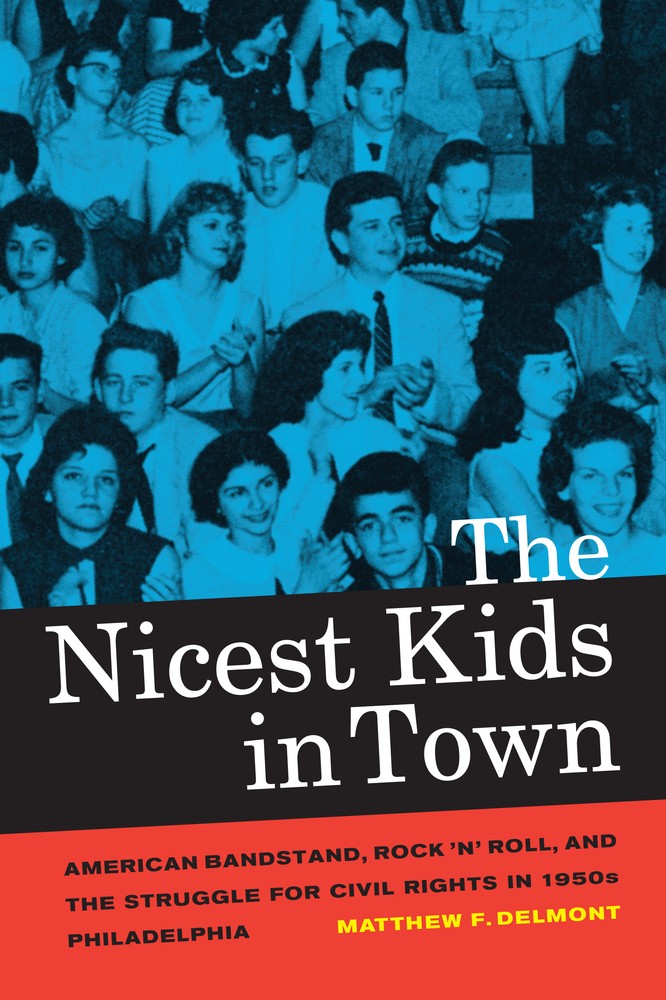
“Although the story of Bandstand has been told before, it is Delmont’s documentation of Bandstand’s resistance to integration, and black Philadelphians’ subsequent counter-resistance to Bandstand, that distinguishes his account. . . . The Nicest Kids in Town counters the (false) mythology of American Bandstand with valuable descriptions of ‘forgotten’ cultural productions.”
"Lively and perceptive. . . . Delmont’s book offers a subtle, refreshingly interdisciplinary reading of Bandstand as a site of the civil rights struggles in Philadelphia."
“Delmont set out to write about how the '50s dance show "American Bandstand" was an integrated bastion of pop culture, where Philadelphia's black and white teens mixed and mingled on television even though the rest of the country was bitterly divided by race. Then he discovered his entire premise was dead-wrong. In the resulting book, The Nicest Kids in Town, [Delmont] details how "American Bandstand" kept African-American teens off the show, despite host Dick Clark's later claims to the contrary.”
“By challenging Dick Clark’s claim that he helped integrate American popular music and culture, Matthew Delmont puts the lie to Clark’s air-brushed history of American Bandstand’s role in racial desegregation. The Nicest Kids in Town shows how the nexus of sound, place, race, and space operated together to create and reinforce a myth of national memory and belonging. Just as importantly, this compelling cultural history demonstrates the importance of the youth market as a theater of struggle where brave young men and women—outraged by the discrimination and racism they faced for the simple act of enjoying music—refused to have their bodies, tastes, or desires policed. Delmont shows how the music moved them, and how in turn they moved the music onto television screens across America.”—Herman Gray, author of Cultural Moves.
“The Nicest Kids in Town speaks simultaneously to several significant current lines of inquiry among historians of the United States after World War II. Delmont takes on issues that we thought we already knew completely—the social and cultural history of the 1950s and ‘60s, the Civil Rights movement, the birth of television—but he brings original material to his story and connects these issues in new ways. Delmont’s work proves him to be a talented, careful, and thorough scholar, and in a large body of work on these topics, his book stands alone.”—Jay Mechling, author of On My Honor: Boy Scouts and the Making of American Youth.