
About the Book
A free ebook version of this title is available through Luminos, University of California Press’s Open Access publishing program. Visit www.luminosoa.org to learn more.
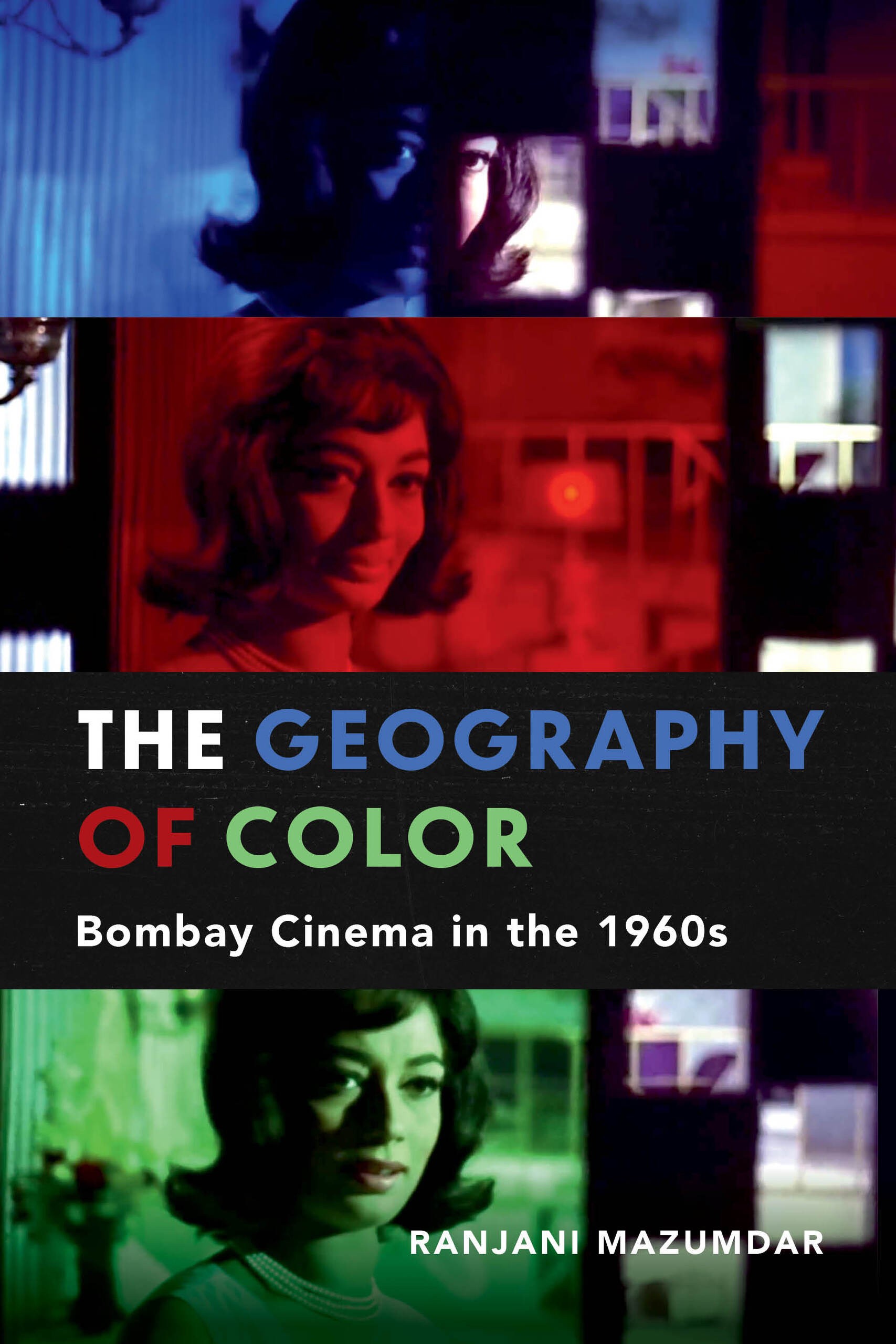
This pioneering book explores the cultural resonance of the global 1960s through Bombay cinema as it transitioned from monochrome to color. For audiences used to black-and-white films, the novel surge of color enabled India to emerge on-screen as geographical space. Hill stations, forests, psychedelic nightclubs, historical monuments, highways, and global cities flooded screens as color transformed India’s landscape into a new environment of desire and emotion. Automobiles, trains, and planes framed the chromatic texture of outdoor locations alongside the aspirational display of private property through interiors shaped by color. Ranjani Mazumdar navigates studios, laboratories, and film locations in a non-Western context, drawing in questions related to accidents, heat, light, skin tone, and race. The first book-length study of color in Bombay cinema, The Geography of Color offers a cultural history of a nation grappling with its identity in a newly globalizing world.