University of California Press

About the Book

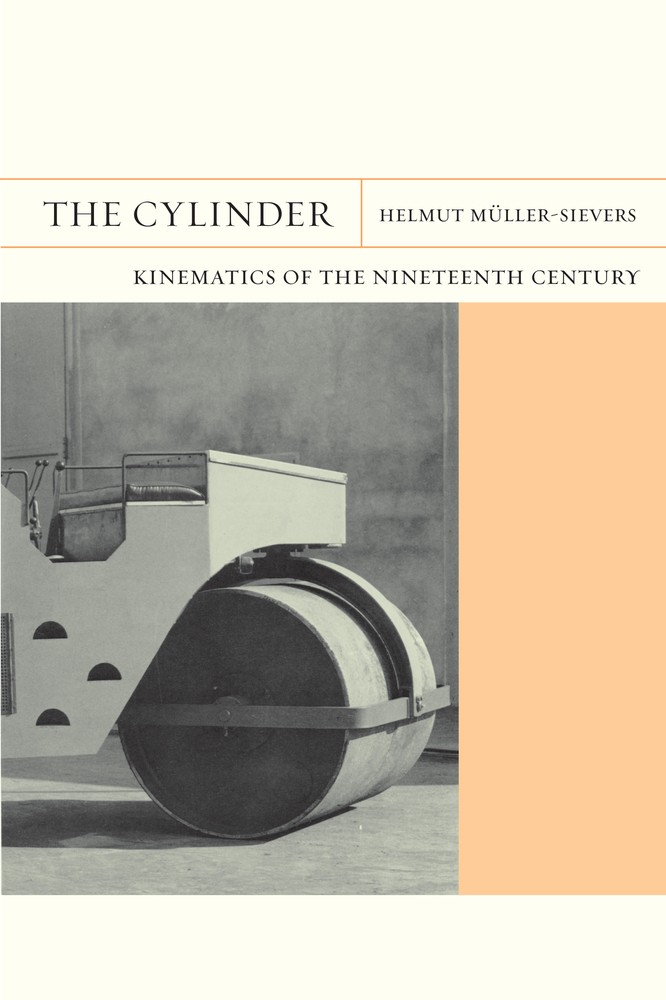
The Cylinder investigates the surprising proliferation of cylindrical objects in the nineteenth century, such as steam engines, phonographs, panoramas, rotary printing presses, silos, safety locks, and many more. Examining this phenomenon through the lens of kinematics, the science of forcing motion, Helmut Müller-Sievers provides a new view of the history of mechanics and of the culture of the industrial revolution, including its literature, that focuses on the metaphysics and aesthetics of motion. Müller-Sievers explores how nineteenth-century prose falls in with the specific rhythm of cylindrical machinery, re-imagines the curvature of cylindrical spaces, and conjoins narrative progress and reflection in a single stylistic motion. Illuminating the intersection of engineering, culture, and literature, he argues for a concept of culture that includes an epoch’s relation to the motion of its machines.

About the Author

Helmut Müller-Sievers is Director of the Center for Humanities and the Arts and Eaton Professor of Humanities and Arts at the University of Colorado at Boulder. His previous books include Self-Generation: Biology, Philosophy, and Literature around 1800.

Table of Contents

Acknowledgments

Part I: The Prehistory and Metaphysics of the Cylinder
1. Introduction
2. The Rise of Kinematics
3. The Valuation of Motions

Part II: Cylinders of the Nineteenth Century
4. The Cylinder as Motor
5. The Cylinder as Tool
6. Kinematics of Narration I: Dickens and the Motion of Serialization
7. The Cylinder as Enclosure
8. Kinematics of Narration II: Balzac and the Cylindrical Shape of the Plot
9. Gears and Screws
10. Kinematics of Narration III: Henry James and the Turn of the Screw

Epilogue
Notes
Works Cited
Index

Reviews

"Helmut Muller-Sievers’s richly illustrated, innovative study will be a great contribution to debates on realism."
Monatshefte