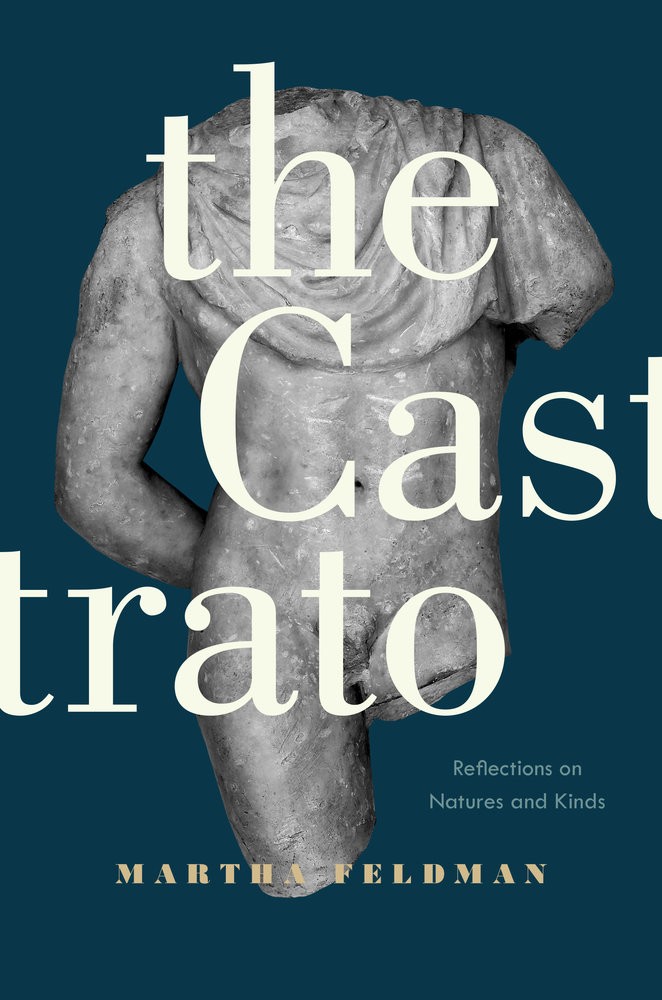
University of California Press

About the Book

The Castrato is a nuanced exploration of why innumerable boys were castrated for singing between the mid-sixteenth and late-nineteenth centuries. It shows that the entire foundation of Western classical singing, culminating in bel canto, was birthed from an unlikely and historically unique set of desires, public and private, aesthetic, economic, and political. In Italy, castration for singing was understood through the lens of Catholic blood sacrifice as expressed in idioms of offering and renunciation and, paradoxically, in satire, verbal abuse, and even the symbolism of the castrato’s comic cousin Pulcinella. Sacrifice in turn was inseparable from the system of patriarchy—involving teachers, patrons, colleagues, and relatives—whereby castrated males were produced not as nonmen, as often thought nowadays, but as idealized males. Yet what captivated audiences and composers—from Cavalli and Pergolesi to Handel, Mozart, and Rossini—were the extraordinary capacities of castrato voices, a phenomenon ultimately unsettled by Enlightenment morality. Although the castrati failed to survive, their musicality and vocality have persisted long past their literal demise.

About the Author

Martha Feldman is Mabel Greene Myers Professor of Music, Romance Languages, and Literatures and the Humanities at the University of Chicago. She is the author of City Culture and the Madrigal at Venice and Opera and Sovereignty: Transforming Myths in Eighteenth-Century Italy and coeditor of The Courtesan’s Arts.

Table of Contents

Preface
Note on Textual Transcription, Translations, Lexicon, and Musical Nomenclature

PART ONE. Reproduction
1. Of Strange Births and Comic Kin
Appendix to Chapter 1
2. The Man Who Pretended to Be Who He Was

PART TWO. Voice
3. Red Hot Voice
4. Castrato De Luxe

PART THREE. Half-light
5. Cold Man, Money Man, Big Man Too
6. Shadow Voices, Castrato and Non

Acknowledgments
Abbreviations
Notes
Bibliography
List of Illustrations
Index

Reviews

"Rich in scholarship and filled with subtle analysis." 
London Review of Books
"This is a remarkable book. . . . An impressive achievement."
Early Music
"Meticulously researched, beautifully written and richly illustrated . . . In this book, as erudite as it is gripping, there is little to criticize."
Cultural History
"Feldman's high-mindedness . . . allows her to investigate this most easily sensationalized of topics with subtlety, taste and doses of scholarship that are not suffocatingly encyclopedic. . . . If you love singing there's every reason to read The Castrato."
The Bay Area Reporter
"Working in from the broadest anthropological reflections to the most minute points of physiology and endocrinology—by way of musical and social history, the theory and practice of singing, the insights of three centuries’ worth of philosophers and psychologists, all illustrated with the rarest pictures and recordings—The Castrato is a scholarly and literary feast." —Richard Taruskin, University of California, Berkeley, and author of The Oxford History of Western Music

"After centuries of anxious myth-making, finally we have a book about the castrati that we can trust, learn from, and enjoy. Martha Feldman has given us a meditation as thought-provoking as it is wide-ranging. After this book, the topic will never be quite the same: with Feldman's imagination to guide us, the castrato's resonances, both musical and more broadly cultural, will linger in the memory."—Roger Parker, coauthor of A History of Opera
 

Awards

  • 2016 Otto Kinkeldey Award, American Musicological Society
  • Otto Kinkeldey Award 2016, American Musicological Society