University of California Press

About the Book

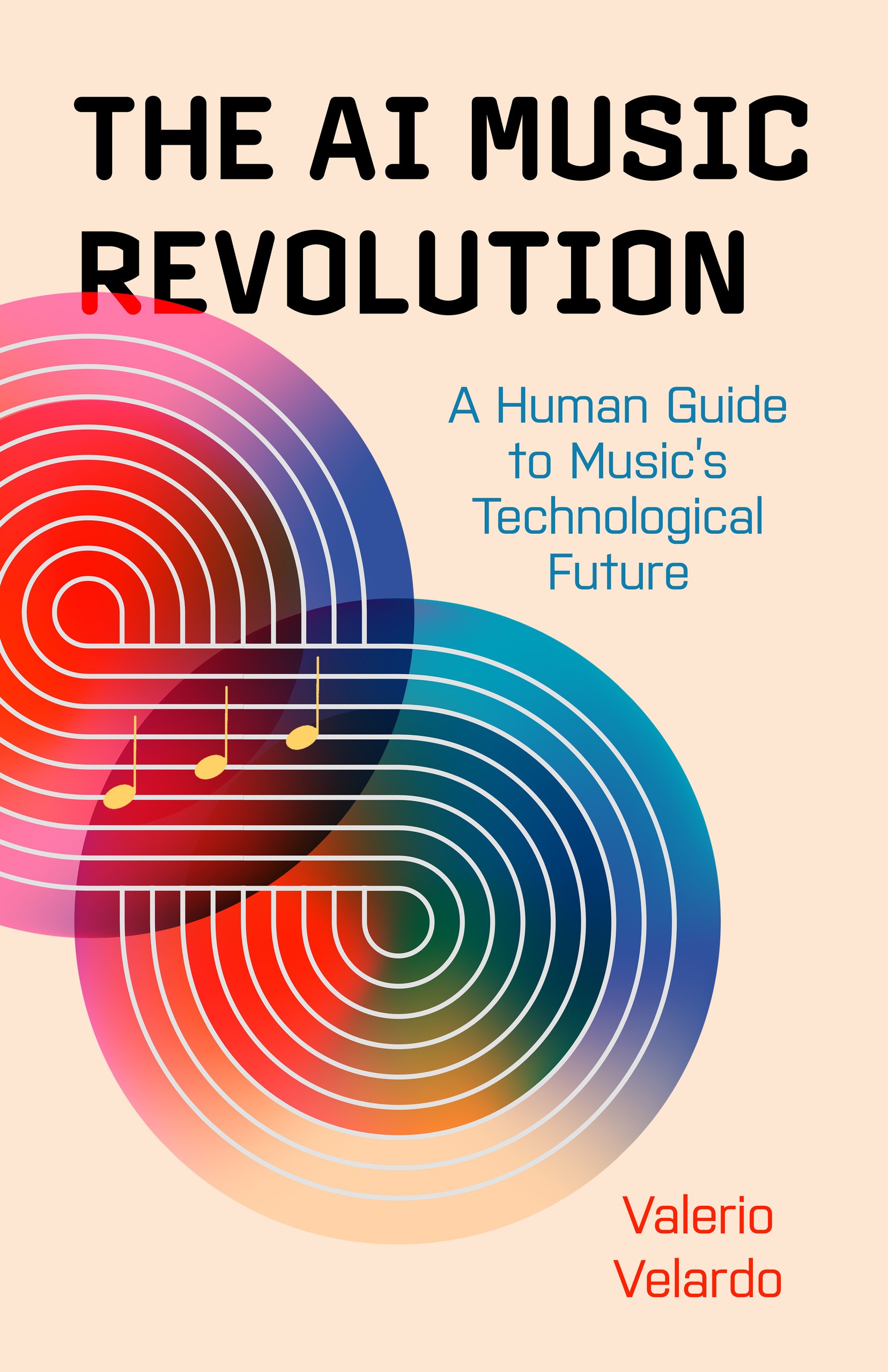
The essential guide to how AI is redefining music.

From ancient bone flutes to neural networks, humans have always used technology to push the boundaries of music-making. Rather than an unprecedented disruption, artificial intelligence is the latest chapter in the long, ever-evolving history of musical innovation.

The AI Music Revolution cuts through the hype and alarm surrounding artificial intelligence to trace the evolution of generative music from its earliest experiments to today’s explosion of machine-generated sound. Drawing on fifteen years at the forefront of AI music, Valerio Velardo explains how these systems generate sound, how they’re transforming the music industry, and what musicians, listeners, and everyone who makes a living from music stand to gain and lose.

Neither a celebration nor a warning, this book offers an accessible, clear-eyed guide to understanding the shifts driven by AI. Velardo equips us with the critical tools we need to decrypt this new chapter in music’s history—and to steer its future in a direction that centers musicians.

About the Author

Valerio Velardo is an AI music engineer, music tech entrepreneur, and adjunct professor at Pompeu Fabra University’s Music Technology Group. He is creator and host of the YouTube channel and online community The Sound of AI.

Reviews

"Valerio Velardo does not skimp in his approach to addressing the array of topics and questions that AI is thrusting upon the music world from every standpoint: historically, aesthetically, technically, economically. The AI Music Revolution is a must-read for all wanting to understand this new paradigm.”—Nolan Gasser, author of Why You Like It: The Science and Culture of Musical Taste

“Clearly optimistic about the potential of AI in music, but also aware of the risks, tensions, and unresolved questions, Velardo succeeds in bringing together expertise in AI, music, entrepreneurship, and the music industry while maintaining a personal and readable voice. This is a timely, engaging, and highly relevant contribution to the current public and professional debates on artificial intelligence and music.”—Xavier Serra, Director of the Music Technology Group, Pompeu Fabra University