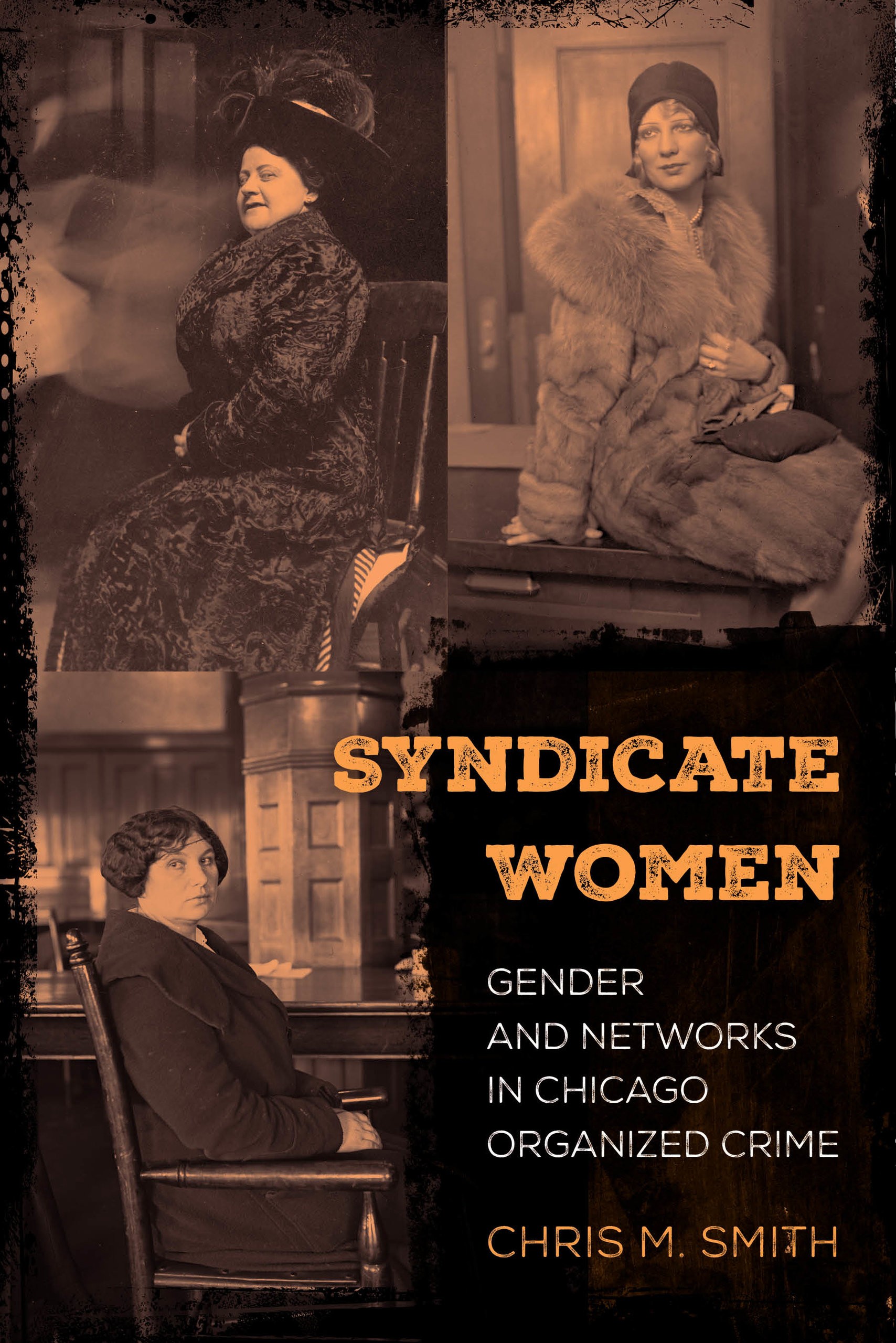
"Syndicate Women is a highly readable and entertaining study of a fascinating empirical puzzle with theoretical implications for its historical context as well as today. It showcases theories and techniques, as well as combinations of multiple theories and mixed methods in a way that is complementary rather than gratuitous, while contributing to important debates about the nature and study of criminality. Ultimately, the book offers lessons not only about female criminality, but about criminality in general."
"In short, Syndicate Women stands out for its rich and engaging blend of historiographical and network-analytic techniques applied to a topic of both scholarly and general interest. The book will especially be of interest to readers who wish to know more about the application of network techniques to historical data, Prohibition-era criminal historiography, and the gender dynamics of organized crime."
"Smith’s careful study is a welcome addition to the history of crime and criminal justice."
"Syndicate Women is a masterful piece of sociological detective work that brings to life the all-but-forgotten lives of the women entrepreneurs of Chicago’s gangster era. Smith builds an innovative theoretical argument supported by an unprecedented array of historical and network data. Move over, Al Capone—scholars will no longer be able to ignore the women who help create and sustain organized crime."—Andrew V. Papachristos, Professor of Sociology, Northwestern University
"Rich in historical detail, Syndicate Women brings to life the criminal activity of women—and men—of the Chicago underworld. Crime bosses have a part in this narrative, but it is the less prestigious positions—saloonkeeper and barmaid, brothel operator and worker—that Smith vividly captures. Using state-of-the-art network analysis, Smith shows how women offenders became increasingly marginalized as the Chicago syndicate prospered. A must-read for anyone theorizing or studying gender and crime." —Bill McCarthy, coauthor of Mean Streets: Youth Homelessness and Crime
"Smith provides rich description to set the scenes and eras and also draws from rigorous empirical analyses to make her analytic points." —Vanessa Panfil, author of The Gang's All Queer: The Lives of Gay Gang Members
"Smith’s research offers a framework that can be smoothly transposed beyond the Chicago crime scene to multiple other settings that are shaped by similar gender-related and power-struggle dynamics." —Carlo Morselli, author of Crime and Networks