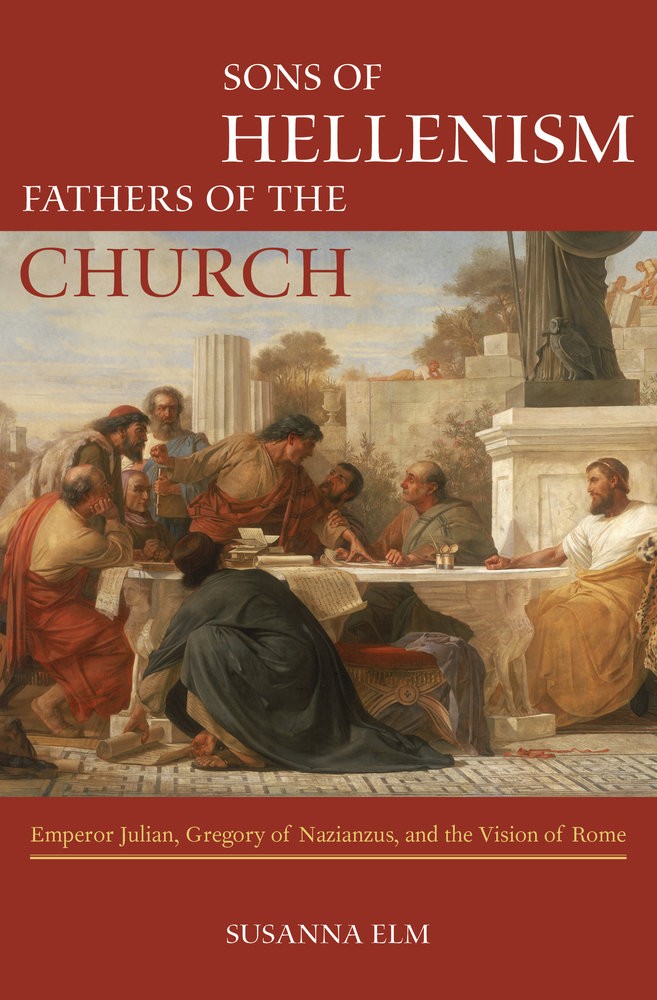
About the Book
This groundbreaking study brings into dialogue for the first time the writings of Julian, the last non-Christian Roman Emperor, and his most outspoken critic, Bishop Gregory of Nazianzus, a central figure of Christianity. Susanna Elm compares these two men not to draw out the obvious contrast between the Church and the Emperor’s neo-Paganism, but rather to find their common intellectual and social grounding. Her insightful analysis, supplemented by her magisterial command of sources, demonstrates the ways in which both men were part of the same dialectical whole. Elm recasts both Julian and Gregory as men entirely of their times, showing how the Roman Empire in fact provided Christianity with the ideological and social matrix without which its longevity and dynamism would have been inconceivable.
Table of Contents
Abbreviations
Acknowledgments
Introduction
Universalism and Governance
Julian the Emperor and Gregory the Theologian
Gregory and the Bishops
Julian and Gregory in Context
Part I
1. Nazianzus and the Eastern Empire, 330–361
Nazianzus and Gregory: The Personal and the Local
Constantinople: Emperor, Cosmopolis, and Cosmos
Constantius’s Triumph: Unity and Harmony, 358–360
Reversal: Constantius and Julian Augustus, 360–361
2. Julian, from Caesar to Augustus: Paris to Constantinople, 355–362
Toward Constantinople: From Caesar to Augustus, 360–361
Julian’s Concepts of Leadership: Philosopher and King
3. Philosopher, Leader, Priest: Julian in Constantinople, Spring 362
The Context of Julian’s Concepts of the True Philosophical Life
A Philosopher as Leader, in Julian’s Own Words: Against the Cynic Heraclius
A Universal Divinity for a Universal Empire; or, How to Interpret Myth: Hymn to the Mother of the Gods
How to Achieve True Philosophy: Against the Uneducated Cynics
The Law Regarding Teachers
Part II
4. On the True Philosophical Life and Ideal Christian Leadership: Gregory’s Inaugural Address, Oration 2
A High-Wire Act: The True Philosophical Life as the Model of Priesthood in Late Antiquity
The Codes of Aptitude
5. The Most Potent Pharmakon: Gregory the Elder and Nazianzus
The Other High-Wire Act: Fathers and Sons
The Royal Road: Gregory the Elder’s Opponents at Nazianzus
6. Armed like a Hoplite—Gregory the Political Philosopher at War: Eunomius, Photinus, and Julian
Oikeiosis pros Theon as Political Philosophy
The Enemy on the Inside: Photinus and Eunomius
What Do Words Mean?
Oikeiosis pros Theon: Oration 2 against Eunomius
Part III
7. A Health-Giving Star Shining on the East: Julian in Antioch, July 362 to March 363
The Emperor as Priest
Julian’s Divine Mandate
The Platonic Philosopher-King: The Misopogon and Julian’s Universal Vision
8. The Making of the Apostate: Gregory’s Oration 4 against Julian
The Pillar of Infamy: An Inverted Fürstenspiegel
Imperial Decrees and Divine Enactments: Julian and Constantius
9. A Bloodless Sacrifice of Words to the Word: Logoi for the Logos
Myth and Allegory
Logoi: The Theological Implications
Apostasis versus Theosis; or, True Oikeiosis pros Theon
Oration 6, On Peace: Unity and Concord
10. Gregory’s Second Strike, Oration 5
The Pagan Context
Gregory’s Second Strike against the Pagans
Procopius versus Valens
Conclusion: Visions of Rome
Governing the Oikoumene
Authority and Kinship of the Elites
Competing Universalisms
Notes
Bibliography
Index