University of California Press

About the Book

Shauna Pomerantz is Associate Professor of Child and Youth Studies at Brock University in St. Catharines, Ontario, Canada. She is the author of Girls, Style, and School Identities: Dressing the Part and the coauthor of “Girl Power”: Girls Reinventing Girlhood.
 
Rebecca Raby is Professor of Child and Youth Studies at Brock University in St. Catharines, Ontario, Canada. She is the author of School Rules: Obedience, Discipline, and Elusive Democracy and the coeditor of Power and Everyday Practices.


About the Author

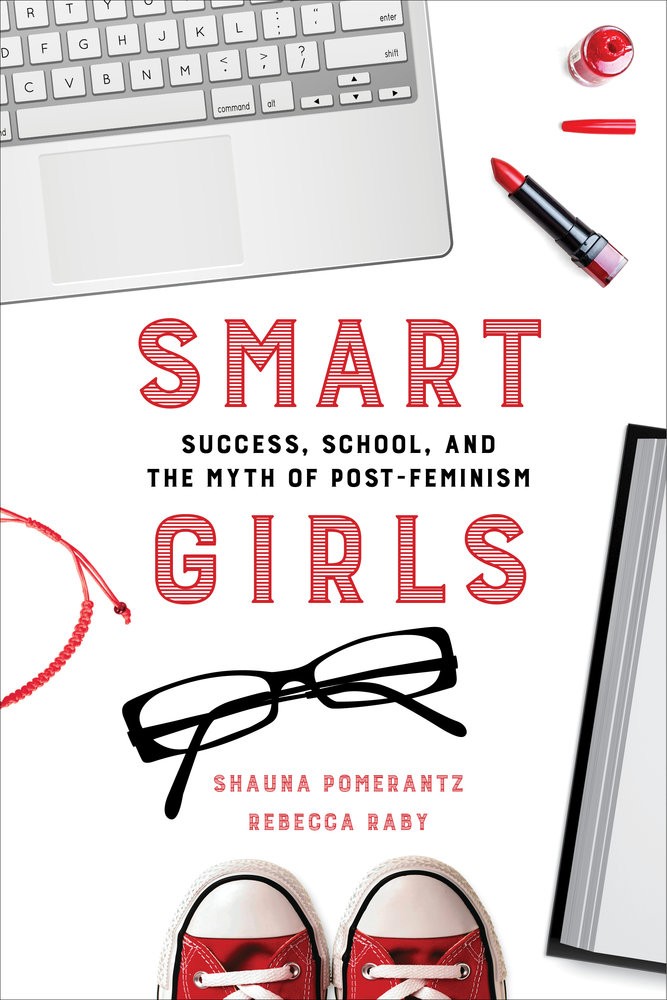
and the Myth of Post-Feminism

From Our Blog

Women’s Equality Day: 100 years after the 19th Amendment

This year is the 100th anniversary of the ratification Nineteenth Amendment, and Women's Equality Day marks the anniversary of its certification. This day offers an opportunity for reflection: how far have we come in terms of gender equality? It's crucial to note, that while the Nineteenth Amend
Read More

Table of Contents

Smart Girls is unexplored territory. Pomerantz and Raby have conducted a superbly balanced mix of interviews and analysis for a post-feminist and neoliberal age to help us understand why the stereotype of the ‘smart girl’ holds such sway in our culture and how to put girls back on the political and social agenda.”—Leslie C. Bell, author of Hard to Get: Twenty-Something Women and the Paradox of Sexual Freedom
 
“Pomerantz and Raby urge us to reconsider the ‘smart girl’ stereotype that pervades popular culture, schools, and common-sense beliefs. With compelling analysis and engaging writing, the book reveals the challenge of negotiating smartness alongside narrow ideals of popular femininity and post-feminist promises of success. A fine contribution to studies of gender, schooling, and girlhood, Smart Girls vividly depicts the lived experience of educational inequities in a context where these very inequities are widely dismissed as a thing of the past.”—Kate Cairns, author of Food and Femininity
 
Smart Girls goes straight to the heart of the dilemma—how have high-achieving girls been modified through the discourses and practices of neoliberalism? This is a satisfying, highly readable, and fascinating book.”—Bronwyn Davies, coauthor of Deleuze and Collaborative Writing: An Immanent Plane of Composition 


Reviews

"A compelling look into the complex topic of female academic success."
Library Journal
"In general, smart girls felt they needed to 'dumb down' their intelligence in order to be popular. If a girl was talking to a boy, she might pretend she didn’t know the answer to a question and ask the boy to explain it to her. Or, she might not raise her hand in class, to avoid being labelled as smart, says Pomerantz."
St Catharines Standard
"A? textured and meaningful account of gender in perceptions of intelligence, academic effort, and? ?aspirations. . . . Smart Girls is an engaging, highly readable book that I would recommend to anyone interested in childhood and gender. Ideally, it will help families and schools support girls by realizing that true success grows from identifying and challenging, not ignoring, gender inequality."
American Journal of Sociology
Smart Girls is unexplored territory. Pomerantz and Raby have conducted a superbly balanced mix of interviews and analysis for a post-feminist and neoliberal age to help us understand why the stereotype of the ‘smart girl’ holds such sway in our culture and how to put girls back on the political and social agenda.”—Leslie C. Bell, author of Hard to Get: Twenty-Something Women and the Paradox of Sexual Freedom
 
“Pomerantz and Raby urge us to reconsider the ‘smart girl’ stereotype that pervades popular culture, schools, and common-sense beliefs. With compelling analysis and engaging writing, the book reveals the challenge of negotiating smartness alongside narrow ideals of popular femininity and post-feminist promises of success. A fine contribution to studies of gender, schooling, and girlhood, Smart Girls vividly depicts the lived experience of educational inequities in a context where these very inequities are widely dismissed as a thing of the past.”—Kate Cairns, author of Food and Femininity
 
Smart Girls goes straight to the heart of the dilemma—how have high-achieving girls been modified through the discourses and practices of neoliberalism? This is a satisfying, highly readable, and fascinating book.”—Bronwyn Davies, coauthor of Deleuze and Collaborative Writing: An Immanent Plane of Composition