University of California Press

About the Book

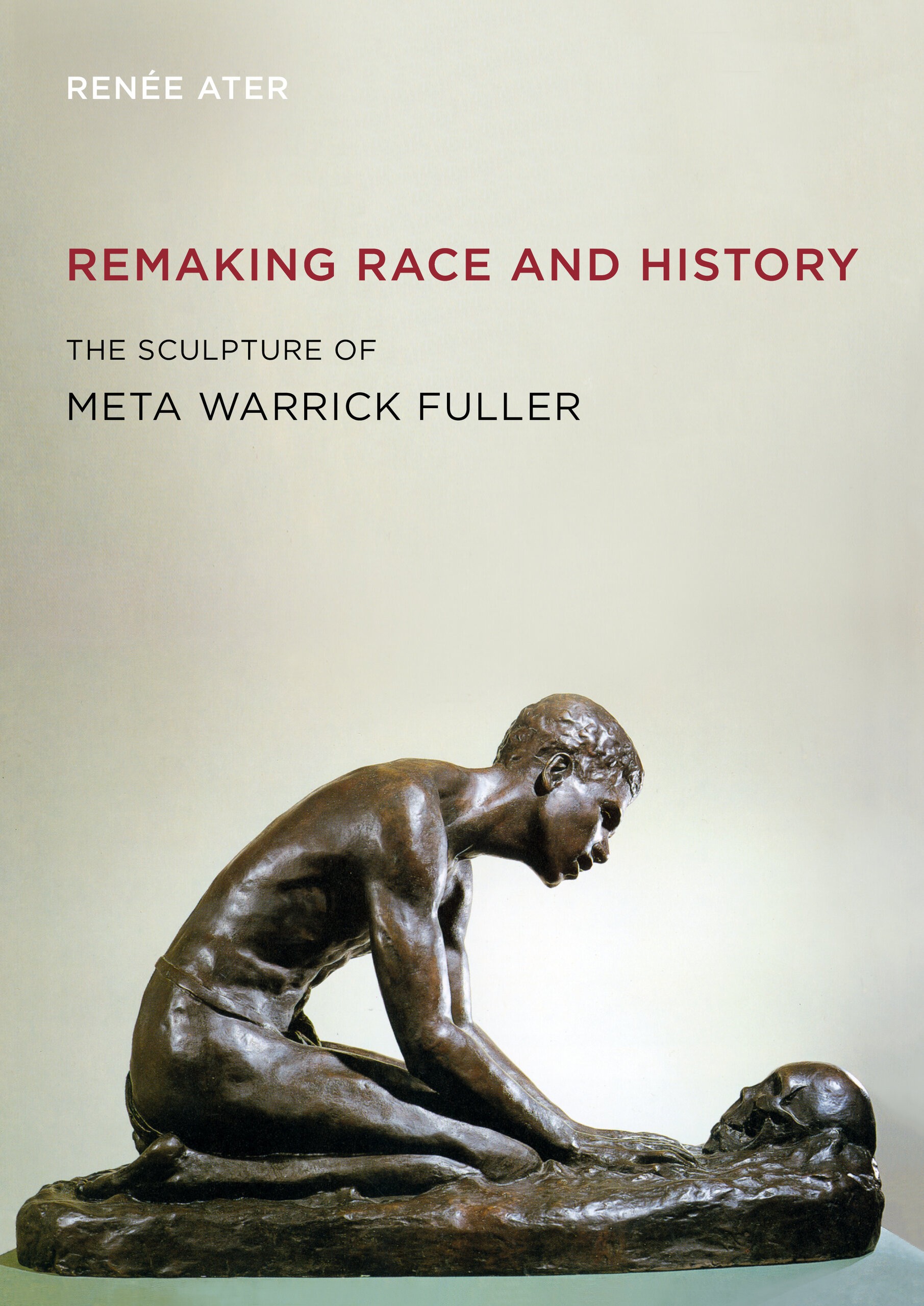
This beautifully written study focuses on the life and public sculpture of Meta Warrick Fuller (1877–1968), one of the early twentieth century’s few African American women artists. To understand Fuller’s strategy for negotiating race, history, and visual representation, Renée Ater examines the artist’s contributions to three early twentieth-century expositions: the Warwick Tableaux, a set of dioramas for the Jamestown Tercentennial Exposition (1907); Emancipation, a freestanding group for the National Emancipation Exposition (1913); and Ethiopia, the figure of a single female for the America’s Making Exposition (1921). Ater argues that Fuller’s efforts to represent black identity in art provide a window on the Progressive Era and its heated debates about race, national identity, and culture.

About the Author

Renée Ater is Associate Professor of American Art in the Department of Art History and Archaeology at the University of Maryland, College Park. She is also the author of Keith Morrison.

Table of Contents

Introduction

1. “Foremost Sculptor of the Negro Race”
2. Segregation and Inclusion
3. Memory and Commemoration
4. Race and Americanization

Epilogue

Acknowledgments
Notes
Bibliography
List of Illustrations
Index

Reviews

“Recommended.”
CHOICE
Remaking Race and History is an important sourcebook on this otherwise under-recognized artist. . . . Provides an indication of the insights that such future investigations can yield.”
caa.reviews
caa.reviews
“Impressive and important. . . . The socio-historical details and contexts of Fuller’s life and art given throughout the book are well-researched and coherently presented. . . . Ater makes a noteworthy contribution to African American art history.”
Association of Historians of American Art
"An exemplar of a more integrated art history. [Ater] is especially gifted with comparative stylistic and iconographic analysis of period sculpture."
Art Bulletin
Remaking Race and History: The Sculpture of Meta Warrick Fuller goes a long way in correcting the glaring omission of one of the key African American woman artists of the twentieth century.”
Tikkun
“This book is a major achievement. An exemplary practitioner in the field, Ater seamlessly merges theoretical insight, social history, formal analysis, and an impressive array of primary sources. She extends observations from the related fields of literary and textual studies into her examination of Fuller’s work without losing site of the specific challenges Fuller faced as a visual artist working in a particular context and genre.“—Mary Ann Calo, author of Distinction and Denial: Race, Nation and the Critical Construction of the African American Artist, 1920-1940

“Renee Ater's approach to the study of Meta Warwick Fuller's public work is both creative and resourceful, revealing the ways in which African-Americans participated in the civic life of the nation in the early twentieth-century. Thoroughly researched with attention to important archives and primary sources, this book makes a unique contribution to scholarship in the fields of American and African-American art, feminist art history, and American Studies. Moreover, in its clear prose, it would be of interest to educated general readers engaged with issues of race and public culture in the Progressive Era."—Melissa Dabakis, author of Visualizing Labor in American Sculpture: Monuments, Manliness, and the Work Ethic