University of California Press

About the Book

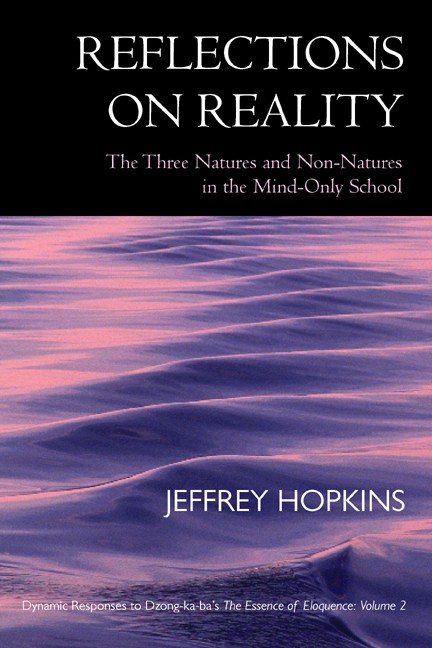
This is the second volume in Jeffrey Hopkins's valuable series on the Mind-Only School of Buddhism. Dzong-ka-ba (1357-1419) is generally regarded as one of the greatest Tibetan philosophers, and his "Mind-Only" discourse on emptiness is considered a landmark in Buddhist philosophy. In Volume 2, Emptiness in the Mind-Only School of Buddhism, Hopkins provided a translation of the introduction and section on the Mind-Only School in The Essence of Eloquence. The present volume places this enigmatic and influential exposition in its historical and philosophical contexts. Reflections on Reality conveys the intellectual vibrancy of the different cultural interpretations of this text and expands the key philosophical issues it addresses.

About the Author

Jeffrey Hopkins is Professor of Tibetan and Buddhist Studies at the University of Virginia. His more than twenty-five books include Emptiness in the Mind-Only School of Buddhism (California, 1999) and Cultivating Compassion (2001) and, as translator-editor, His Holiness the Dalai Lama's How to Practice (2002) and The Meaning of Life (2000).

Table of Contents

Preface
Technical Notes

Part One: Background
Part Two: Religous Significance of the Three Natures of Phenomena
Part Three: Examining the Sutra Unraveling the Thought
Part Four: Thoroughly Established Nature Endowed with Buddha Qualities
Part Five: Views on the Two Emptinesses
Part Six: Undermining Error

Appendix 1
Appendix 2
Appendix 3

Backnotes
Bibliography
Index

Reviews

"This is without question the finest and most complete discussion of the renowned Mind-Only school and its Tibetan context."—Anne C. Klein, author of Knowledge and Liberation, Path to the Middle

"An important new contribution to our understanding of the development of Buddhist philosophical thought in Tibet."—Matthew T. Kapstein, author of The Tibetan Assimilation of Buddhism: Conversion, Contestation, and Memory