University of California Press

About the Book

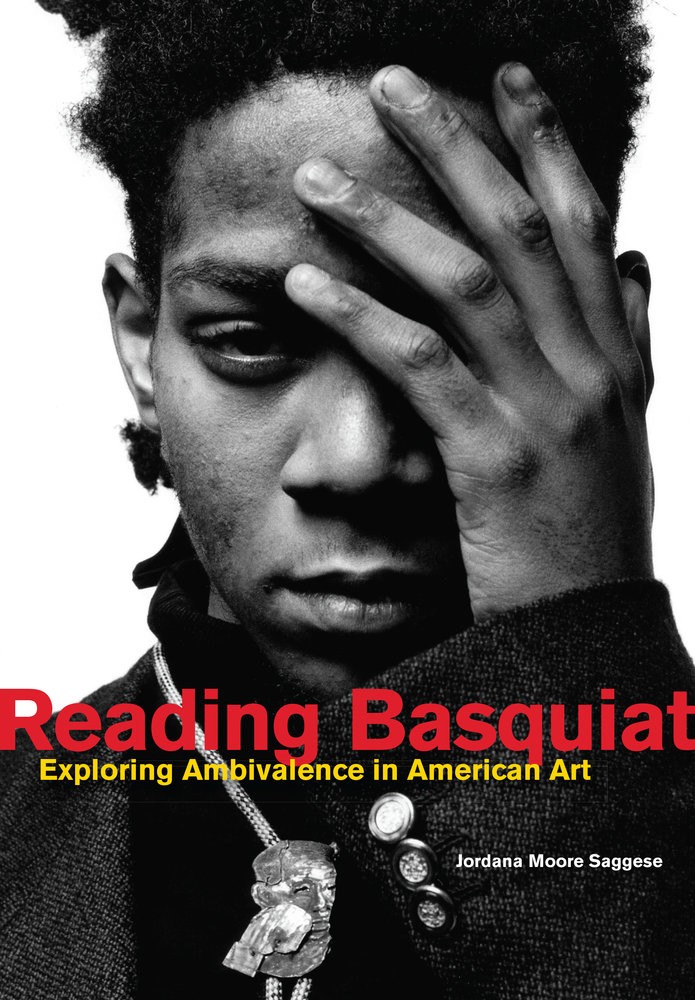
Before his death at the age of twenty-seven, Jean-Michel Basquiat completed nearly 2,000 works. These unique compositions—collages of text and gestural painting across a variety of media—quickly made Basquiat one of the most important and widely known artists of the 1980s. Reading Basquiat provides a new approach to understanding the range and impact of this artist’s practice, as well as its complex relationship to several key artistic and ideological debates of the late twentieth century, including the instability of identity, the role of appropriation, and the boundaries of expressionism. Jordana Moore Saggese argues that Basquiat, once known as “the black Picasso,” probes not only the boundaries of blackness but also the boundaries of American art. Weaving together the artist’s interests in painting, writing, and music, this groundbreaking book expands the parameters of aesthetic discourse to consider the parallels Basquiat found among these disciplines in his exploration of the production of meaning. Most important, Reading Basquiat traces the ways in which Basquiat constructed large parts of his identity—as a black man, as a musician, as a painter, and as a writer—via the manipulation of texts in his own library.

About the Author

Jordana Moore Saggese is Associate Professor of American Art at the University of Maryland.

From Our Blog

Black History Makers & Risk Takers: Artists

In 1915, Dr. Carter G. Woodson, a pioneering black intellectual and the son of former slaves, recognizing “the dearth of information on the accomplishments of blacks . . . founded the Association for the Study of Negro Life and History, now called the Association for the Study of African American Li
Read More

Table of Contents

Acknowledgments

Introduction: Reading Jean-Michel Basquiat
1. “The Black Picasso”: Jean-Michel Basquiat and Questions of Race
2. Creativity Found and Made
3. The Language of Expressionism

Notes
Bibliography
List of Illustrations
Index

Reviews

"Amply illustrated . . . a lucid account that encourages the reader to look with refreshed eyes at the richness of the artist's work."
Times Higher Education
"Offers a compelling analysis that reveals and elucidates the complex language systems and cultural discourses at play in Basquiat’s work."
Art Practical
"In four chapters, the author gives the artist’s work the scholarly and historical attention it rightly deserves while contributing to the fields of American art, African American art, contemporary art, and diaspora art."
Nka: Journal of Contemporary African Art
"A brilliant book and a great read. At long last, a deeply researched text on Basquiat's project."
—Jonathan Fineberg, University of Illinois at Urbana-Champaign

"Challenging prevailing assumptions about the work of Jean-Michel Basquiat, Saggese argues that Basquiat’s practice was as much conceptual as expressive. Reading Basquiat turns the focus from the artist’s lifestyle to his work and the ways in which his approach to appropriation and improvisation addressed the artistic discourse of the 1980s. With this book, Saggese changes the conversation about Basquiat and African Americans’ participation in contemporary art."
—John P. Bowles, University of North Carolina at Chapel Hill

Awards

  • 2015 UC Press First Book Award, PEN American Center