University of California Press

About the Book

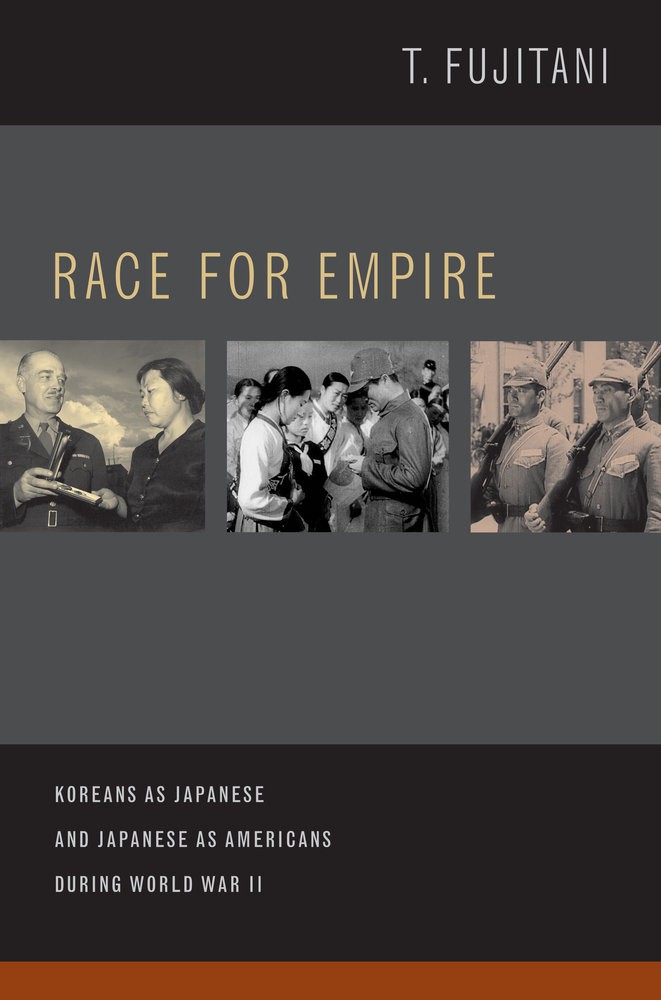
Race for Empire offers a profound and challenging reinterpretation of nationalism, racism, and wartime mobilization during the Asia-Pacific war. In parallel case studies—of Japanese Americans mobilized to serve in the United States Army and of Koreans recruited or drafted into the Japanese military—T. Fujitani examines the U.S. and Japanese empires as they struggled to manage racialized populations while waging total war. Fujitani probes governmental policies and analyzes representations of these soldiers—on film, in literature, and in archival documents—to reveal how characteristics of racism, nationalism, capitalism, gender politics, and the family changed on both sides. He demonstrates that the United States and Japan became increasingly alike over the course of the war, perhaps most tellingly in their common attempts to disavow racism even as they reproduced it in new ways and forms.

About the Author

T. Fujitani is the Dr. David Chu Professor in Asia-Pacific Studies and Professor of History at the University of Toronto. He is the editor of Perilous Memories: The Asia Pacific War(s) and is the author of Splendid Monarchy: Power and Pageantry in Modern Japan (UC Press).

Table of Contents

List of Illustrations
Preface and Acknowledgments
Note on Romanization and Naming
Commonly Used Acronyms

Introduction: Ethnic and Colonial Soldiers and the Politics of Disavowal

Part One: From Vulgar to Polite Racism
1. Right to Kill, Right to Make Live: Koreans as Japanese
2. “Very Useful and Very Dangerous”: The Global Politics of Life, Death, and Race

Part Two: Japanese as Americans
3. Subject to Choice, Labyrinth of (Un)freedom
4. Reasoning, Counterreasonings, and Counter-conduct
5. Go for Broke, the Movie: The Transwar Making of American Heroes

Part Three: Koreans as Japanese
6. National Mobilization
7. Nation, Blood, and Self-Determination
8. The Colonial and National Politics of Gender, Sex, and Family

Epilogue: “Four Volunteer Soldiers”

Notes
Selected Bibliography
Index

Reviews

“[A] monumental history of ethnic and imperial soldiering. . . . Prodigiously researched in Japanese-, English, and Korean-language sources, and situated in multiple historiographies, Race for Empire is that rare work of comparative and transnational history that does justice to all sides. This magisterial book will be indispensable reading for historians of the United States, Japan, and Korea as well as scholars working in the interdisciplinary fields of American and Asian American studies.”
Jrnl Of American History
“[This book] is very important and should be read and studied by all serious students of Asian studies, Japanese American studies, and the Pacific War. . . . Highly recommended.”
Choice
“Truly impressive archival work and rigorous conceptualization. . . . Provides compelling narratives and analyses of Japanese colonialism in Korea.”
Cross Currents: East Asian History & Cultural Review
“This is one of the finest studies to appear in the field of East Asian studies in recent years. In this highly readable book, Fujitani offers superior thinking and analysis on race relations, empire, and wartime collaboration with the enemy.” —Bruce Cumings, University of Chicago

“Pushing against national archives and historiographies and linguistic and disciplinary formations, Race for Empire is a singular, remarkable achievement.” —Gary Y. Okihiro, author of Pineapple Culture: A History of the Tropical and Temperate Zones

Race for Empire offers a profound and thought-provoking re-interpretation. Through excellent use of a wide range of material, Fujitani presents a meticulously researched analysis. This is a milestone in the study of wartime Japan and the U.S.” —Teresa Morris-Suzuki, author of Borderline Japan: Foreigners and Frontier Controls in the Postwar Era