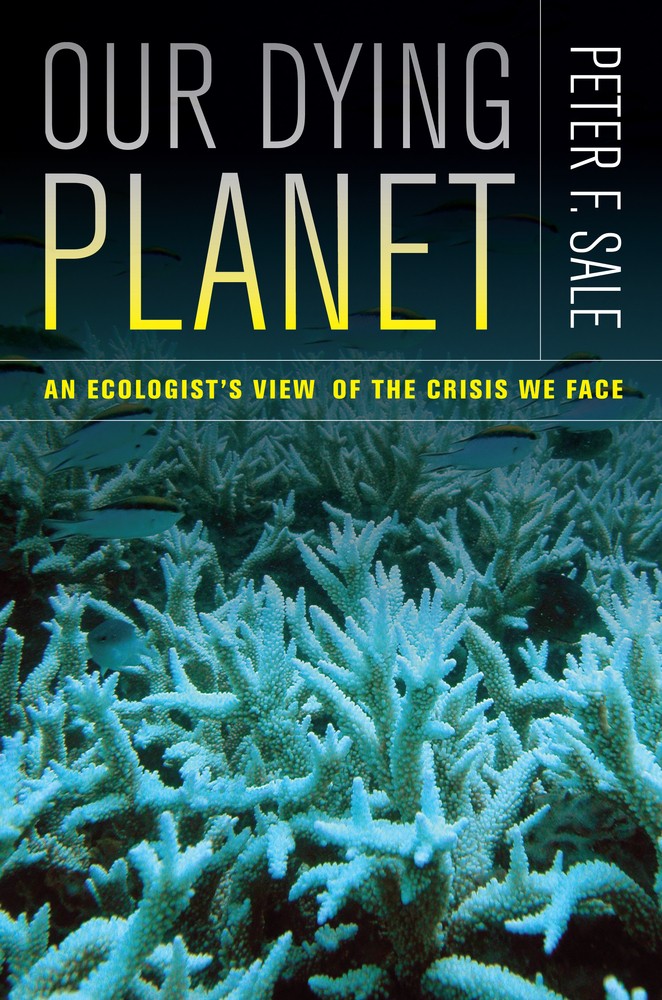
“The ecological analysis is thorough, balanced and state of the art. . . . Our Dying Planet is a powerful, multifaceted, vivid analysis of human-induced environmental change based on the science of ecology focussing on population ecology, community ecology and ecosystem research. It is a rewarding read for every ecologist and all those caring about the future of the planet Earth.”
“[Sale’s] prose and storytelling are engaging and flow well, many complex concepts are well explained, and the author is a world-class expert in coral reef ecology with a long career face to face with his subject. . . . Scientifically illuminating and filled with interesting personal stories. . . . Instructive and intriguing.”
“Clear-eyed descriptions of the problems humans have created for Earth and themselves are particularly enlightening. Sale has a gift for accurately observing and communicating complex scientific concepts to nonscientists; any adult with a high school education can understand and appreciate this work. . . . Highly recommended.”
“Full of nasty surprises. . . . an important book about the future of life on a warmer earth.”
“Sale, a Canadian academic, believes responsible debate leads to effective policy and largely manages to keep above the fray. He considers potential solutions from a range of perspectives and warns against cherry-picking facts to support a favoured hypothesis. . . . Our Dying Planet is not a specialist text, but targeted at a wider readership. Sale’s aim is ‘to convey the complexity and severity of the environmental crisis, and the need for quick and determined action if we care at all about our own children. There is still time to act, and economically viable paths to take, that will bring us to . . . a future in which humans live rich and fulfilling lives as stewards of an ecologically sustainable Earth.’”
“There is a delicate balance between showing the true complexity of environmental problems and keeping the science of these fields accessible to non-scientists. It is a balance that Sale, for the most part, navigates deftly.”
“With a scientists understanding, a teacher’s ability to make ecology clear to us all, and a passion to maintain the earth’s ability to support and sustain us, Sale sounds the alarm.”
" Our Dying Planet is the most powerful statement on the future of life on earth I have ever read. Starting with the title, which I admire greatly, it delivers the sort of honest, accurate, no-punches-pulled assessment you would expect from a scientist who has seen the problems first hand. Coral reefs appear set to be the first major ecosystem to go extinct. Few people know more about this than Peter Sale. If every scientist were to speak as convincingly as Sale, the public might finally grasp the seriousness of the course on which we've set our planet."—Randy Olson, author of Don’t Be Such a Scientist
“Peter Sale's book shows us the exquisite sensitivity of ecosystems to the consequences of human activity. This is the anthropocene epoch, a time when human beings have become a force of nature, altering properties of the biosphere on a geological scale. Read this and you will know it is very late and we must act.” —David Suzuki, author of The Sacred Balance and The Legacy
“Disruptions such as overfishing, forest desecration, ocean acidification and pollution, and the wholesale destruction of coral reefs have already changed the earth disastrously. These problems will not fix themselves. For an articulate and crucial discussion of the mess we've made — and with some small hope for the future — you must read this book."—Richard Ellis, author of The Empty Ocean and The Great Sperm Whale
“A bold and convincing explication of the forces inexorably leading to an environmental collapse, and sooner than most people think. Sale, a leading ecologist, tackles some sacred cows – including the implications of human population growth – and shows the many synergisms between impacts that would be devastating even if they acted alone – which they don’t. No one will read Our Dying Planet and remain complacent, but Sale sketches some promising paths out of our dilemma.”—Daniel Simberloff, coeditor of Encyclopedia of Biological Invasions