University of California Press

About the Book

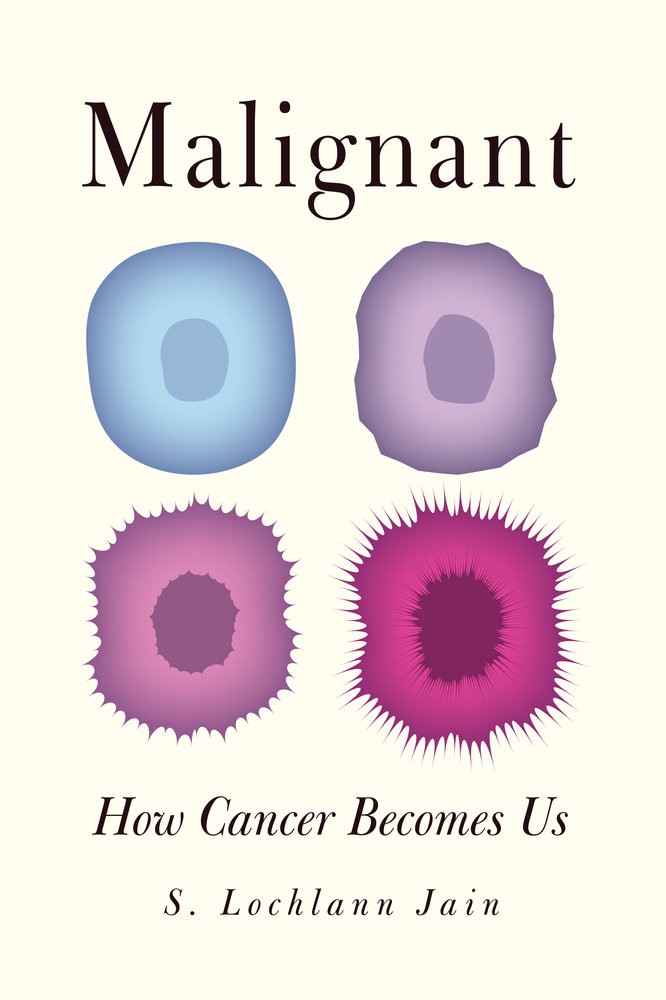
Nearly half of all Americans will be diagnosed with an invasive cancer—an all-too ordinary aspect of daily life. Through a powerful combination of cultural analysis and memoir, this stunningly original book explores why cancer remains so confounding, despite the billions of dollars spent in the search for a cure. Amidst furious debates over its causes and treatments, scientists generate reams of data—information that ultimately obscures as much as it clarifies. Award-winning anthropologist S. Lochlann Jain deftly unscrambles the high stakes of the resulting confusion. Expertly reading across a range of material that includes history, oncology, law, economics, and literature, Jain explains how a national culture that simultaneously aims to deny, profit from, and cure cancer entraps us in a state of paradox—one that makes the world of cancer virtually impossible to navigate for doctors, patients, caretakers, and policy makers alike. This chronicle, burning with urgency and substance leavened with brio and wit, offers a lucid guide to understanding and navigating the quicksand of uncertainty at the heart of cancer. Malignant vitally shifts the terms of an epic battle we have been losing for decades: the war on cancer.

About the Author

S. Lochlann Jain is Associate Professor in the Department of Anthropology at Stanford University and author of Injury: The Politics of Product Design and Safety Law in the United States.

Table of Contents

Introduction: We Just Don’t Know It Yet
1. Living in Prognosis: The Firing Squad of Statistics
2. Poker Face: Gaming a Lifespan
3. Cancer Butch: Trip Up the Fast Lane
4. Lost Chance: Medical Mistakes
5. The Mortality Effect: The Future in Cancer Trials
6. Inconceivable: Where IVF Goes Bad
7. Can Sir: What Screening Doesn’t Do
8. Fallout: Minuets in the Key of Fear
9. Rubble: Bakelite Bodies
Conclusion: Shameless

Acknowledgments
Notes
Index

Reviews

"Brilliant."
Nature
"A whip-smart read."
Discover
"A dark journey into cancer as it is understood, diagnosed and treated in America today."
Kirkus
"The book effortlessly combines the author’s roles as a first-person participant in cancer diagnosis and an anthropological authority on why we Americans tolerate high rates of cancer."
Public Books
"The book effortlessly combines the author’s roles as a first-person participant in cancer diagnosis and an anthropological authority on why we Americans tolerate high rates of cancer."

http://www.publicbooks.org/nonfiction/cancers-poison-gift
Public Books
"Malignant is a wonderful book . . . In this candid and critical analysis, [Jain] . . . eloquently captures the ambiguity and uncertainty that undergird every aspect of cancer."
Journal of Anthropological Research
"Jain uses dry wit, irony, and occasionaly glee."
Anthropological Quarterly
"The book is compelling and engaging."
CHOICE
"Malignant is a wonderful book... In this candid and critical analysis, [Jain]...  eloquently captures the ambiguity and uncertainty that undergird every aspect of cancer."
Journal of Anthropological Research
"The writing is marvelous and the scholarship is incredible -- but you aren't prepared for the disarming humor, or the delicate dissection of the psyche that Jain achieves. I could not stop reading this book."
– Siddhartha Mukherjee, author of Emperor of All Maladies, Pulitzer Prize Winner

"Malignant is a beneficent book, a tough gift for all of us. I—we—need this scholarly, angry, intimate, objective, smart, moving book that teaches us how to endure and even maybe thrive in the ‘rubble.’"
-- Donna Haraway, author of Simians, Cyborgs, and Women

"Malignant is the most important book about cancer in decades.  Lochlann Jain brilliantly compels us to look straight into its metastases and cultural malignancies.  In cancer's claws we find, not just the limits of existence, but also a poetics of resistance."
-- Jonathan Metzl MD, PhD, author of The Protest Psychosis

“I found myself entertained, informed, surprised and ultimately transformed by this wonderful narrative.”
-- Abraham Verghese, author of Cutting for Stone

Awards

  • Finalist for 83rd Annual California Book Awards 2014, Commonwealth Club of California
  • Foreword Book of the Year (silver medal) 2014, Foreword Magazine
  • 2014 Independent Publisher Book Awards (Gold Medal), Independent Publisher Book Awards
  • 2016 J. I. Staley Prize, School of Advanced Research
  • 2014 Edelstein Prize, Society for the History of Technology
  • 2014 Diane Forsythe Prize, American Anthropological Association
  • 2014 Victor Turner Prize for Ethnographic Writing, American Anthropological Association
  • 2015 Ludwik Fleck Prize, Society for Social Studies of Science