University of California Press

About the Book

What the world’s oldest cities can teach us about adapting to rising seas.

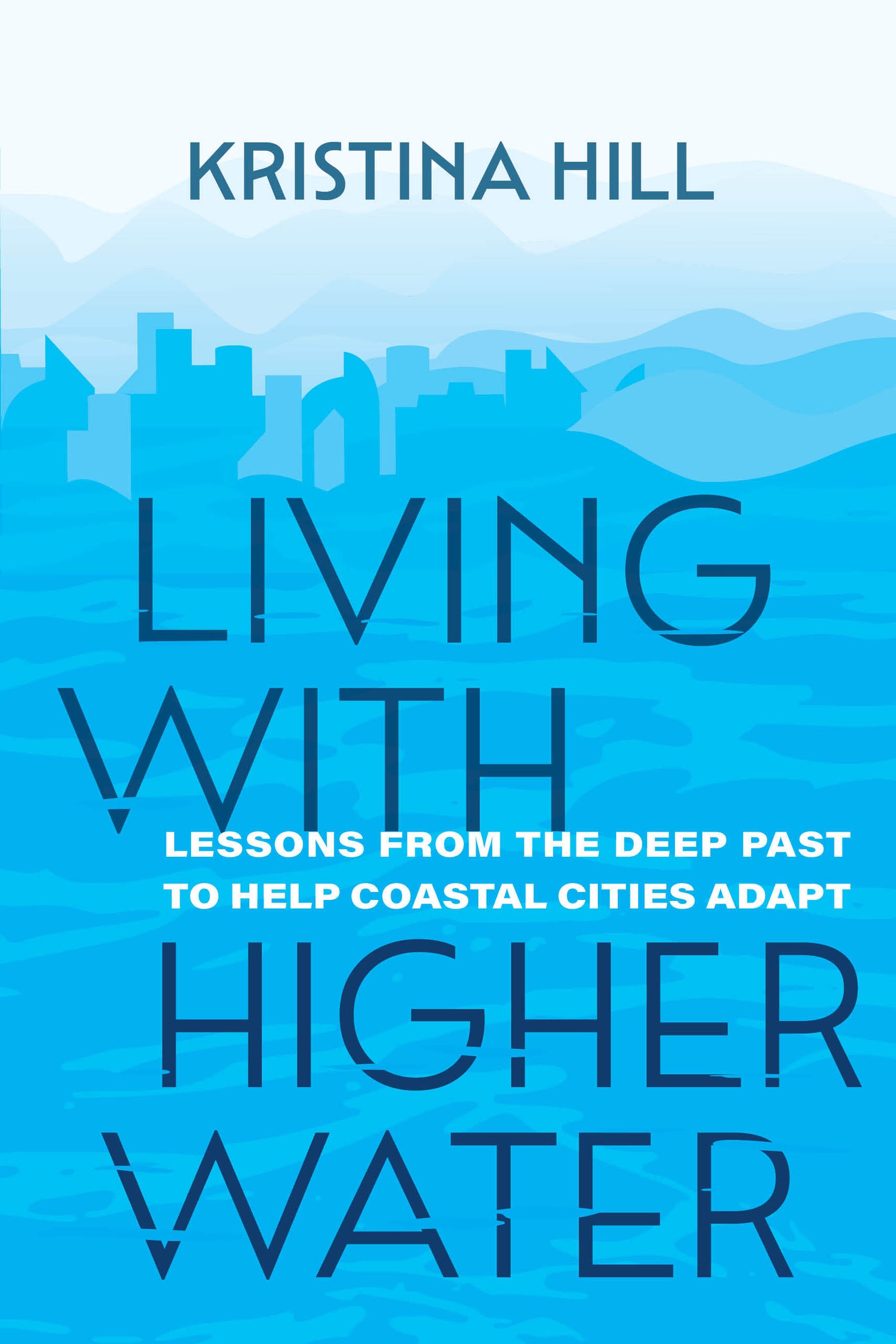
As sea level rise accelerates, securing the future of coastal cities requires us to think beyond our current strategies. Most adaptation plans focus on keeping high tides out with concrete and steel. But these plans often overlook the threat from below: rising coastal groundwater that can cause flooding even behind seawalls and levees.  

Living with Higher Water argues that, in order to meet the challenges of groundwater rise, we must turn to the long history of how humans have adapted in the past. Drawing on ancient Mesopotamia and Indigenous North America, alongside contemporary examples from Europe and Asia, Kristina Hill shows how landscape-based approaches such as dikes, ponds, and mounds can create more resilient cities while reducing costs and supporting biodiversity. Blending history, science, and design, she reminds us that the first civilizations lived with rising seas thousands of years ago—and now it’s our turn. Knowing more about those civilizations’ flexible strategies can help us prepare for the changes ahead.

About the Author

Kristina Hill is Professor of Landscape Architecture, Environmental Planning, and Urban Design at the University of California, Berkeley. She is coeditor of Ecology and Design: Frameworks for Learning. 

Reviews

“Kristina Hill is a pioneer in the study of how people design for and live with water. Living with Higher Water offers readers a vivid picture of the complex systems and cultural practices that shape our stewardship of and adaptation to water. In a warmer and wetter world, this book is an essential resource not just for technical innovation but also for navigating the politics of a shared coexistence.”—Jesse M. Keenan, author of North: The Future of Post-Climate America  

“Living with Higher Water offers a timely and compelling call to rethink how cities confront rising seas. Bridging urban design, landscape architecture, planning, and climate adaptation, Hill challenges us to move beyond incremental responses toward transformative strategies for living with water—and creating more resilient urban futures.”—Frederick R. Steiner, author of Making Plans: How to Engage with Landscape, Design, and the Urban Environment