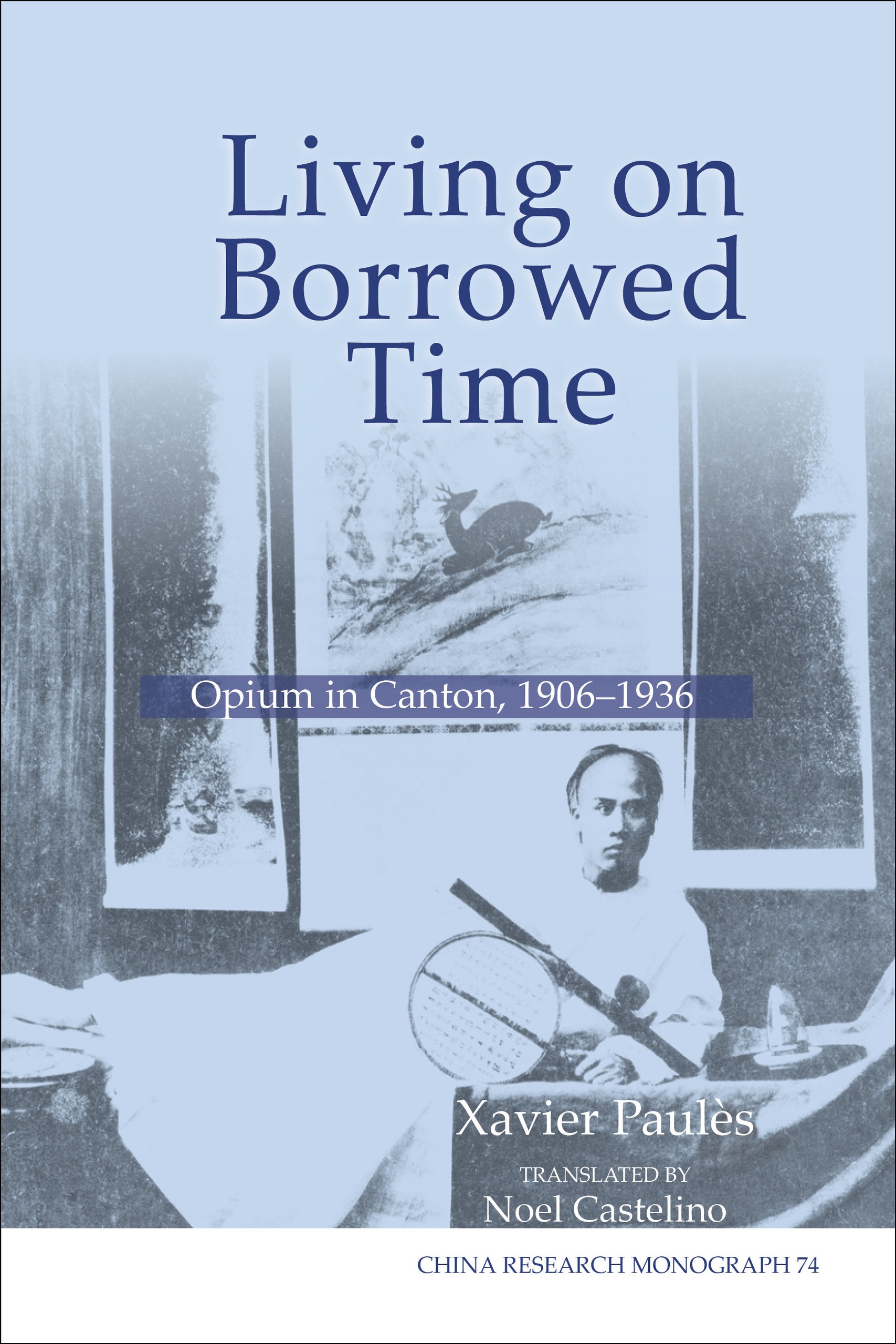
“Paulès’ monograph is the most comprehensive study we have of opium’s use and meaning in a single place. It challenges our conceptual and historiographical stereotypes.”—Blaine Chiasson, Sir Wilfrid Laurier University, Twentieth-Century China 39, no. 3 (2014).
"This book by Xavier Paulès is written in a way to somewhat revise the history of the Republican era along three original lines....[U]nlike all his predecessors, Xavier Paulès is not content to study the supply of opium. He seeks to explore the demand for opium. His first chapter...contains a veritable anthropological survey of the preparation of the drug, as well as the tools used in the smoking houses, the modes of consumption, and the effects of the drug.”—Alain Roux, in Revue historique, vol. 663 (July 2012). [orig. French].
“The diversity of sources used, from archives to periodicals and yearbooks of Canton, permits Xavier Paulès to propose a detailed study of both the supply and demand of opium during the period studied and to provide a very innovative vision of diverse aspects of the drug.”—Frédéric Obringer, Etudes Chinoises, vol. 30 (2011) [orig. French]
"Joining a host of recent works on opium and urbanism in modern China, Living on Borrowed Time is a welcome contribution not only to the study of these topics, but also as a model for the close analysis of drug consumption and its social ramifications." —Miriam Kingsberg Kadia, University of Colorado Boulder, Situations: Cultural Studies in the Asian Context, 10, no. 2 (2017): 189-193.
"Paulès’ monograph presents an exceptionally well-researched and consistent defense of the argument that rather than being the main ill of the early twentieth-century China, opium’s negative social role was largely demonized and exaggerated...While most of the studies on the matter have traditionally adopted a relatively wide scope both in terms of space and time, Paulès proves that a microhistory of the drug in modern China can shed a new light on the subject. As such, Paulès’ contribution does not only stand out as one of the most important studies on the history of opium in China, but also as one of the major contributions to our understanding of the daily life at the fringes of society in the early twentieth-century Canton."—José Antonio Cantón Álvarez, Needham Research Institute, Cambridge, China Review International 23, no. 1 (2016).