University of California Press

About the Book

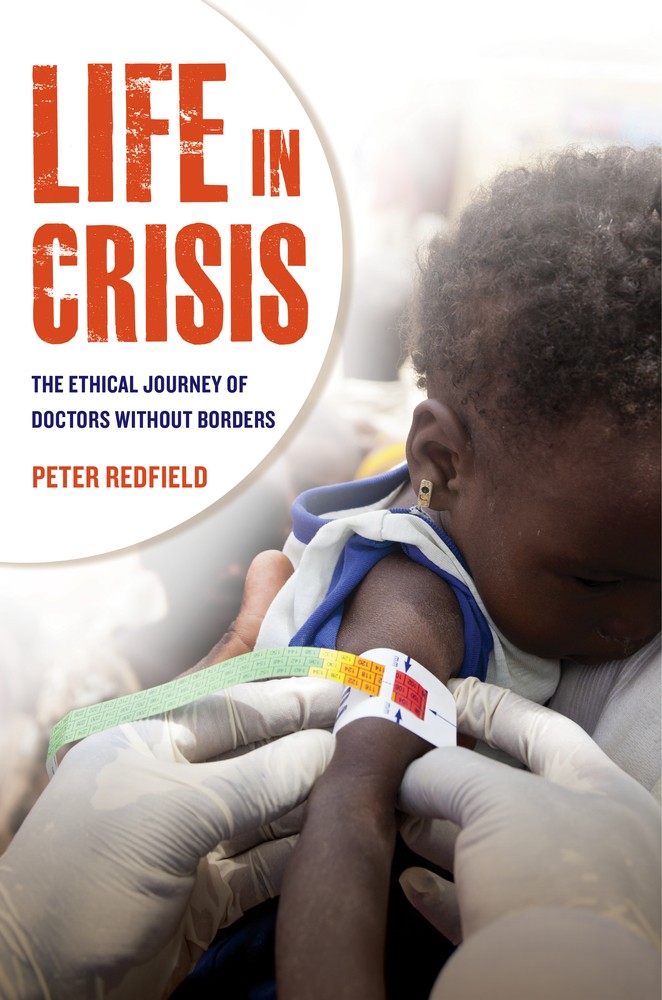
Life in Crisis tells the story of Médecins Sans Frontières (Doctors Without Borders or MSF) and its effort to “save lives” on a global scale. Begun in 1971 as a French alternative to the Red Cross, the MSF has grown into an international institution with a reputation for outspoken protest as well as technical efficiency. It has also expanded beyond emergency response, providing for a wider range of endeavors, including AIDS care. Yet its seemingly simple ethical goal proves deeply complex in practice. MSF continually faces the problem of defining its own limits. Its minimalist form of care recalls the promise of state welfare, but without political resolution or a sense of well-being beyond health and survival. Lacking utopian certainty, the group struggles when the moral clarity of crisis fades. Nevertheless, it continues to take action and innovate. Its organizational history illustrates both the logic and the tensions of casting humanitarian medicine into a leading role in international affairs.

About the Author

Peter Redfield is Professor of Anthropology at the University of North Carolina. He is the author of Space in the Tropics: From Convicts to Rockets in French Guiana.

Table of Contents

Contents
List of Figures
Acknowledgments

Introduction

Part 1: Terms of Engagement
1. A Time of Crisis
2. A Secular Value of Life

Part 2: Global Ambitions
3. Vital Mobility
4. Moral Witness
5. Human Frontiers

Part 3: Testing Limits
6. The Problem of Triage
7. The Longue Durée of Disease
8. The Verge of Crisis
9. Action beyond Optimism

Epilogue

Notes
References
Index

Reviews

"An intriguing read that will be useful for students as well as health care practitioners. . . . Recommended."
CHOICE
"A coherent, evocative, critical and balanced piece of scholarship."
Global Public Health
"Anyone who believes that providing medical aid to the poorest people in poor and conflict-ridden countries provides moral clarity should read this book and be disabused."
Health Affairs
"For scholars in the field [Life in Crisis] is invaluable."
Centre for Medical Humanities
"An important ethnography, a retrospective on MSF, and a map to future research."
Culture, Medicine, and Psychiatry
"A must-read . . . Historically and analytically rich."
Current Anthropology
“Peter Redfield’s beautifully and evocatively written Life in Crisis: The Ethical Journey of Doctors Without Borders, is an extremely accessible and in-depth ethnographic view of the humanitarian organization Doctors Without Borders. Redfield’s generous and honest examination of humanitarianism’s contemporary ethical dilemmas brings a novel approach to these often intractable issues; refusing easy answers, Life in Crisis instead challenges readers to think what it means to act, even without hope.”—Miriam Ticktin, author of Casualties of Care: Immigration and the Politics of Humanitarianism in France


“While humanitarianism has recently become a major domain of investigation in the social sciences, it still lacked its ethnography: with Peter Redfield’s subtle, insightful and deeply honest study of Doctors Without Borders, we now have it. Bringing together the ethical issues raised by the project of saving lives, such as the triage of patients, the practice of bearing witness, and the aporia of neutrality, Life in Crisis offers a generous but critical perspective on the Nobel Prize winning organization.” Didier Fassin, author of Humanitarian Reason. A Moral History of the Present